



Victorian Grape Scissors
Victorian grape scissors are specialist dining implements designed for severing stems at the table, uniting practical utility with elaborate nineteenth-century craftsmanship.
Victorian Grape Scissors
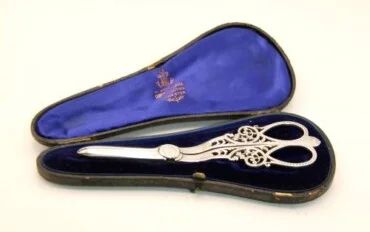
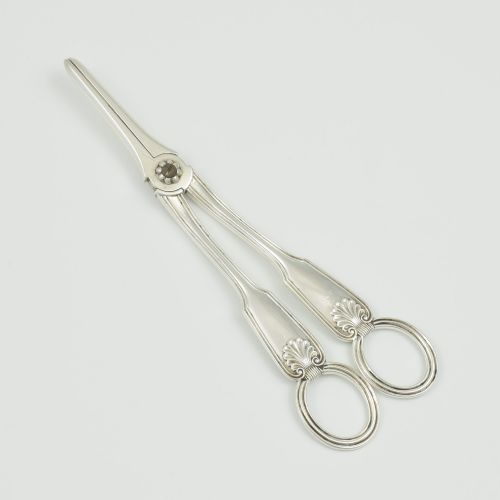
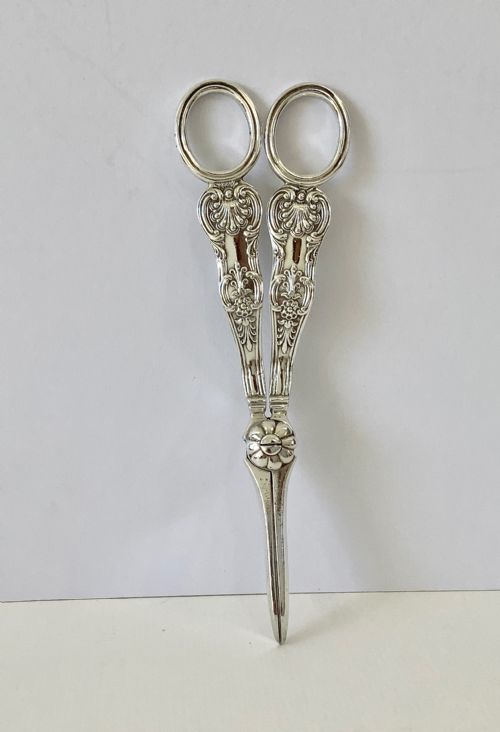
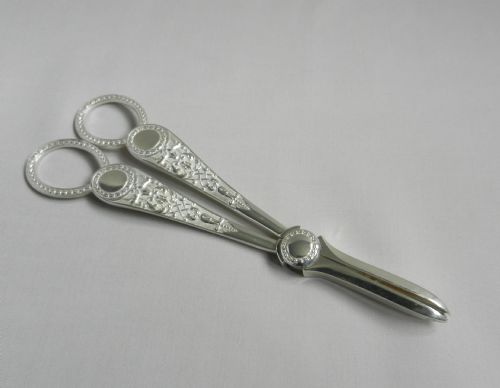
Victorian grape scissors form a distinct category of serving cutlery engineered specifically to portion bunches of fruit without bruising the berries or disturbing the arrangement on a dish. Most examples encountered on this page originate from the nineteenth century, spanning William IV, early Victorian, and late Victorian periods.
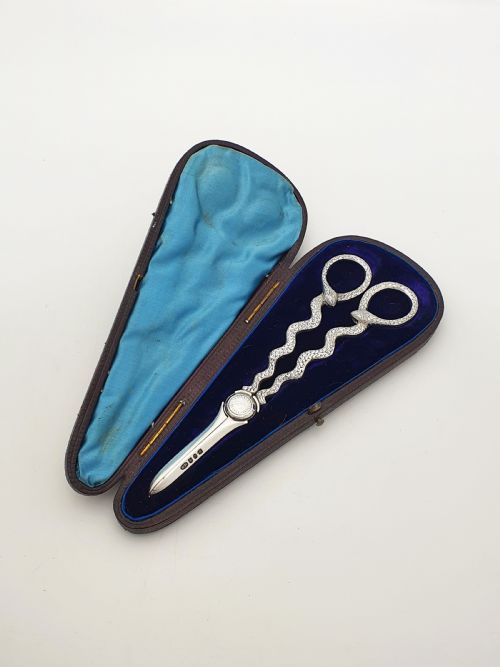
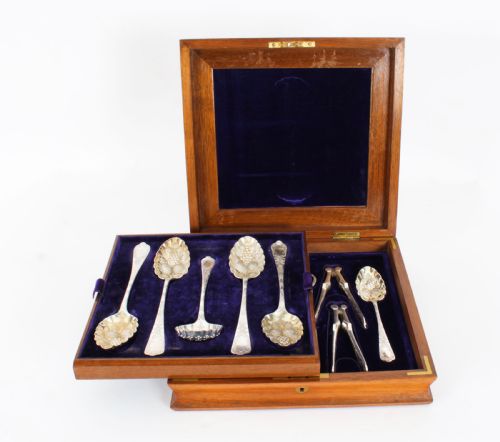
The objects typically appear as short-bladed shears rather than standard domestic scissors, often accompanied by fitted presentation cases lined with silk, velvet, or leatherette. Makers paired these implements with matching fruit knives, nutcrackers, or serving spoons to form comprehensive dessert sets for formal dining.
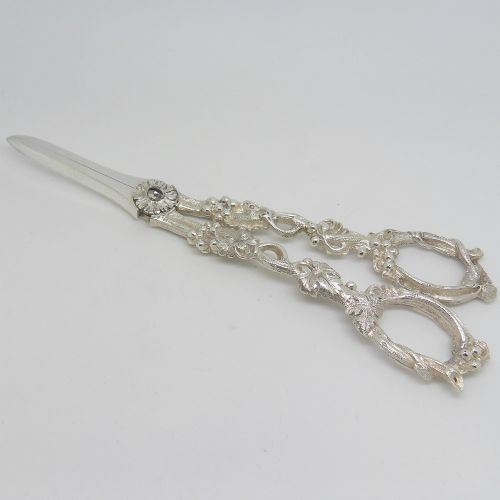
Forms range from plain polished metal to heavily ornamented pieces bearing naturalistic motifs, cast figural handles, or armorial crests. Buyers examine these serving implements for their period specific styling and the presence of original storage boxes.
Materials and Techniques
Silversmiths constructed these implements predominantly from sterling silver or silver plate, occasionally applying gold gilt to the interior surfaces of the blades and bows. Some specialised examples incorporated mother of pearl handles to provide contrast against the polished metal.
Manufacturing methods relied heavily on casting and hand engraving to achieve intricate designs such as acanthus leaves, snake motifs, and trailing grape vines. Makers utilised specialised punchwork and hallmarking techniques to stamp purity standards, dates, and maker marks directly onto the metal.
Recorded periods span the early Victorian era through the late nineteenth century, incorporating William IV designs alongside high Victorian styles.
Distinctions in Quality
Quality in these implements rests upon the depth and precision of the metalwork, distinguishing crisp cast relief from softer, worn ornamentation. Cast figural handles and deeply chased vine decoration demand greater artisan skill than plain stamped alternatives.
The integrity of the pivot joint and the alignment of the blades determine the mechanical standard of each piece, ensuring clean action over generations of use. Preserved original presentation cases lined with fabric add significantly to the completeness and desirability of an individual set.
Goldsmiths & Silversmiths Co·Gibson & Langman·Paul Storr·Chawner & Co·Reilly & Storer·Hukin & Heath·Elizabeth Eaton·Francis Higgins·Josiah Williams & Co·John Gilbert·Wakely & Wheeler
The Victorian Grape Scissors Glossary
- Sterling Silver
- An alloy containing ninety-two point five percent silver by mass, standard for quality nineteenth-century tableware. This composition provided the durability required for functional serving implements.
- Silver Plate
- A base metal substrate coated with a thin layer of silver through electroplating or older Sheffield plating techniques. This method offered a bright metallic finish at a lower cost than solid silver.
- Silver Gilt
- Silver that has been coated with a thin layer of gold on its surface, creating a dual-toned golden appearance. This treatment protected the metal from tarnishing in acidic fruit environments.
- Hallmark
- A system of official marks stamped on precious metals indicating the maker, assay office, standard of purity, and year of manufacture. These symbols allow historians to trace the exact origin of a piece.
- Shears
- A cutting instrument similar to scissors but typically larger or built with sturdier blades for specific heavy tasks. In fruit service, the term refers to implements with robust stems designed for leverage.
Victorian Grape Scissors: Frequently Asked Questions
What are Victorian grape scissors?
Victorian grape scissors are specialised dining implements created in the nineteenth century for neatly cutting small clusters of grapes at the table.
They combine short, sturdy cutting blades with decorative handles, functioning as both a practical tool and a refined piece of formal tableware.
How were they used?
Diners used these shears to snip individual stems from a larger fruit cluster, allowing guests to serve themselves without handling the entire bunch.
They belonged to formal dessert services alongside specialised spoons and fruit knives, maintaining table etiquette during Victorian banquets.
How should I care for them?
These metal implements require gentle cleaning with a soft cloth and specialised silver polish to preserve the original engravings and highlights.
Storing them in lined cases protects the delicate metal surfaces and hinged joints from accidental scratches or tarnish accumulation.
How do I identify the date?
Dates are determined through stamped assay office hallmarks, maker marks, and stylistic indicators such as acanthus leaf casting or naturalistic vine motifs.
Comparing the engraved decorative patterns against documented Victorian design periods helps narrow down the decade of production.