






Antique Silver Fruit Shears
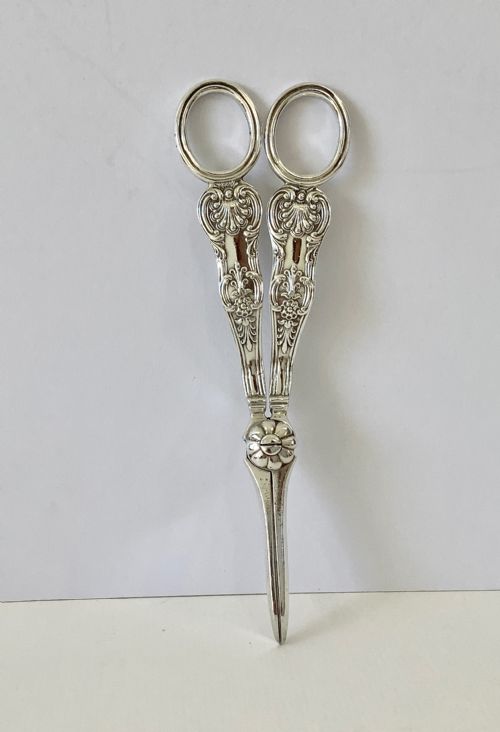
Antique silver fruit shears are specialised cutting implements designed for the dining table, most frequently encountered here as sterling silver grape scissors dating from the Victorian and Edwardian periods.
Antique Silver Fruit Shears
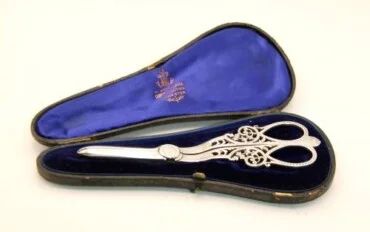
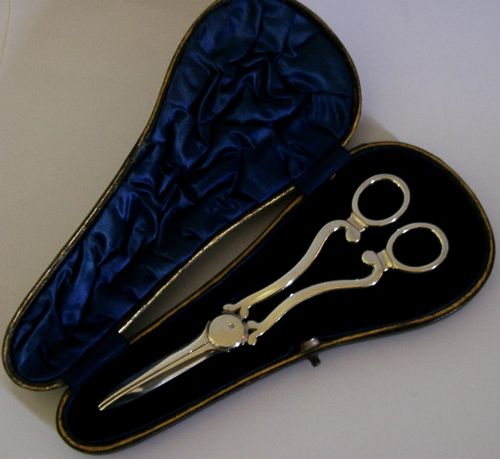
When you search for antique silver fruit shears, you are looking at purpose-built cutlery designed specifically for trimming bunches of grapes at the table. The form most commonly met on this page is the pair of grape scissors, often found complete with fitted cases lined in velvet, silk, satin, or leatherette.
These items emerge across several distinct eras, spanning William IV, Early Victorian, Victorian, Edwardian, and mid-twentieth-century iterations. Alongside dedicated grape shears, the selection encompasses broader fruit and nut serving sets and ornate engraved fruit sets intended for formal dining.
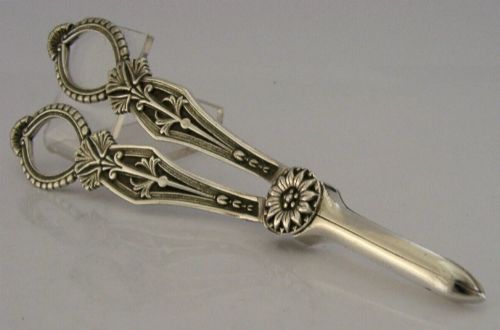
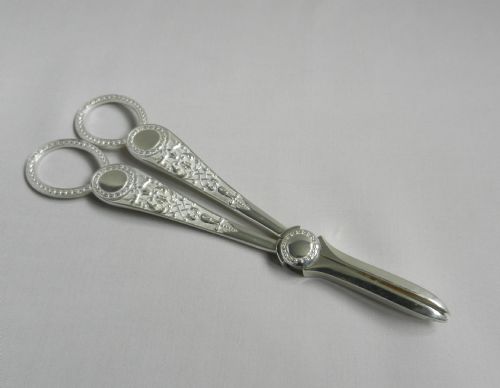
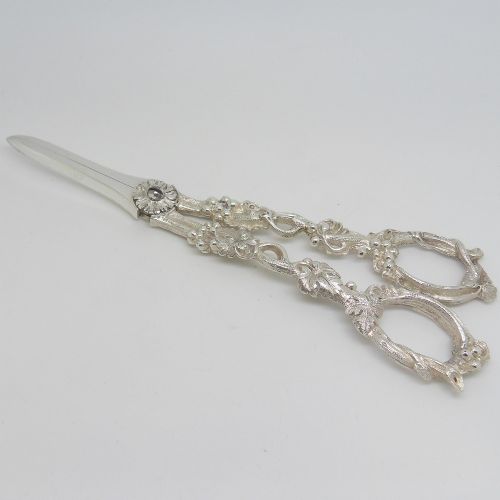
Origins range from early nineteenth-century workshops to later twentieth-century makers, reflecting shifting dining habits over more than a century of production. Buyers will find both plain polished forms and highly decorated designs featuring grape vine motifs.
Materials and methods of construction
The primary material utilised across these pieces is sterling silver, occasionally complemented by silver plate or finished with a silver gilt surface. Construction often involves cast silver components joined to form the handles and blades, frequently enhanced by hand engraving.
Decoration is achieved through specialist techniques, notably ornate engraving and cast relief work that depicts naturalistic vine leaves and fruit. Presentation pieces are housed in protective cases covered in leather or leatherette and lined with soft fabrics like silk and velvet to cushion the metal.
Antique Silver Fruit Shears Retail Price Guide 2026
Typical asking prices for silver fruit shears among the pieces listed under this phrase on Sellingantiques today, from the lower quarter to the upper quarter. They describe what is for sale here now, not the wider market.
Heavy barware examples exist from nineteen sixty-eight, proving that even nineteenth-century grape manners occasionally found a late-century cocktail revival.
Distinctions in quality and execution
Quality in these implements is determined by the weight of the metal and the crispness of the decorative cast work. Superior examples display deeply struck hallmarks and finely detailed grape vine decoration that remains sharp across the handles and pivot.
The standard of the accompanying fitted case also indicates quality, with robust leather exteriors and well-preserved silk or velvet linings adding to the completeness of the piece. Substantial gauge silver and renowned makers elevate certain pairs above standard domestic utensils.
Goldsmiths & Silversmiths Co. Gibson & Langman·Charles Reily & George Storer·Paul Storr·Chawner & Co·Reilly & Storer·C.J. Vander
The Antique Silver Fruit Shears Glossary
- Sterling silver
- A standard alloy consisting of ninety-two point five percent silver by mass, forming the primary material for most pieces here. This metal provides the durable yet malleable base required for detailed cutting implements.
- Silver gilt
- Sterling silver that has been coated with a thin layer of gold, often referred to as vermeil. This treatment gives the metal a warm golden hue while retaining the underlying silver structure.
- Hallmark
- An official stamp applied to precious metals to indicate purity, origin, and year of manufacture. These small stamped marks allow collectors to verify the exact period and maker of the item.
- Cast sterling silver
- Metal poured into a mould to create three-dimensional decorative shapes, such as the curved handles seen on these shears. This technique allows for high relief ornamentation like naturalistic vine motifs.
- Leatherette
- A synthetic imitation of leather frequently utilised to cover the protective presentation cases accompanying Edwardian and Victorian cutlery. It provides a durable exterior designed to protect the silver within.
Antique Silver Fruit Shears: Frequently Asked Questions
What are antique silver fruit shears used for?
These implements were created specifically for severing individual stems when serving grapes at the dinner table. Their short, sturdy blades allowed diners to portion fruit cleanly without damaging the surrounding clusters.
Over time, they became part of formal dining rituals, often presented in dedicated boxes alongside other fruit-serving cutlery.
How do I identify Victorian grape scissors?
Victorian examples frequently display ornate naturalistic decoration such as cast grape vines and foliage along the handles. They generally bear hallmarks indicating nineteenth-century British assay offices and maker marks from prominent silversmiths.
Examining the style of the engraving and the presence of original fitted cases lined in silk or velvet also helps confirm the period.
Are these shears always made of solid silver?
While the majority of the pieces listed are fashioned from sterling silver, some examples are constructed from silver plate. Hallmarks stamped directly onto the metal will indicate whether the piece is solid sterling or plated.
Weight can also serve as an indicator, as solid silver items generally possess a more substantial feel in the hand than plated alternatives.
How should I store antique silver fruit shears?
Storing these items in their original fitted cases helps protect the metal from excessive tarnishing and physical damage. The velvet, satin, or silk linings provide a soft environment that cushions the hinged mechanism.
If a case is absent, keeping them in a dry, tarnish-resistant wrap inside a drawer preserves the finish without requiring constant polishing.