



Victorian Grape Shears
Victorian grape shears are specialised serving cutlery designed for dining tables, offering a refined way to portion fruit without bruising the bunch.
Victorian Grape Shears
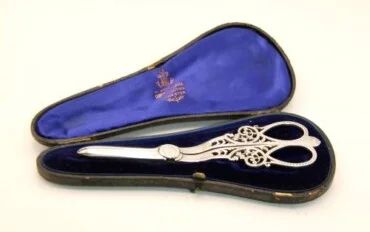
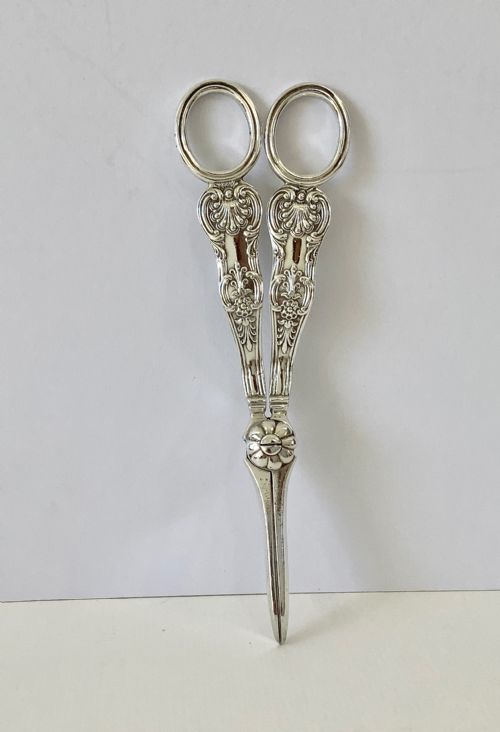
When you search for Victorian grape shears, you encounter purpose-built implements designed for the dining room during the nineteenth century. These items appear primarily as sterling silver grape scissors, frequently accompanied by fitted cases lined with silk and velvet.
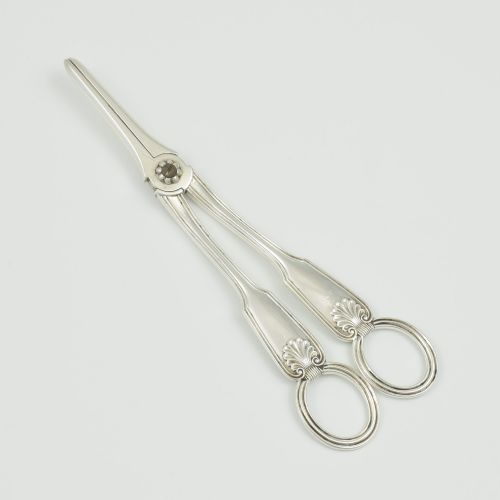
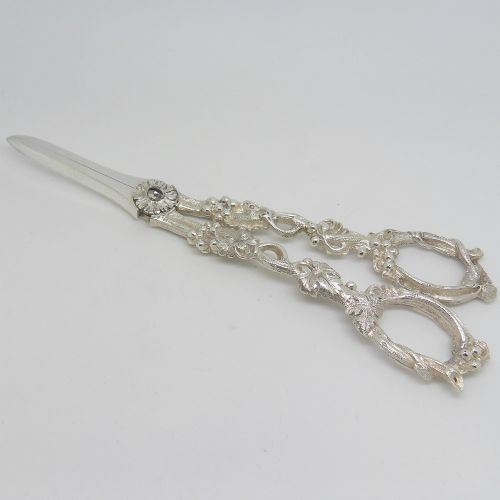
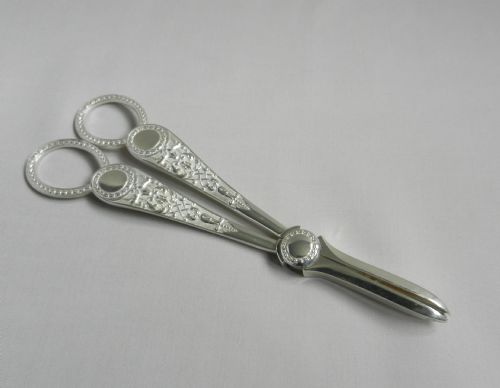
The selections range from plain nineteenth century examples to ornate pieces bearing cast acanthus leaf or grape vine decoration. Alongside sterling silver, you will also discover silver plate versions, sometimes presented within larger fruit and nut serving sets.
Materials and construction
Makers utilised solid sterling silver and silver plate as the primary metals for these shears. Many pieces receive a silver gilt finish, adding a warm gold tone over the silver surface.
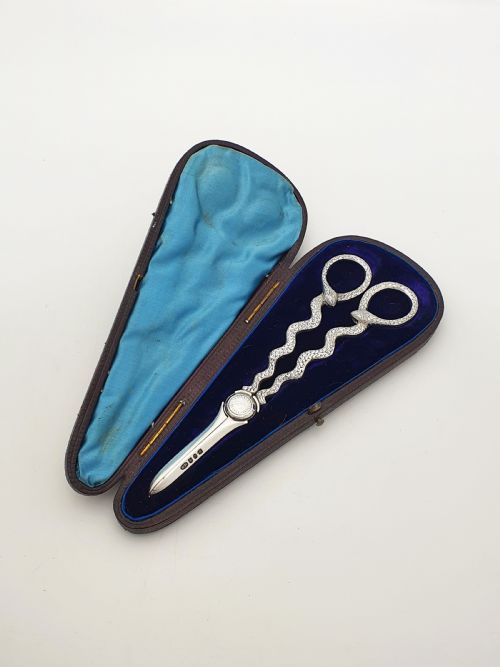
Handles display cast ornamentation, featuring detailed snake designs, bead patterns, or naturalistic grapevine motifs. Cases utilise leatherette, leather, silk, and velvet to protect the metalwork during storage.
Judging quality
Quality rests upon the crispness of the cast decoration along the handles and the weight of the metal. Cast acanthus designs and snake handles demand considerable skill from the silversmith, separating standard production from superior work.
The presence of a matching fitted case lined in silk and velvet elevates a piece, as does clear hallmarks indicating reputable makers and specific assay years. Heavier solid silver examples demonstrate substantial material value compared to lighter pieces or silver plate alternatives.
Goldsmiths & Silversmiths Co·Gibson & Langman·Paul Storr·Chawner & Co·Reilly & Storer·Elizabeth Eaton·Francis Higgins·Charles Boyton·Martin Hall & Co
The Victorian Grape Shears Glossary
- Sterling silver
- A silver alloy containing 92.5 percent pure silver by mass, representing the standard for quality British tableware. This material provides the necessary durability for functional cutlery.
- Silver gilt
- Sterling silver that has been coated with a thin layer of gold. This treatment creates a contrasting two-tone appearance inside the bowls or along the blades.
- Silver plate
- A base metal coated with a layer of silver. This method offered an accessible alternative to solid sterling silver during the period.
- Hallmark
- An official stamp applied by an assay office indicating metal purity, the maker, and the year of testing. These marks provide precise dating for nineteenth century items.
- Acanthus design
- A decorative motif modelled on the foliage of the Mediterranean acanthus plant. Silversmiths frequently cast this classical pattern into the handles of serving implements.
Victorian Grape Shears: Frequently Asked Questions
What are grape shears used for?
Victorian grape shears were utilised at the dinner table to snip individual stems of grapes without damaging the fruit or disturbing the arrangement. Guests used them to take a portion cleanly from the communal bunch.
They formed part of the formal dessert service, often accompanied by fruit knives, forks, and nutcrackers within fitted presentation boxes.
How do I identify the date?
Dating relies upon the hallmarks stamped into the metal by official assay offices during the nineteenth century. These tiny marks record the year letter, the maker's mark, and the standard of silver.
Stylistic clues also help, as early Victorian and William IV pieces often display distinct handle castings compared to items made toward the end of the century.
Are cased sets common?
Cased sets appear frequently among surviving pieces from this era, housed in wooden boxes lined with velvet and silk. These presentations protected the metal from tarnish and kept the serving pieces together.
Many contain a matching pair of grape shears alongside fruit spoons and knives for complete dessert service.
What is the difference between silver and plate?
Solid sterling silver consists of a regulated alloy of high purity throughout the entire object, bearing distinct silver hallmarks. Silver plate applies a thin layer of silver over a base metal.
Heavier pieces usually indicate solid silver construction, whereas plated items often form part of larger boxed fruit and nut sets.