


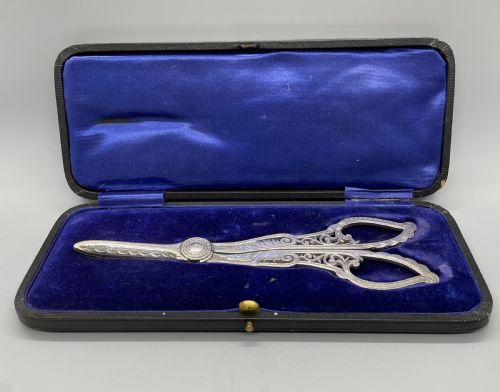
Sterling Silver Shears
Sterling silver shears primarily take the form of specialised grape scissors, offering a refined method for serving fruit at formal dining tables.
Sterling Silver Shears
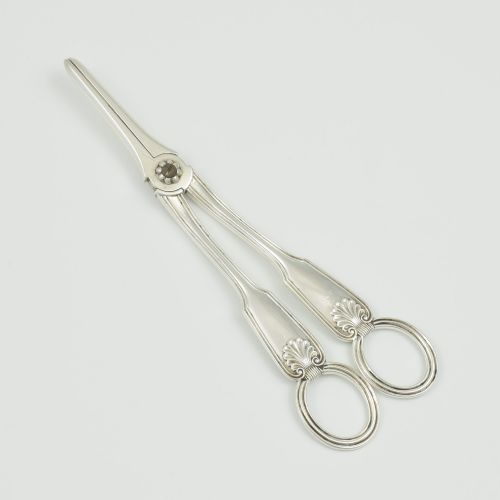
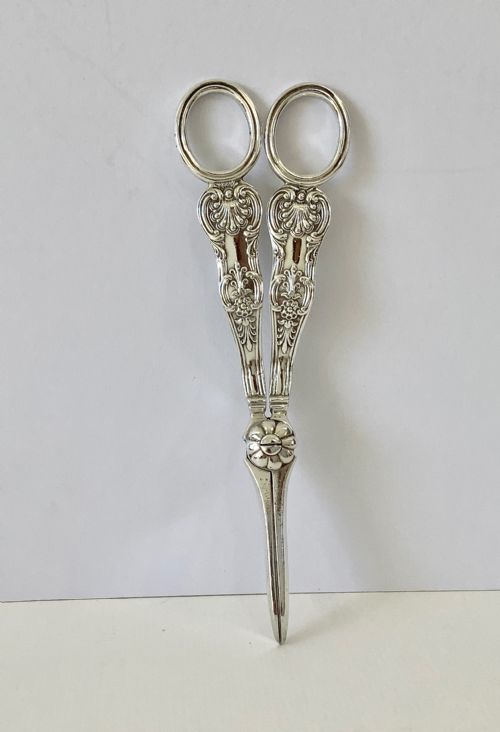
When searching for sterling silver shears, collectors encounter specialised instruments designed specifically for harvesting individual portions of fruit from a bunch at the dining table. The dominant form on this page is the grape scissor, produced extensively throughout the Victorian and Edwardian eras, alongside related cutlery and barware.
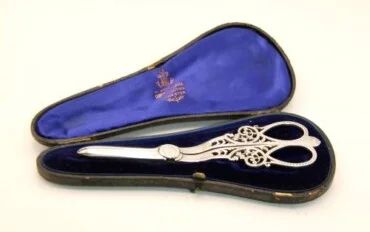
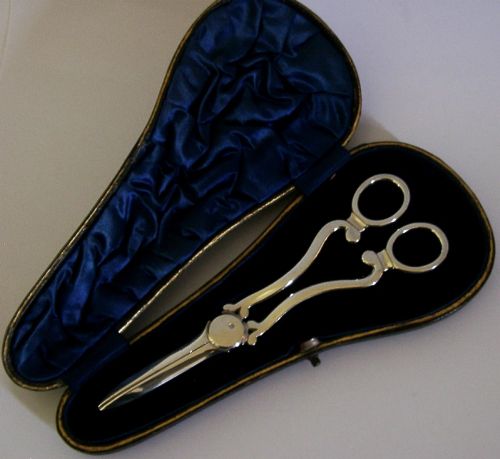
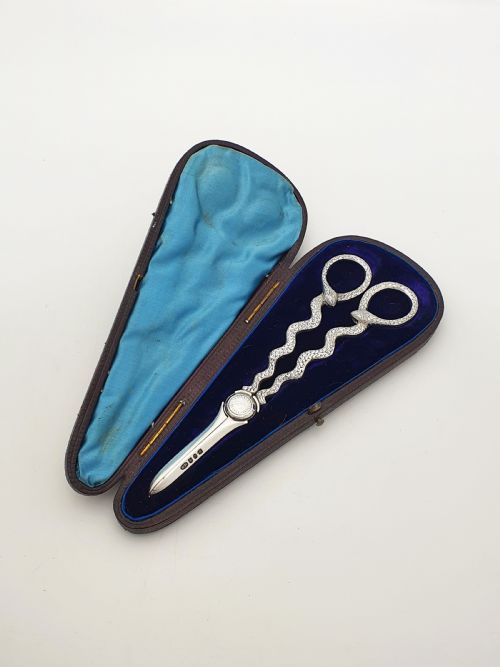
Makers fashioned these implements with robust handles and short, stout blades that allowed guests to snip grape stems cleanly without bruising the fruit. Many surviving examples retain their fitted cases lined with velvet, leatherette, or silk, indicating their original use as prestige presentation pieces and wedding gifts.
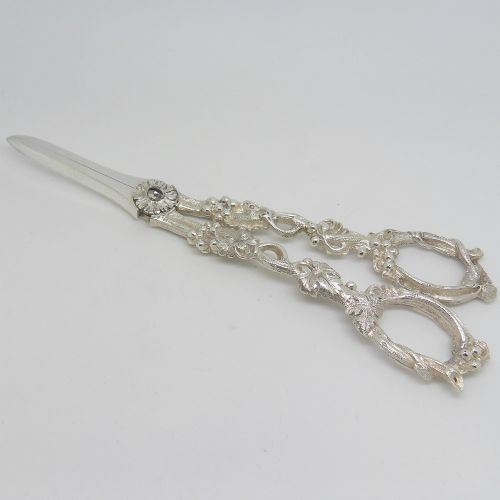
The historical span represented in the archive stretches from the Georgian period through the mid-twentieth century, encompassing styles such as Gothic Revival, William IV, and Art Deco. Buyers find both plain polished forms and ornate cast variations featuring vine motifs and figural handles.
Materials and Method of Manufacture
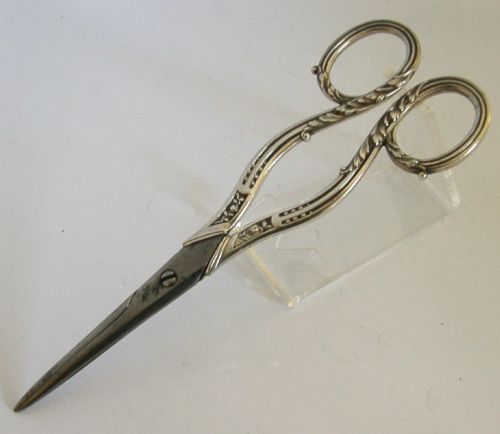
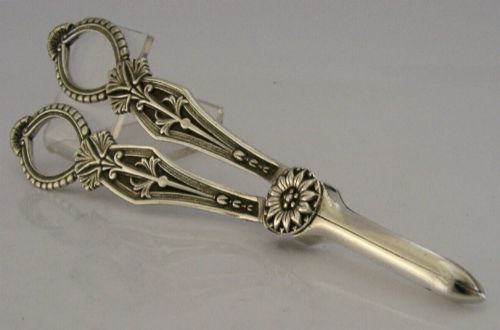
Silversmiths utilised sterling silver and silver gilt for the main body of the shears, frequently pairing the precious metal with steel blade inserts to ensure a sharp, durable cutting edge. Handles were often cast in high relief using intricate moulds, depicting naturalistic grape vines, beaded patterns, or serpentine shapes.
Makers stamped hallmarks onto the handles or blades to record the assay office, standard of silver, and date letter, providing a reliable paper trail of British and international production. Cased sets demanded supplementary craftsmanship in wood covered with leather, satin, and velvet to house the instrument securely.
Victorian diners required dedicated scissors just for grapes, proving that historical etiquette demanded a specialised tool for every single fruit.
Distinctions in Quality and Execution
The calibre of a pair of sterling silver shears rests primarily on the depth and definition of the cast decoration and the weight of the silver used in construction. Substantial gauge metal and crisp detailing on vine leaf handles distinguish superior workshop output from simpler, lighter stamped alternatives.
The presence of original fitted cases lined with satin or velvet adds significantly to the completeness of an object. Furthermore, matching assay marks across components and the survival of gilding on the interior blades denote a higher standard of original preservation.
Goldsmiths & Silversmiths Co.·Gibson & Langman·Charles Reily & George Storer·Paul Storr·Chawner & Co·Elizabeth Eaton·Charles Boyton·C.J. Vander
The Sterling Silver Shears Glossary
- Sterling Silver
- An alloy comprising 92.5 percent silver and 7.5 percent other metals, typically copper, chosen for durability in tableware. British pieces carry the lion passant hallmark to indicate this standard.
- Silver Gilt
- Sterling silver that has been coated with a thin layer of gold through an electrochemical or fire-gilding process. This technique protected the metal from the acidic juices of fresh fruit.
- Cast Silver
- A method where molten silver is poured into a mould to create three-dimensional, high-relief handles. This technique allowed silversmiths to produce complex grapevine and figural designs.
- Hallmark
- A series of official marks stamped onto precious metal items indicating the maker, assay office, purity, and year of manufacture. They serve as the primary tool for dating antique silver.
- Harlequin
- A term describing a matched set or grouping where individual pieces originate from different makers or years but share a cohesive stylistic theme.
Sterling Silver Shears: Frequently Asked Questions
What were sterling silver shears used for?
These implements were specifically manufactured to sever individual stems of grapes during formal nineteenth-century dining. Guests used them at the table to avoid handling the fruit directly.
Over time, collectors repurposed them as decorative barware or specialised serving pieces. They remain functional today for entertaining and table styling.
How can I date my silver grape scissors?
Dating relies heavily on the assay office hallmarks stamped directly onto the silver handles or blades. These marks include specific symbols and date letters corresponding to active registry years.
Stylistic cues also help narrow the period, such as heavy Gothic revival casting versus clean Edwardian beaded patterns. Matching the design motifs to known production decades provides a reliable secondary guide.
Why do some grape scissors have gilded bowls?
The gold wash, known as silver gilt, was applied to protect the underlying sterling silver from the natural acids present in fresh fruit. Acidic grape juice could tarnish or pit untreated silver over prolonged contact.
This protective layer also created an appealing visual contrast against the polished exterior of the handles. Surviving gilding often indicates a piece received careful, sparing use.
How do I care for antique silver shears?
Regular maintenance involves gentle dusting with a soft microfiber cloth to prevent tarnish accumulation. When cleaning becomes necessary, use a non-abrasive silver polish formulated specifically for antiques.
Avoid submerging cased pairs in water, as moisture damages the original velvet, silk, and leatherette linings. Store them in dry conditions away from direct sunlight to preserve the lining fabrics.