


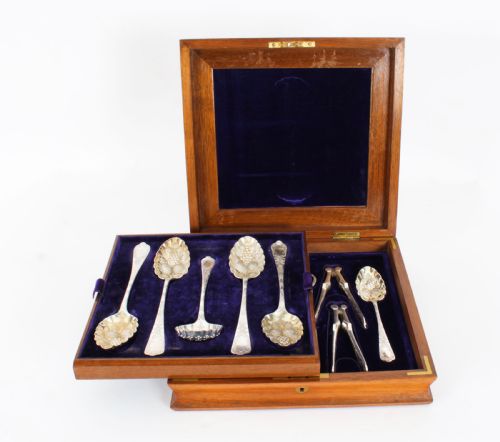
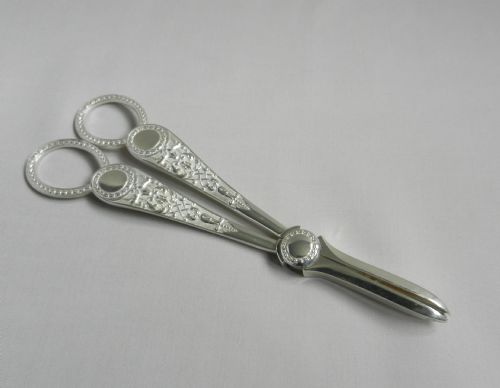
Victorian Dessert Scissors
Victorian dessert scissors are dedicated dining implements designed for the table, offering a refined way to portion fruit.
Victorian Dessert Scissors
Victorian dessert scissors are specialised implements designed specifically for portioning fruit at the dining table, most commonly appearing as grape scissors or grape shears. These pieces date across the nineteenth century, with examples emerging from the early Victorian period through to eighteen ninety.
The inventory on this page centres primarily on sterling silver and silver plate forms, alongside associated fruit serving sets and serving tongs. Buyers encounter both plain and ornately engraved designs, occasionally accompanied by fitted presentation boxes lined with velvet or leatherette.
How they were made
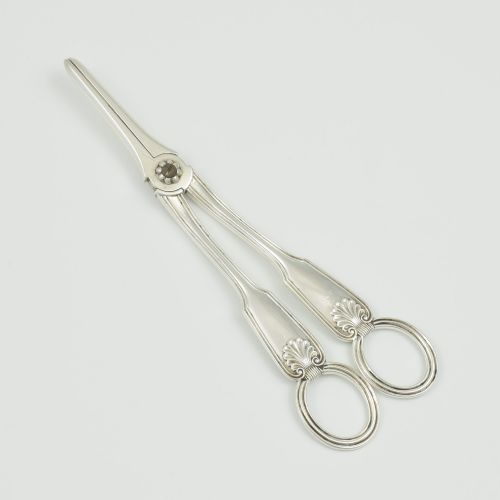
Silversmiths utilised solid sterling silver or silver plate over a base metal, frequently applying gold gilt highlights to the interior of blades or handles. Manufacturing techniques combined traditional casting with detailed hand engraving to achieve ornamental surfaces.
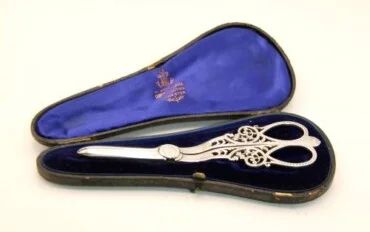
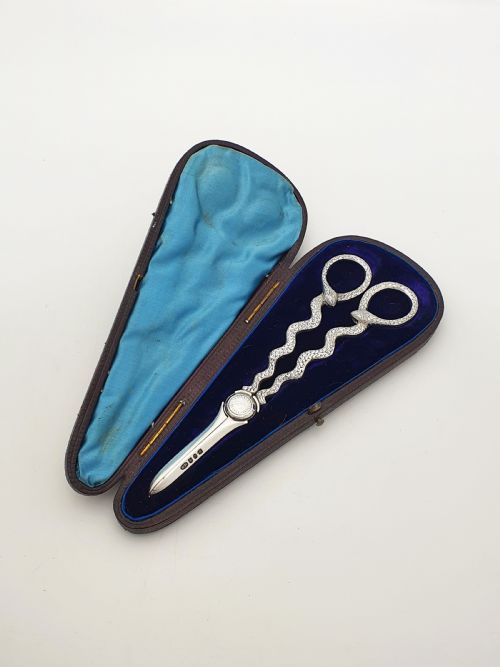
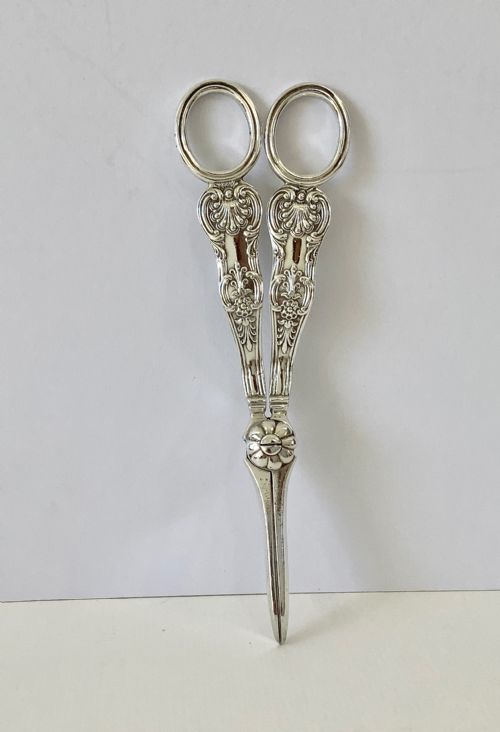
Handles often display intricate sculptural work, such as cast snake motifs or floral patterns, joined to functional cutting blades built for severing fruit stems cleanly.
Listings feature sterling silver, silver plate, and gold gilt materials across nineteenth-century periods including eighteen eighty and eighteen ninety.
What varies in quality
Quality rests upon the crispness of the cast decoration and the depth of the hand engraving across the handles and blades. Pieces originating from notable workshops or bearing clear hallmarks demonstrate superior silversmithing standards compared to unmarked or plated alternatives.
The presence of original fitted boxes lined in materials like leather or velvet elevates the standing of a set, as does the survival of supplementary pieces such as fruit knives or nutcrackers.
Goldsmiths And Silversmiths Co·Gibson And Langman·Reilly And Storer·Hukin And Heath
The Victorian Dessert Scissors Glossary
- Sterling silver
- A standard alloy consisting of ninety-two point five percent silver by mass, widely utilised for quality Victorian flatware and cutlery.
- Silver plate
- A layer of silver applied to a base metal core, offering the appearance of solid silver at a different tier of production.
- Silver gilt
- Sterling silver that has been coated with a thin layer of gold, often found on the working parts of dessert implements.
- Fruit set
- A matched grouping of dining pieces, such as scissors, spoons, and nutcrackers, housed together in a fitted presentation box.
Victorian Dessert Scissors: Frequently Asked Questions
How were grape scissors used?
Diners used these short, sturdy scissors to snip individual clusters of grapes from a larger bunch without touching the fruit by hand. This maintained proper etiquette during formal dessert courses.
The design allowed guests to serve themselves neatly from a central fruit bowl onto their own plates.
What materials are common?
Sterling silver and silver plate dominate the surviving examples, frequently paired with gold gilt washes on the blades. Handles occasionally incorporate cast figural elements like snakes or floral motifs.
Fitted cases lined with velvet, leather, or leatherette often accompany complete fruit serving sets.
How do I identify a period piece?
Dating relies upon stylistic details, maker marks, and silver hallmarks stamped directly onto the metal. Nineteenth-century pieces typically exhibit specific handle designs and engraving styles characteristic of early and late Victorian manufacture.
Consulting recorded maker names from the era helps confirm the workshop origin.