


Silver Dessert Shears
Silver dessert shears are specialised serving implements designed for the table, prized for their ability to portion fruit cleanly.
Silver Dessert Shears
Silver dessert shears appear under this search phrase as functional implements primarily intended for portioning fruit at the table. The examples met on this page span the nineteenth and twentieth centuries, incorporating Victorian and Edwardian periods alongside later twentieth-century iterations.
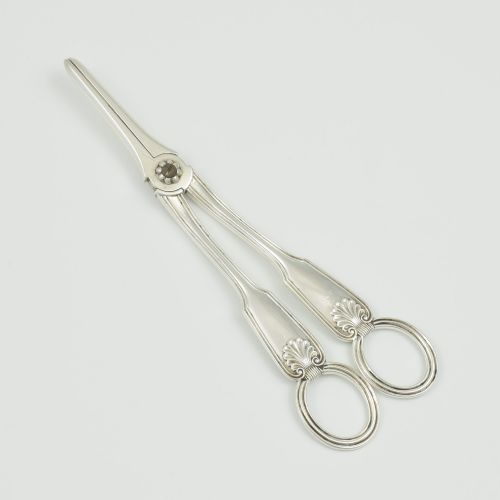
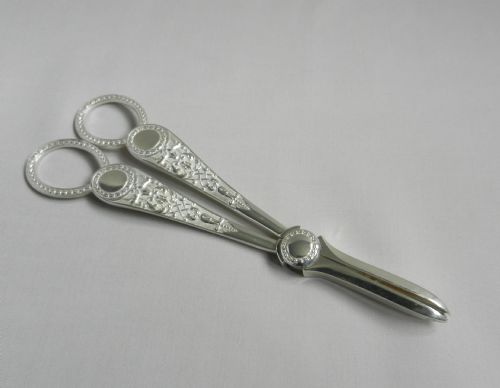
Most pieces function as grape scissors or grape shears, designed specifically to snip individual clusters from the vine without bruising the fruit. Forms range from simple everyday cutlery to ornate serving pieces meant for formal dining.
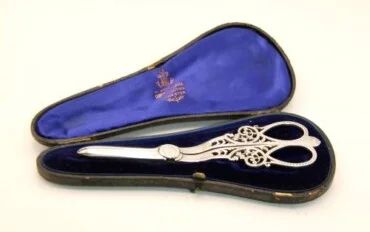
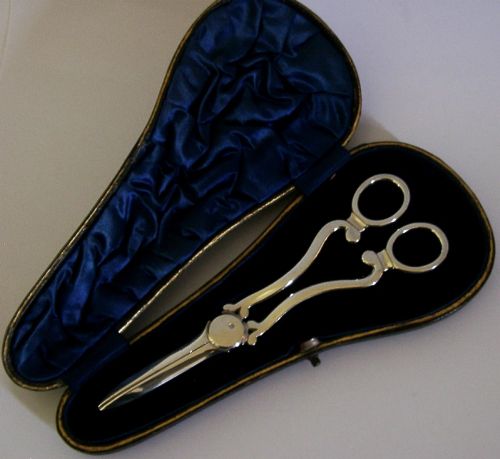
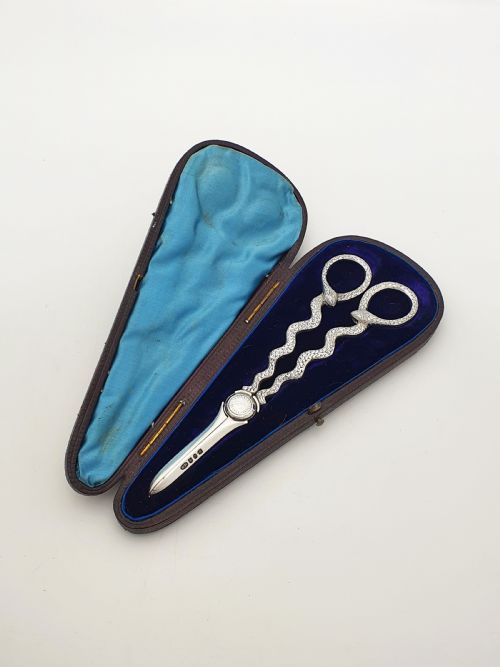
Makers produced these tools in sterling silver and silver plate, frequently pairing them with fitted presentation boxes lined in velvet, satin, or leatherette. Stylistic influences include Gothic Revival designs and sculptural motifs such as snake handles.
Materials and construction
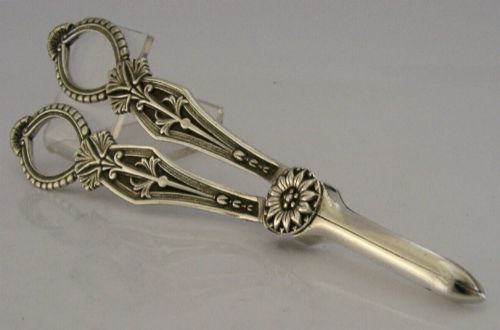
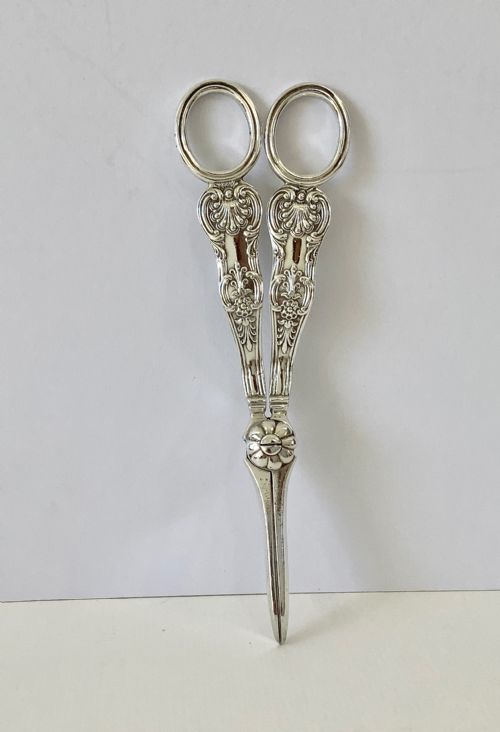
Silversmiths utilised sterling silver and silver plate as the primary structural materials for these implements, sometimes applying a layer of gold wash known as silver gilt to the interior surfaces. Cast silver techniques allowed workshops to produce robust handles with high relief ornamentation.
Cutting blades and bows required careful shaping and tempering to ensure a clean action when snipping stems. Manufacturers housed finer sets in protective cases covered in leather or textured leatherette, lined with soft velvet or satin to prevent surface scratching.
Materials recorded across the inventory range from solid sterling silver and silver gilt to silver plate, accompanied by velvet and leather presentation cases.
Factors determining quality
Quality rests upon the weight of the metal and the sophistication of the manufacturing process, distinguishing heavier cast pieces from lighter stamped alternatives. Substantial weight in the hand indicates a more robust construction suited to heavy barware or formal service.
The degree of hand-engraving and the presence of figural elements, such as serpent handles, elevate the artistic merit of a pair. Furthermore, the inclusion of an original fitted case lined in silk velvet or satin enhances the completeness of the object.
Goldsmiths & Silversmiths Co·Gibson & Langman·Reilly & Storer
The Silver Dessert Shears Glossary
- Sterling silver
- A silver alloy containing 92.5 percent pure silver by mass, with the remainder consisting of other metals like copper. This standard defines the majority of high-grade British table cutlery.
- Silver gilt
- Sterling silver that has been coated with a thin layer of gold, providing a rich two-tone appearance. This finish appears frequently on the interior blades of specialised fruit servers.
- Gothic Revival
- An architectural and decorative style popular during the nineteenth century, characterised by medieval motifs and pointed arches. Implements styled in this manner display heavier, structured ornamentation.
- Silver plate
- A base metal substrate coated with a thin layer of silver through electroplating or older techniques. It offered an accessible alternative to solid sterling for dining accessories.
Silver Dessert Shears: Frequently Asked Questions
What are silver dessert shears used for?
These implements were designed specifically for cutting clusters of grapes and portioning fruit at the dining table. Their specialised shape allowed diners to serve fruit neatly without damaging surrounding clusters.
They also found a place in serving fruit and nut selections during formal Victorian and Edwardian meals.
How do I identify a Victorian pair?
Victorian examples often feature heavy cast construction, ornate floral engraving, or distinct stylistic details like Gothic Revival motifs. Look for period hallmarks or manufacturer marks stamped onto the metal.
Makers during this era frequently employed sculptural elements, such as snake handles, which help date the piece.
Are these made of solid silver?
The listings include both solid sterling silver and silver plate variants. Sterling pieces contain standard British hallmarks indicating purity and assay office origin.
Silver plate items offer a similar aesthetic using a base metal coated in a layer of silver.
How should I store them?
Many pairs come in original fitted cases lined with velvet, satin, or leatherette. Keeping them in these protective boxes prevents tarnishing and guards against accidental surface scratches.
If stored without a case, wrap them in acid-free tissue to limit exposure to atmospheric moisture.