


Antique Fruit Scissors
Antique fruit scissors are specialised silver implements designed for the table, offering a refined way to serve fruit.
Antique Fruit Scissors
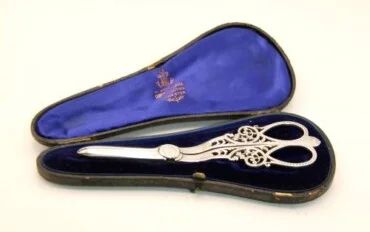
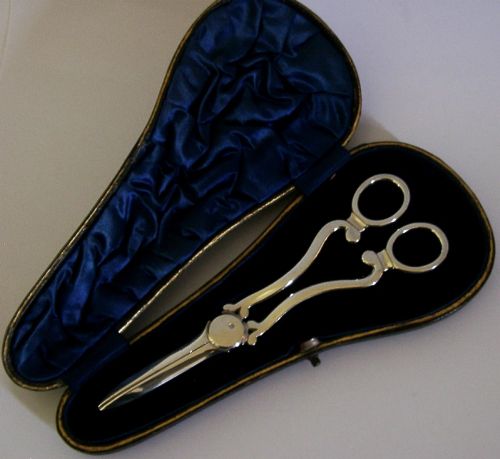
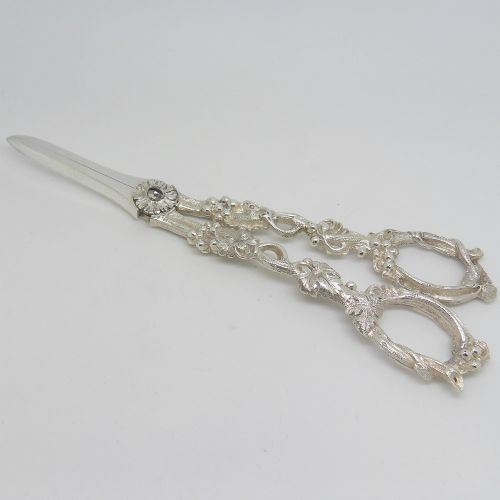
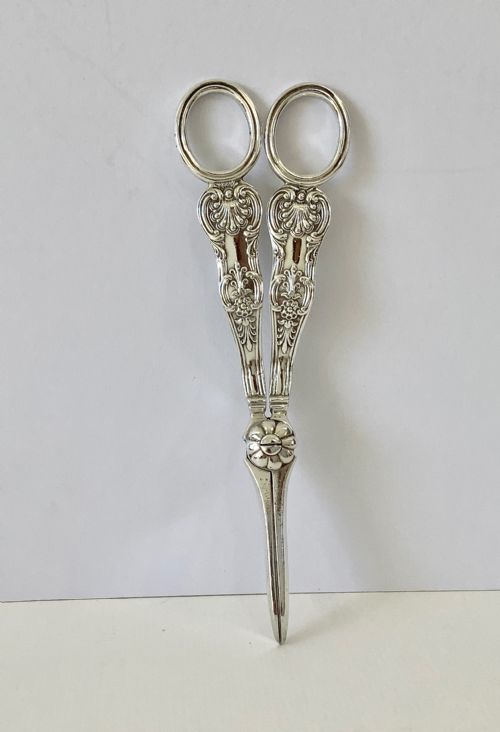
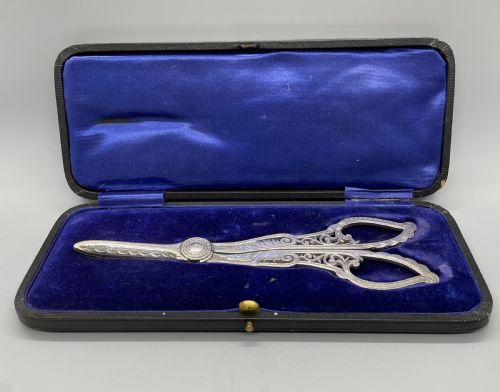
When you search for antique fruit scissors, you encounter specialised cutting implements created for the formal dining table. The selection centres primarily on grape scissors and shears, often accompanied by fitted presentation cases lined with velvet, silk, or satin.
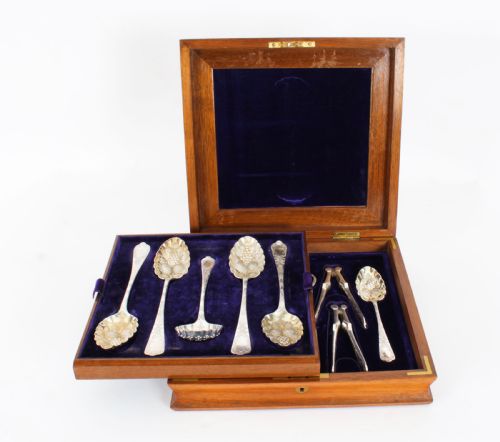
Most examples date from the Victorian and Edwardian periods, stretching from the William IV era into the mid-twentieth century. You will frequently find them paired with spoons, knives, and nutcrackers as part of larger fruit serving sets.
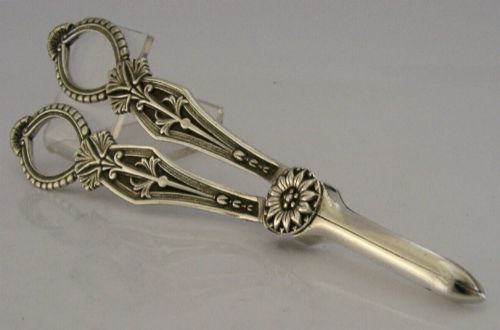
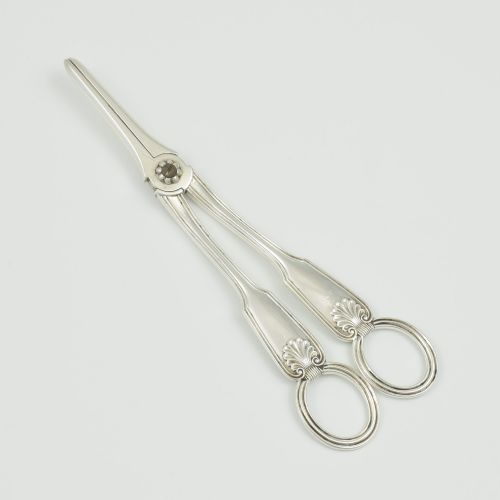
The dominant material across these forms is sterling silver, though silver plate alternatives also appear. Designs range from plain polished finishes to ornate cast vine decorations and engraved motifs.
Assessing quality
Quality rests upon the weight of the silver and the crispness of the engraved or cast botanical details. Heavier gauges and detailed vine motifs indicate superior work.
The presence of a matching, fitted case lined in silk or velvet elevates the standing of a piece compared to loose items.
Goldsmiths & Silversmiths Co·Charles Reily & George Storer·Paul Storr·Chawner & Co·Hukin & Heath·C.J. Vander
The Antique Fruit Scissors Glossary
- Grape scissors
- Implements specifically shaped for severing individual clusters of fruit at the dinner table. They feature short, sturdy blades designed to handle stems cleanly.
- Sterling silver
- A silver alloy containing 92.5 percent pure silver by mass, forming the primary material for most listed items. It provides durability and a bright finish.
- Silver plate
- A layer of silver applied to a base metal core, offering the appearance of solid silver at a different tier of manufacture. This technique appears on serving sets.
- Gilt
- A thin layer of gold applied to the surface of silver, creating a two-tone decorative effect seen on specific Victorian pairs.
- Hallmark
- An official stamp applied by an assay office to indicate metal purity, origin city, and date of manufacture.
Antique Fruit Scissors: Frequently Asked Questions
What are antique fruit scissors used for?
These implements were utilised at the dining table specifically for cutting small bunches of grapes or other fruit from a larger cluster without damaging the surrounding produce.
They allowed diners to serve fruit cleanly and with proper etiquette during formal meals.
How do I identify a Victorian pair?
Victorian examples frequently display ornate cast vine decoration, heavier silver weights, and specific hallmarks denoting nineteenth-century assay offices.
Many of these nineteenth-century items also arrive in original fitted presentation cases lined with silk or velvet.
Are all fruit scissors made of solid silver?
While the majority of pieces utilise sterling silver, some examples are constructed from silver plate over a base metal.
Examining the hallmarks or surface wear helps distinguish between solid silver and plated alternatives.
How should I store boxed fruit sets?
Keep the items inside their original leather, leatherette, and textile-lined cases to protect the silver from excessive tarnishing and surface scratches.
Store them in a dry environment away from direct sunlight to preserve the internal velvet, silk, or satin linings.