



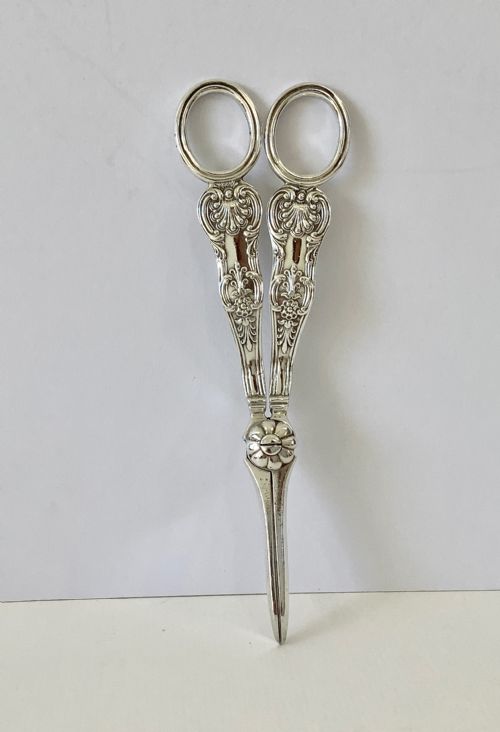
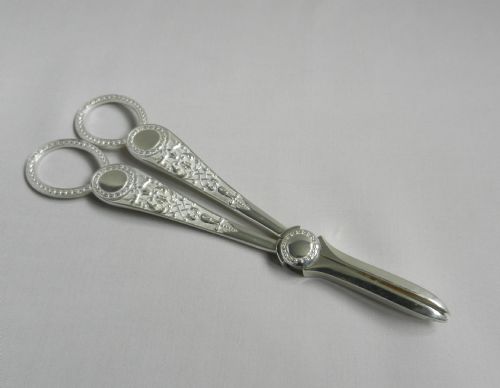


Silver Grape Shears
Silver grape shears are purpose-built dining implements designed for cleanly snipping clusters of fruit at the table.
Silver Grape Shears
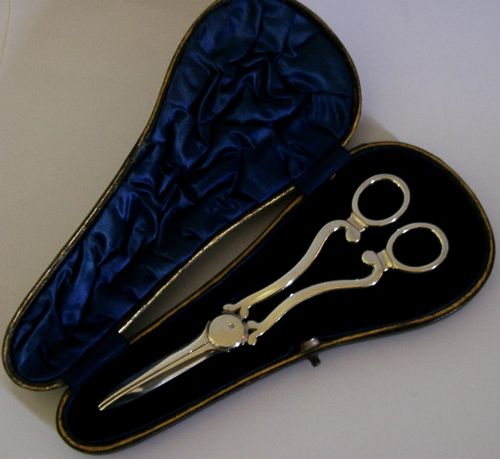
Silver grape shears are specialised implements designed specifically for cutting clusters of grapes at the dining table during dessert courses. These items appear across several distinct historical periods, including the Georgian, William IV, Victorian, and Edwardian eras, extending into mid-century production.
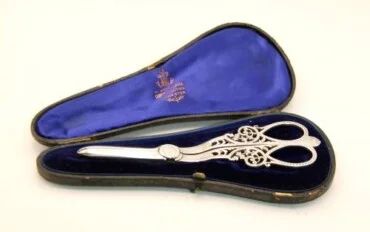
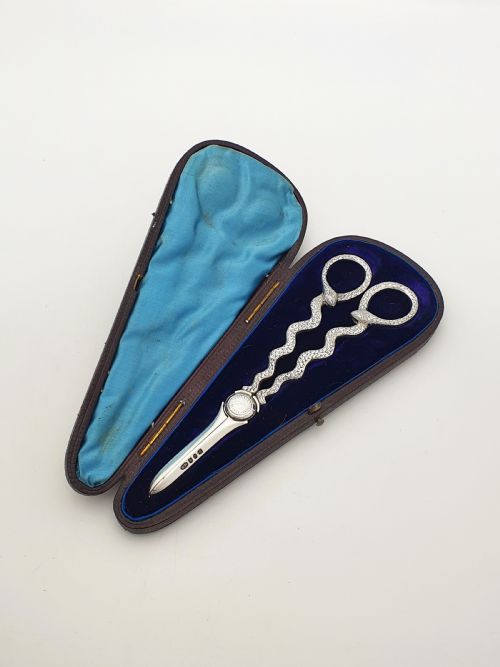
The form typically comprises sturdy loop handles paired with short, robust blades engineered to snip through woody vine stems cleanly without bruising the fruit. Many examples survive complete with their original fitted presentation cases lined in silk and velvet.
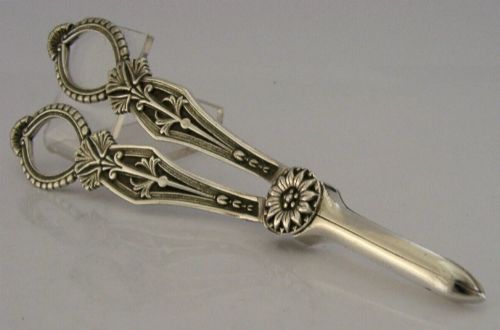
Makers produced these implements in various established dining patterns such as Kings Pattern and Bead Pattern, alongside ornate motifs featuring cast acanthus leaves or grape vine decoration.
Materials and construction
Silversmiths constructed these pieces primarily using sterling silver, frequently employing casting techniques to achieve substantial weight and rigid structural integrity in the handles and bows. Cast elements allowed workshops to execute intricate dimensional motifs like figural bacchanalia masks and naturalistic trailing vines with sharp relief.
Fitted presentation boxes utilised protective interior linings of silk and velvet to cushion the silver implements safely during storage and transport.
Silver Grape Shears Retail Price Guide 2026
Typical asking prices for silver grape shears among the pieces listed under this phrase on Sellingantiques today, from the lower quarter to the upper quarter. They describe what is for sale here now, not the wider market.
Victorian silversmiths occasionally incorporated tiny hiding squirrels scampering among cast grapevines on the handle.
The spectrum of quality
Quality in these implements rests upon the depth and crispness of the cast ornamentation, where sharply articulated vine leaves and three-dimensional figures distinguish superior examples from simpler, flat-chased versions. Substantial weight and solid gauge metal provide a tactile heft that signals elevated craftsmanship by notable makers.
The presence of a matching, original fitted case lined in silk or velvet enhances the completeness and desirability of an ensemble, particularly when the internal housing remains entirely intact.
Paul Storr·Chawner And Co·C J Vander·Elizabeth Eaton·Francis Higgins·Charles Boyton·Mappin And Webb
The Silver Grape Shears Glossary
- Sterling silver
- A standard alloy composed of 925 parts silver per thousand, utilised extensively across British silversmithing for functional tableware.
- Cast
- A manufacturing method where molten silver is poured into a mould to form solid, three-dimensional decorative handles and sturdy bows.
- Kings pattern
- A traditional decorative flatware and cutlery outline featuring an ornate shell and scroll motif at the terminal.
- Bead pattern
- A classic border design characterised by a continuous row of small raised spherical ornaments along the edge of the handle.
Silver Grape Shears: Frequently Asked Questions
What are silver grape shears used for?
These implements were utilised at the dining table to sever individual portions of fruit from a larger hanging bunch during formal dessert courses.
Using dedicated scissors prevented diners from handling the main cluster directly and kept sticky juices away from fingers.
How do you store silver grape shears?
Keeping the implements inside a dry environment helps prevent tarnishing on the sterling silver surface over time.
Original fitted cases lined with silk and velvet provide dedicated slots that secure the blades and handles safely.
Are all grape shears made of solid silver?
The pieces recorded across these historical periods consist of solid sterling silver rather than plated base metals.
Hallmarks stamped directly onto the metal confirm the standard of the silver and identify the assay office and year of production.
How can you tell the age of grape shears?
Official hallmarks struck into the sterling silver provide clear markers including date letters corresponding to specific assay office records.
stylistic indicators such as cast acanthus scrolls or figural vine decoration also point toward specific design periods like the Victorian or Georgian eras.