



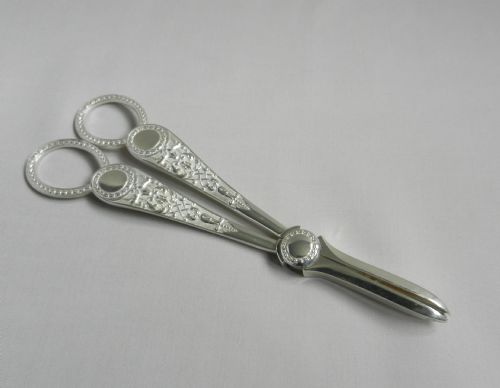
Vintage Silver Grape Cutter
These vintage silver grape cutter examples are purpose-built table implements designed to harvest fruit gracefully at dessert.
Vintage Silver Grape Cutter
When you search for a vintage silver grape cutter, you are looking at specialised dining implements designed specifically for severing small bunches of grapes at the table. The forms appearing on this page span the nineteenth century, the Edwardian era, and the mid-twentieth century.
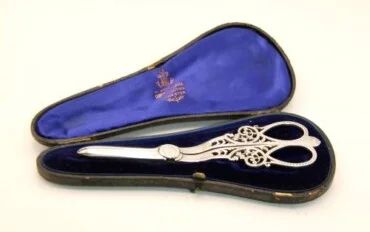
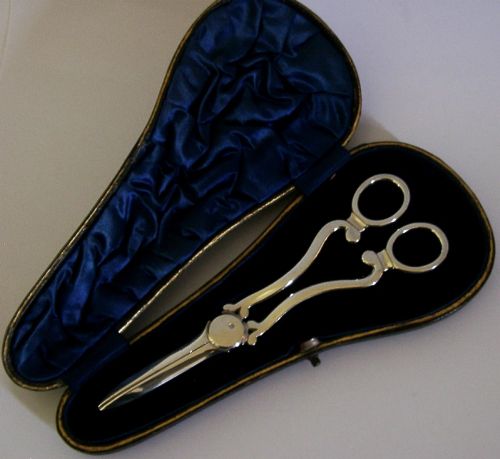
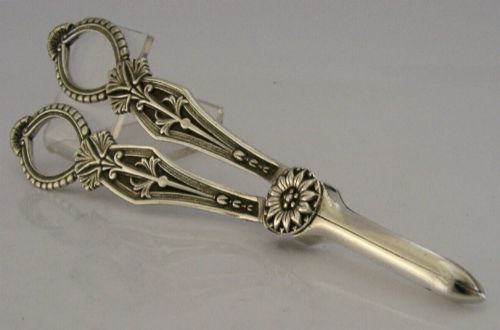
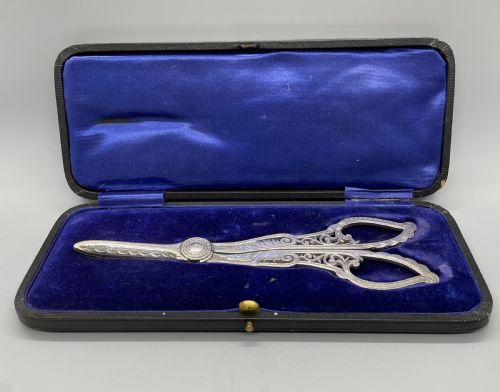
The objects themselves appear primarily as heavy shears or scissors, occasionally housed in fitted presentation cases lined with silk, satin, or velvet. Surviving examples demonstrate origins rooted in Victorian, Edwardian, William IV, and Gothic Revival design traditions.
The versions most commonly met here are sterling silver shears, sometimes enhanced with silver gilt surfaces. Buyers frequently encounter these implements accompanied by original leatherette or leather cases designed for safe storage.
How they were made
The pieces on this page are formed predominantly from sterling silver, with select examples receiving a layer of silver gilt. Makers utilise substantial metal gauges to ensure the shears possess the necessary weight and balance for fruit service.
Workshops housed these implements in fitted protective boxes lined with delicate textiles including silk, satin, velvet, and leatherette. The exterior housings typically utilise durable leather or simulated leather finishes to safeguard the silver blades and handles.
Listings span multiple eras from the year eighteen hundred through to nineteen sixty, capturing shifts in silver design.
What varies in quality
The distinction between standard examples and exceptional pieces rests upon the weight of the metal and the complexity of the handle ornamentation. Heavier gauges of sterling silver and sophisticated decorative motifs elevate certain items significantly above basic utility pieces.
The presence of a fitted presentation case lined with silk, velvet, or satin alters the character of a piece entirely. Original housing demonstrates a higher level of original commissioning and preserves the instrument more effectively over time.
Charles Reily and George Storer·Paul Storr
The Vintage Silver Grape Cutter Glossary
- Grape shears
- Specialised scissors designed with short, stout blades and curved bows to harvest individual portions of fruit without crushing surrounding grapes. They represent the primary functional form seen in these listings.
- Silver gilt
- Sterling silver that has been coated with a thin layer of gold, providing a rich yellow lustre over the white metal. This treatment appears on select nineteenth century dessert implements.
- Gothic Revival
- An architectural and decorative style drawing inspiration from medieval forms, characterised in these listings by pointed arches and heavy ornamentation. Pieces from this movement display robust proportions and distinctive texturing.
- Leatherette
- A simulated leather material utilised for the exterior covering of fitted presentation boxes. It provides a durable protective shell for delicate textiles stored within.
- Sterling silver
- The standard alloy of silver containing a high proportion of pure metal, ensuring durability and lustre for domestic dining implements. This material forms the structural foundation of nearly every listing here.
Vintage Silver Grape Cutter: Frequently Asked Questions
What are vintage silver grape cutters used for?
These instruments serve the specific purpose of severing small clusters of grapes from a larger bunch during formal dessert courses. They allow diners to take fruit cleanly without handling the entire stem.
Using dedicated shears prevents bruising on neighbouring fruit and maintains the presentation of the table setting. They function as both a practical utensil and a decorative element of historical dining habits.
How do I care for silver grape shears?
Silver implements require gentle cleaning with appropriate silver polish to maintain their reflective surface and prevent tarnish accumulation. Regular, careful wiping after minimal handling keeps the metal stable.
Storing the shears inside their original fitted cases protects the delicate silk or velvet linings and prevents accidental scratching. Avoiding harsh abrasive cleaners preserves any subtle ornamentation or silver gilt surfaces present on the handles.
How can I tell Victorian grape shears apart from Edwardian examples?
Victorian examples often display heavier ornamentation, including ornate floral motifs, cast details, or Gothic Revival influences. The metal gauge on these nineteenth-century pieces tends to feel substantial in the hand.
Edwardian pieces generally exhibit lighter, more refined decorative schemes reflective of changing aesthetic preferences at the turn of the twentieth century. Hallmarks stamped into the silver provide the definitive guide to exact chronological placement.
Why do some grape scissors come in fitted boxes?
Fitted presentation boxes protected delicate dining implements from damage when stored in sideboards or transported. The internal linings of silk, satin, or velvet cushioned the silver against knocks.
Such cases indicate that the shears were likely intended as gifts or formed part of a comprehensive dessert service. Survival of the original case adds significant context to the history of the object.