



Victorian Silver Shears
When searching for victorian silver shears, expect specialised cutting implements designed primarily for serving fruit at the dining table.
Victorian Silver Shears
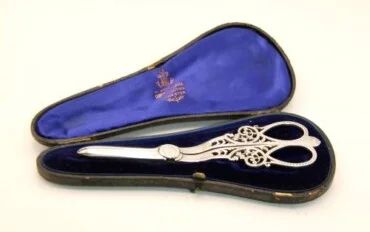
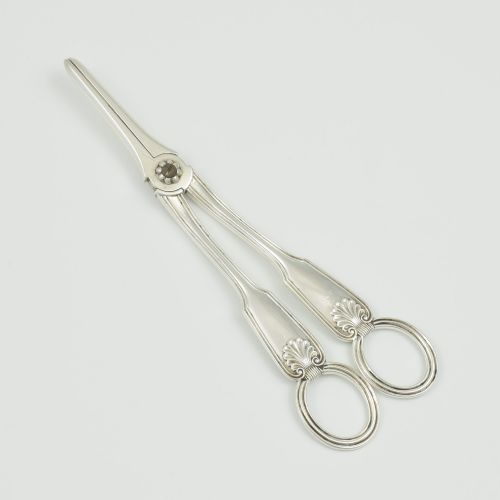
The pieces grouped under victorian silver shears comprise specialised grape scissors and fruit service implements alongside sewing accessories and general cutlery. Grape scissors dominate the selection, often appearing singly or paired within fitted cases lined in silk and velvet.
Most examples originate from the nineteenth century, spanning William IV, early Victorian, and Edwardian periods. Makers utilised silver plate and sterling silver, frequently pairing metal blades and handles with steel cutting edges.
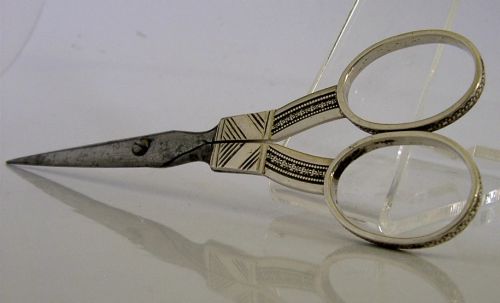
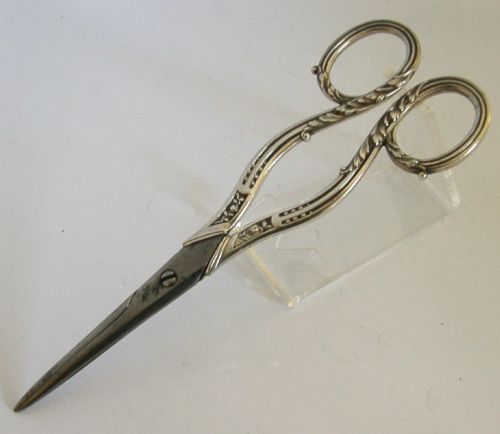
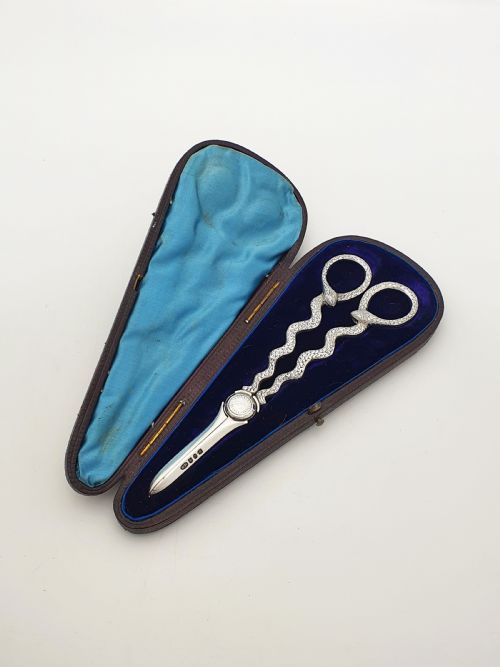
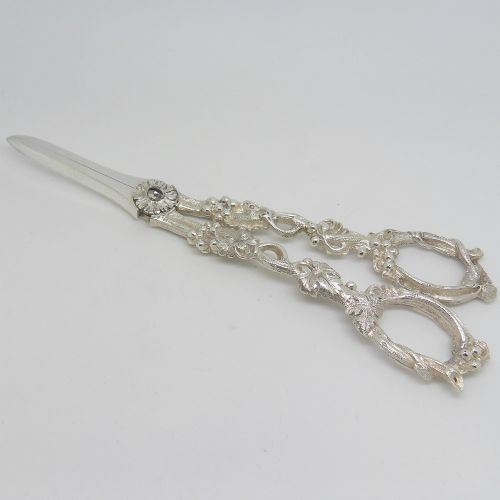
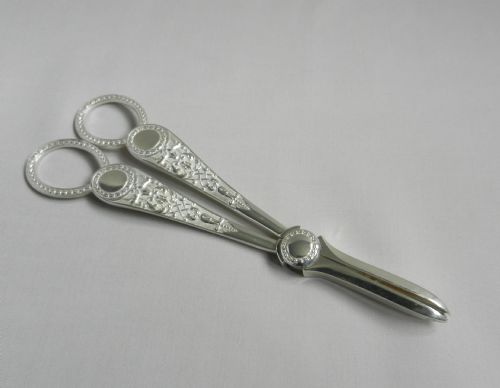
Forms vary from plain cast designs to elaborately engraved items featuring grape vine decoration, acanthus leaf motifs, and snake handles. Alongside dedicated grape shears, the inventory includes sewing scissors and fruit and nut serving sets.
Materials and Technique
Silversmiths employed sterling silver and silver plate for handles and mounts, combining these with steel for the cutting edges to ensure a functional edge. Cases utilised leatherette, silk, and velvet interiors to protect the metalwork.
Techniques relied upon casting and hand engraving to ornament the handles with naturalistic motifs like vines and foliage. Silver gilt finishes appear on specific items, adding a layer of gold wash over the sterling silver base.
Some nineteenth-century silversmiths fashioned grape scissor handles into writhing serpents.
Assessing Quality
Quality rests upon the crispness of the cast ornamentation and the depth of the hand engraving on the handles. Heavier gauge silver and pieces retaining their original fitted silk and velvet cases command greater distinction.
The reputation of the maker's mark stamped into the metal distinguishes standard production from exceptional silversmith output. Complete fruit and nut serving sets preserved in original boxes represent the higher tier of survival.
Goldsmiths & Silversmiths Co·Gibson & Langman·Paul Storr·Chawner & Co·Reilly & Storer·Elizabeth Eaton·Francis Higgins·Charles Boyton·Martin Hall & Co
The Victorian Silver Shears Glossary
- Sterling Silver
- An alloy containing ninety-two point five percent silver by mass, with the remainder consisting of copper or other metals. This standard grade appears frequently across nineteenth-century tablewares.
- Silver Gilt
- Sterling silver that has been coated with a thin layer of gold through an electrochemical process or fire gilding. This technique gives the metal a warm yellow sheen.
- Cast Silver
- Molten silver poured into a mould to create three-dimensional relief patterns and figural handles. This method allows for intricate forms such as snake bodies or acanthus leaves.
- Hallmark
- A series of official marks stamped on items to certify the metal standard, place of assay, and year of manufacture. British pieces typically show a lion passant and maker's initials.
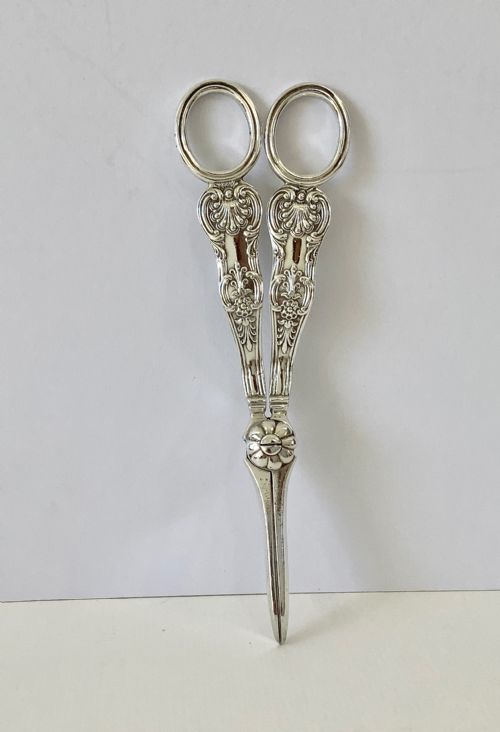
- Kings Pattern
- A traditional decorative flatware and cutlery pattern featuring a shell and scroll motif at the terminal. It remained popular throughout the nineteenth century.
Victorian Silver Shears: Frequently Asked Questions
What are grape shears used for?
These implements were designed specifically at the dining table for snipping small clusters of grapes from the main stem during dessert service. Their short, curved blades allowed diners to portion fruit cleanly without disturbing the rest of the bunch.
They formed part of larger fruit or dessert services alongside specialised spoons and nutcrackers, often housed together in dedicated presentation boxes.
How should cased shears be stored?
Original cases lined with silk and velvet provide structural protection against knocks and help reduce tarnishing from atmospheric exposure. Keeping the metal clean and dry before returning it to the fitted box prevents moisture retention.
Displaying the items out of direct sunlight preserves the original fabric linings and prevents the exterior leatherette or wood from fading.
How do I identify a Victorian period piece?
Victorian items often display hallmarks including date letters and sovereign duty marks that pinpoint the exact year of manufacture between eighteen thirty-seven and nineteen hundred. Stylistic clues such as naturalistic grape vine engraving and cast acanthus motifs also point to this era.
Makers' marks registered with British assay offices provide further documentation to confirm the exact decade of production.