

Antique Dessert Cutlery
Antique dessert cutlery brings silver, mother-of-pearl, and steel to the table in fitted cases for fruit and sweets.
Antique Dessert Cutlery
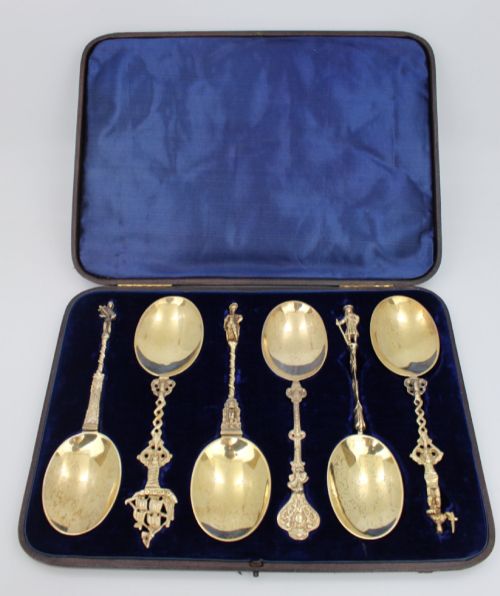
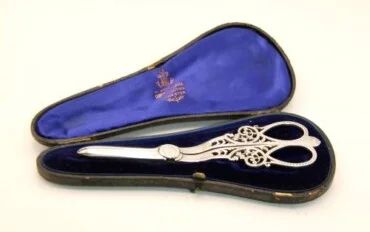
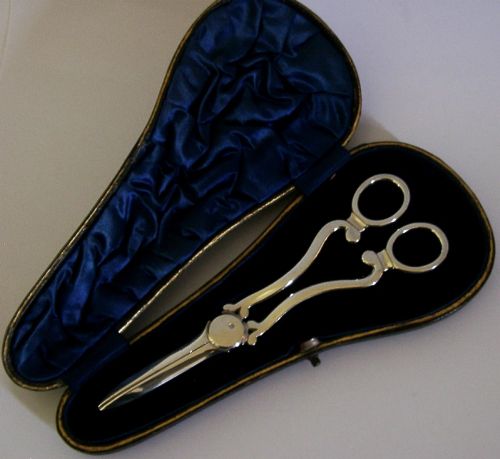
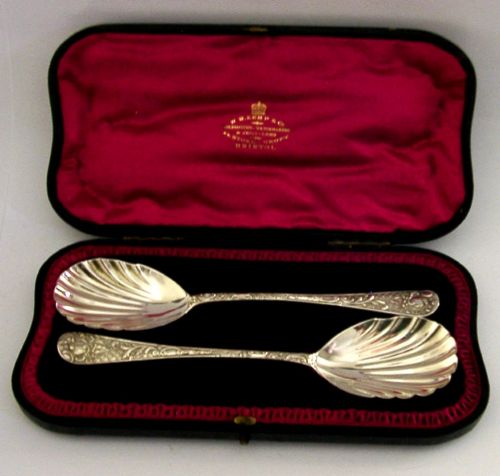
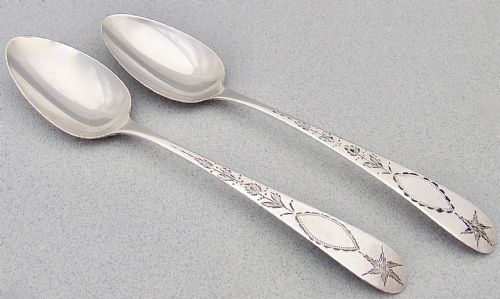
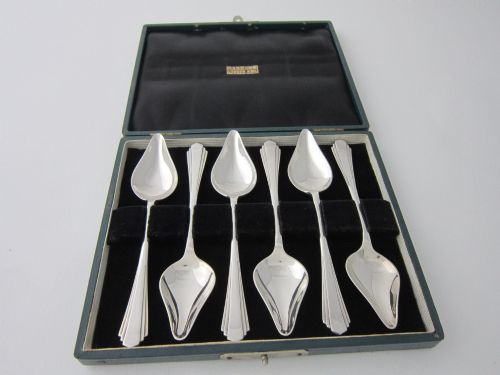
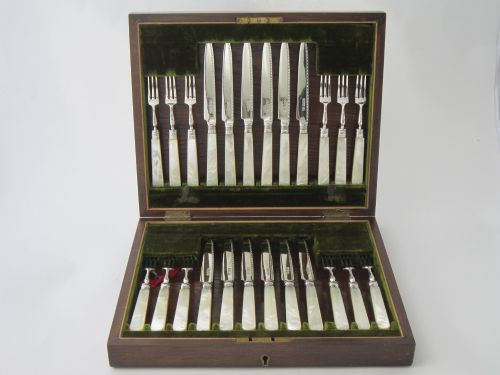
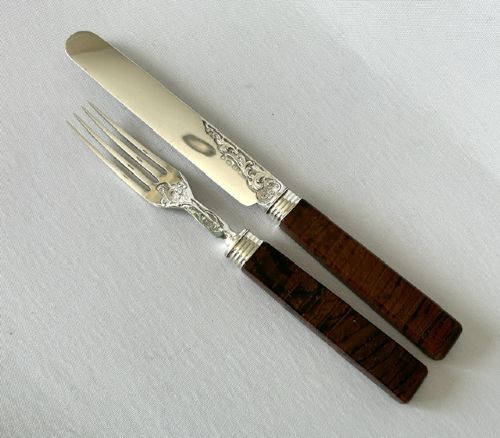
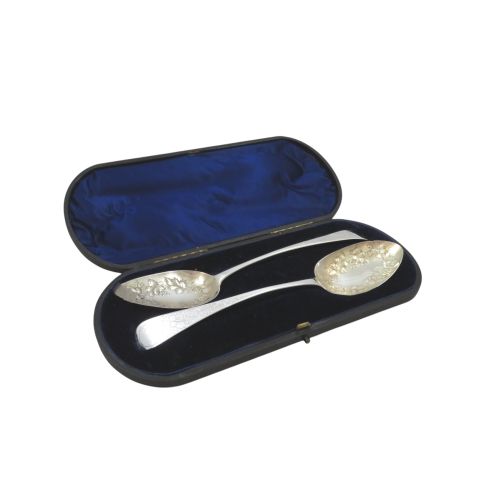
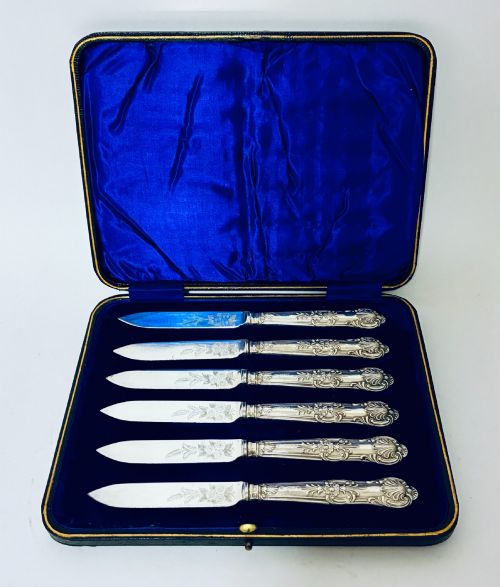
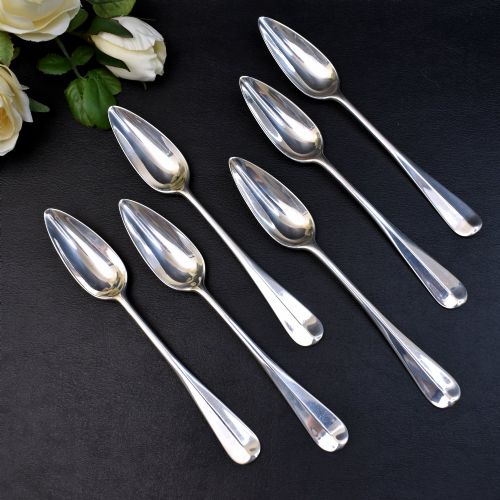
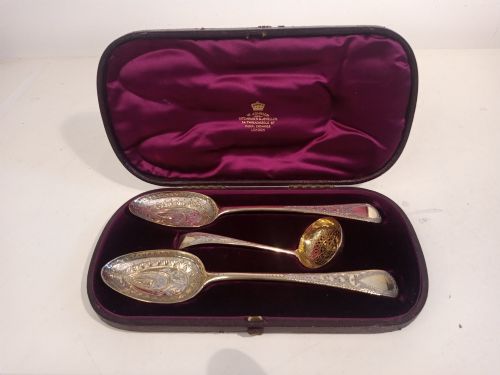
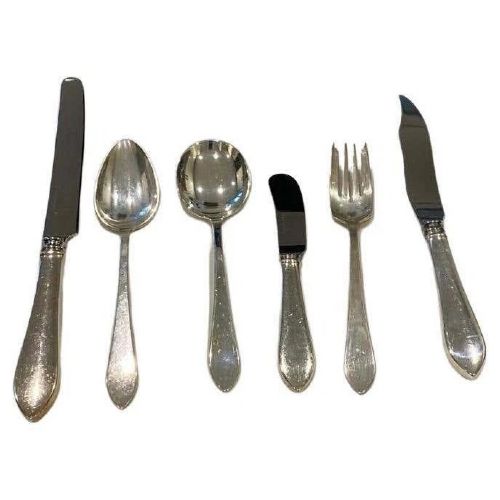
When you search for antique dessert cutlery, you are looking at specialised dining implements designed for the final courses of a meal, encompassing everything from fruit knives and forks to grape shears, berry spoons, and sugar sifters. The most frequent pieces you will encounter on this page are cased sets from the Victorian and Edwardian periods, combining silver or silver plate with handles of mother-of-pearl.
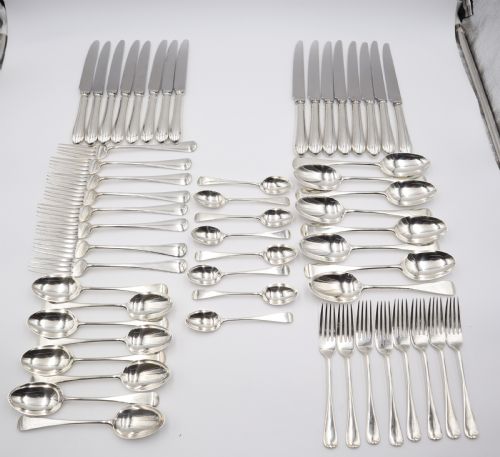
The selection ranges from Georgian individual serving spoons to complete sets of knives and forks housed in velvet or silk-lined oak and walnut canteens. Styles stretch across the nineteenth and twentieth centuries, featuring traditional floral engraving, Gothic Revival motifs, and later Art Deco geometric lines.
Materials and methods of construction
The construction of these pieces relies on the pairing of sterling silver or silver plate with organic grip materials such as mother-of-pearl, agate, porcelain, and carved bone. Blades and tines are frequently formed from steel or cast silver, sometimes accented with parcel-gilt finishes.
Handles are shaped and pinned by hand to tangs, while fitted presentation cases employ interior linings of velvet, satin, and silk to protect the metalwork and natural materials from wear.
Listings feature sterling silver, silver plate, mother-of-pearl, and steel across periods from the eighteenth century to the mid-twentieth century.
What separates the finest pieces
Quality in these implements rests upon the crispness of the chased or engraved ornament on the metal and the integrity of the fitted cases. Superior sets display careful matching of mother-of-pearl scales and precise balance in the hand.
The distinction between standard plated wares and solid sterling silver pieces, particularly those bearing the marks of specialised makers, defines the upper tiers of the collection.
John Pittar·Hamilton & Inches·William Chawner II·E Coker·Carrington·Georg Jensen·Tiffany
The Antique Dessert Cutlery Glossary
- Berry spoon
- A large serving spoon with an oversized bowl, heavily chased or embossed with fruit and foliage, often dating from the Georgian and Victorian eras.
- Grape shears
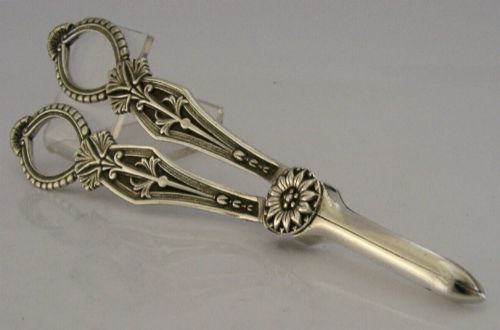
- Specialised scissors designed for cutting clusters of fruit at the table, frequently cast in silver with ornate handles.
- Canteen
- A fitted box, chest, or case lined with velvet or silk, built specifically to hold a matched set of cutlery.
- Mother-of-pearl
- The iridescent inner layer of pearl oyster shell used extensively for carving knife and fork handles during the nineteenth century.
- Silver gilt
- Sterling silver that has been coated with a thin layer of gold, providing a rich yellow lustre to the surface of spoons and servers.
Antique Dessert Cutlery: Frequently Asked Questions
What is antique dessert cutlery used for?
These implements were created for the dessert course, specifically for eating fruit, tarts, and soft sweets rather than heavy main meals.
They appear as specialised knives, forks, spoons, and grape shears designed to handle foods that required finer tools than standard dining silver.
How do I store cased cutlery sets?
The original fitted oak or velvet-lined boxes provide the best environment for keeping these pieces secure and preventing the silver from tarnishing too rapidly.
Keeping the cases away from damp atmospheres protects both the steel blades and the delicate silk or satin interior linings.
Can I use these items daily?
Many people enjoy using these vintage implements for modern dining, provided they receive careful hand washing rather than machine cleaning.
Mother-of-pearl handles and older steel blades require gentle treatment to preserve their finish and prevent separation from the metal tangs.
How can I tell Georgian pieces from Victorian ones?
Georgian examples often feature simpler, hand-raised forms with hallmark stamps indicating early nineteenth or eighteenth-century assay offices.
Victorian and Edwardian pieces frequently showcase heavier cast decoration, mechanical engraving, and a wider use of cased mother-of-pearl sets.