




Vintage Silver Grape Shears
Vintage silver grape shears are dedicated dining implements designed to sever fruit cleanly from the bunch, bringing genuine Victorian ceremony to the modern table.
Vintage Silver Grape Shears
Vintage silver grape shears are specialised serving cutlery created for the formal dining room of the nineteenth and twentieth centuries. These purpose-built implements allow hosts to cut small clusters of fruit without bruising the berries or disturbing the arrangement on the table.
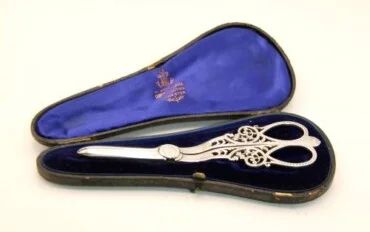
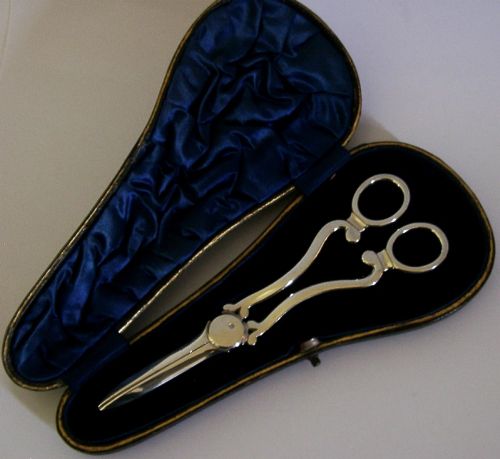
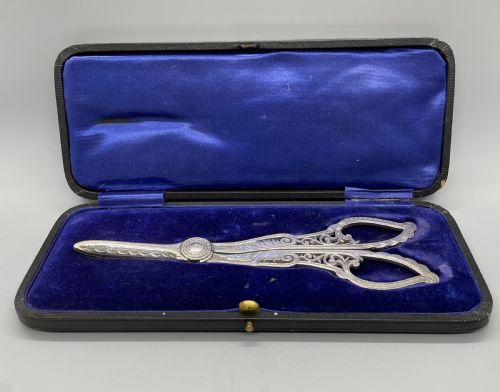
The pieces on this page span the Victorian and Edwardian eras, alongside later twentieth-century examples up to the 1960s. Collectors will encounter simple nineteenth-century designs alongside heavily ornamented pairs housed in fitted presentation cases lined with silk, velvet, or satin.
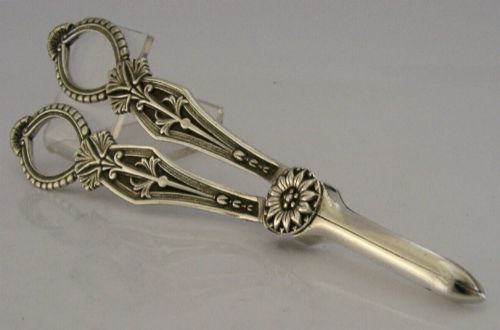
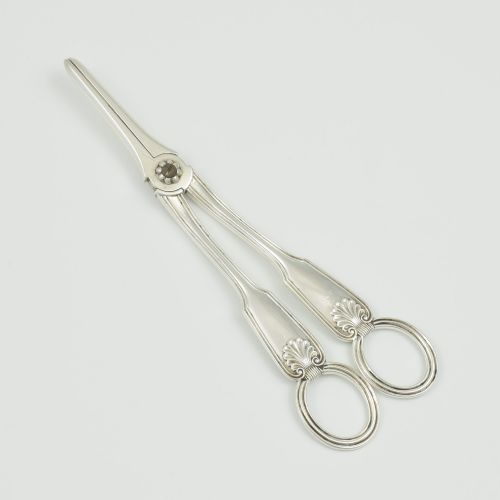
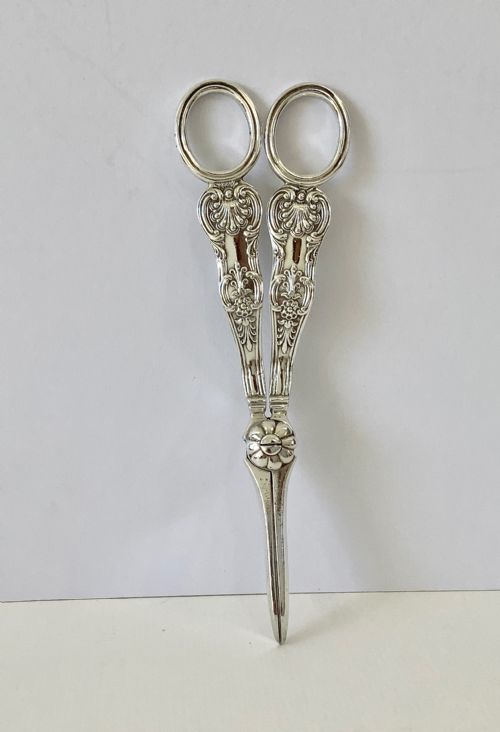
The dominant forms are grape scissors and grape shears, appearing in solid sterling silver and silver plate. Many incorporate ornate cast decoration or floral engraving along the handles, reflecting the material tastes of their respective periods.
How they were made
Silversmiths utilised sterling silver and silver plate, shaping the metal through casting and hand-engraving techniques. The handles frequently feature ornate cast foliage or geometric patterns, paired with robust steel-reinforced pivot joints designed to maintain tension during use.
Fitted presentation boxes employ protective outer coverings of leather, leatherette, or cloth. The interiors use soft fabrics such as silk, satin, or velvet to cradle the implements securely against tarnishing and impact.
Victorian diners required an entirely separate pair of scissors just to avoid touching the fruit with their bare fingers.
What varies in quality
The distinction between standard utility items and masterwork pieces rests in the weight of the metal and the depth of the casting. Heavy cast silver pairs demonstrate substantial heft, whereas simpler plated versions feel considerably lighter in the hand.
Artistry in the engraving separates basic production from exceptional workshop output. Crisp, deeply chased vine and leaf motifs executed by named makers command greater appreciation than generic machine stamping.
Goldsmiths & Silversmiths Co.·Gibson & Langman·Charles Reily & George Storer·Paul Storr·C.J. Vander
The Vintage Silver Grape Shears Glossary
- Sterling Silver
- An alloy consisting of 92.5 percent silver by mass, representing the standard for quality British tableware. This material forms the primary body of the finest antique shears.
- Silver Plate
- A base metal substrate coated with a thin layer of pure silver. This technique provided an accessible alternative to solid sterling for nineteenth-century dining rooms.
- Cast Silver
- Molten silver poured into a mould to create three-dimensional relief decoration on the handles. This method allows for complex, tactile representations of natural foliage.
- Gilt
- A thin application of gold wash over the silver surface, sometimes termed vermeil. This treatment adds a warm tone to the interior bowls or blades.
- Gothic Revival
- An architectural and decorative style popular during the nineteenth century that influenced the heavy, medieval-inspired ornamentation found on certain serving pieces.
Vintage Silver Grape Shears: Frequently Asked Questions
What are vintage silver grape shears used for?
These implements were designed specifically for cutting individual portions of grapes from a larger bunch during formal dining courses. The short, blunt blades ensured the fruit could be severed cleanly without damaging the surrounding berries.
Today, collectors utilise them as decorative serving pieces for modern dinner parties or display them alongside other period barware and silver collections.
How do I clean antique silver shears?
Maintenance requires gentle washing in warm, soapy water followed by immediate drying with a soft cloth to preserve the finish. Avoid abrasive scouring pads that can wear away crisp hand-engraving or damage delicate silver surfaces.
For tarnish removal, apply a specialist silver polish sparingly using circular motions, working carefully around pivot joints and recessed cast decoration before buffing clean.
Are these shears made of solid silver?
The materials vary between solid sterling silver and silver plate depending on the specific piece and period of manufacture. Hallmarks stamped onto the metal typically indicate the silver standard and assay office of origin.
Pieces lacking hallmarks are generally silver-plated over a base metal core, a common manufacturing method for domestic tableware throughout the nineteenth and twentieth centuries.
How do I date a pair of grape shears?
Dating relies primarily upon official hallmarks stamped into the metal, which record the assay office, standard mark, and date letter for British items. Stylistic clues such as Gothic Revival motifs or Victorian floral engraving also provide reliable chronological indicators.
Original fitted presentation cases lined with velvet or silk often contain retailer stamps that help narrow the production era.