



Vintage Grape Scissors
Vintage grape scissors are specialised serving cutlery designed to harvest fruit at the table, offering both mechanical utility and period elegance.
Vintage Grape Scissors
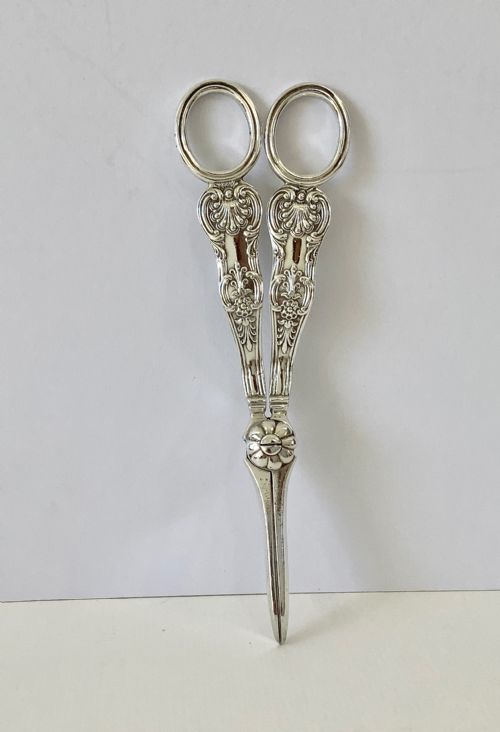
Vintage grape scissors are specialist serving cutlery created to snip small bunches of fruit cleanly at the table during formal dining. Most examples met here belong to the Victorian and Edwardian periods, alongside mid twentieth century iterations.
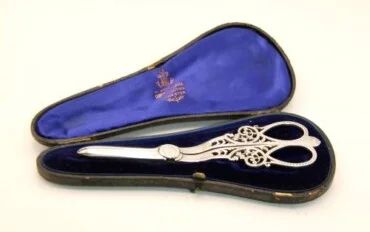
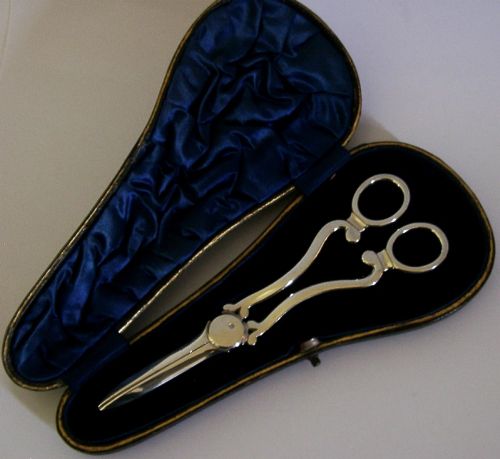
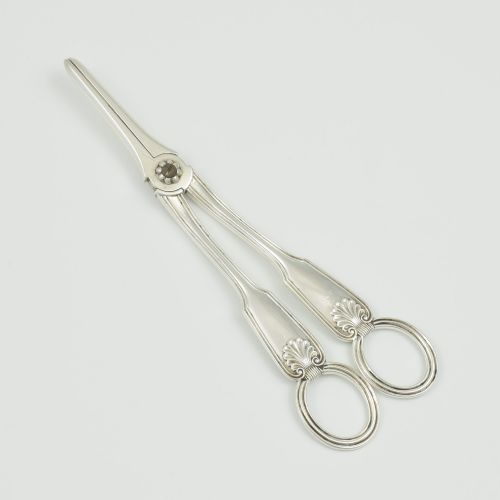
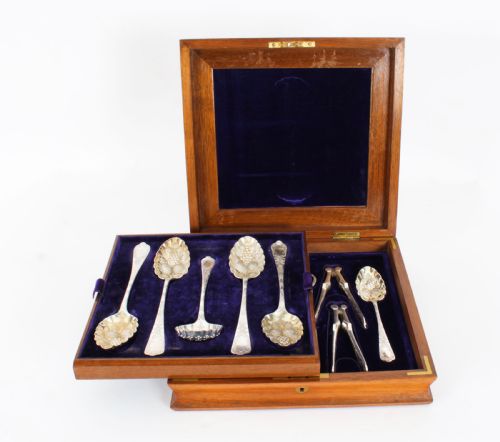
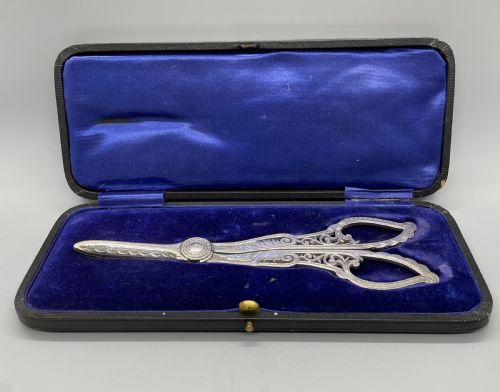
The primary forms take the shape of hinged shears with ornate loop handles, often paired with matching fruit sets or fitted presentation cases. Makers produced these implements in both solid sterling silver and silver plate to suit the dining customs of the era.
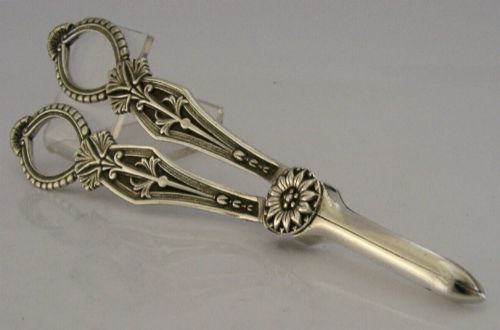
Collectors encounter diverse stylistic revivals, ranging from Gothic Revival heavy castings to early Victorian engraved designs. These pieces functioned as both practical serveware and status symbols within affluent households.
How they were made
Makers utilised sterling silver and silver plate as the foundational materials for these implements, shaping them through casting and hand engraving. Cast silver versions provide substantial weight and rigidity, which aided the cutting action.
Fitted presentation boxes incorporate luxury linings made from silk, velvet, satin, leatherette, and leather. These interior materials protected the polished metal surfaces from tarnishing and physical damage during storage.
The listings here span the Victorian, Edwardian, William IV, and 1960 eras, constructed from sterling silver, silver plate, leather, and silk.
What varies in quality
The distinction between standard production and top tier pieces rests upon the crispness of the cast decoration and the thickness of the metal. Heavier sterling silver examples maintain structural integrity across the handles and pivot points.
The presence of an original fitted case lined in silk, velvet, or leather elevates the preservation status of the implement. Maker attribution through clear hallmarks further separates workshop pieces from unmarked production.
Goldsmiths & Silversmiths Co. Gibson & Langman·Charles Reily & George Storer·Paul Storr·Reilly & Storer·Hukin & Heath·C.J. Vander
The Vintage Grape Scissors Glossary
- Sterling silver
- A silver alloy containing 92.5 percent pure silver by mass, providing the durable metal standard for high quality Victorian and Edwardian grape shears.
- Silver plate
- A layer of silver applied to a base metal core, offering an alternative finish for serving cutlery produced during the nineteenth and twentieth centuries.
- Gothic Revival
- An architectural and decorative style from the nineteenth century that influenced the heavy cast ornamentation found on certain period grape scissors.
- Serveware
- Specialised tableware and cutlery utilised for presenting and portioning food items during formal dining occasions.
Vintage Grape Scissors: Frequently Asked Questions
What are vintage grape scissors used for?
These implements were designed specifically for cutting individual stems of fruit from a larger bunch at the dining table. This kept fingers clean and preserved the presentation of the dessert course.
They formed part of a broader collection of serving cutlery used in formal nineteenth and twentieth century households.
How can I date my grape scissors?
Dating relies heavily upon the assay office marks, date letters, and maker stamps struck into the sterling silver or silver plate. Comparing the decorative style, such as Gothic Revival motifs, against known period aesthetics also helps.
Fitted presentation cases and associated hallmarks provide secondary clues regarding the exact year of manufacture.
Were all grape scissors made of silver?
While solid sterling silver represents a significant portion of surviving examples, many pieces were produced using silver plate over a base metal. Both materials were common across the Victorian, Edwardian, and mid twentieth century periods.
Testing the metal or checking for wear through to the base metal reveals the underlying construction.
How should I display or store them?
Pieces that retain their original fitted cases of leather, leatherette, silk, velvet, or satin benefit from being stored within those linings to prevent scratches. Open display requires stable humidity levels to protect both the metal and any textile elements.
Regular handling helps maintain the surface finish without resorting to abrasive cleaning agents.