


Chased Silver Spoons
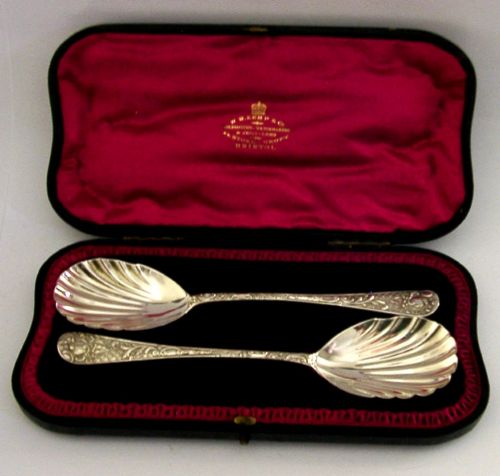
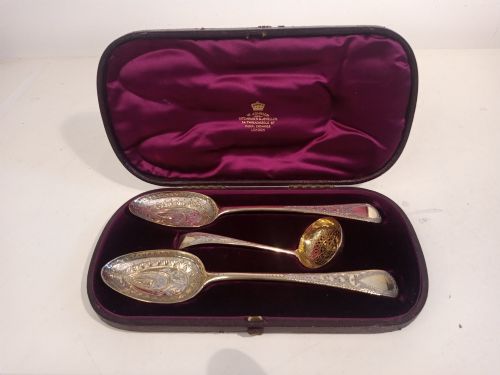
These chased silver spoons combine utility and ornate surface decoration, offering a tangible piece of silversmithing history.
Chased Silver Spoons
Chased silver spoons include serving spoons, berry spoons, dessert spoons, and trifid spoons alongside related items like sugar sifter spoons and ladles. Buyers examining these listings encounter pieces originating from the 17th Century, the Georgian and William & Mary eras, and the Victorian period.
The most common examples on this page are Victorian and Georgian items, often found in fitted cases alongside matching pieces like sugar tongs or mustard pots. Makers utilised sterling silver, silver-gilt, and solid silver, frequently augmenting the bowls and handles with detailed surface work.
Beyond standard flatware, the category encompasses specialised serving implements such as berry spoons and ladles. These utensils reflect the changing dining habits and table settings of past centuries.
What varies in quality
Quality in chased silver spoons rests on the crispness and depth of the chased decoration, which can range from shallow, worn impressions to sharp, deeply textured floral and fruit motifs. The weight and balance of the solid silver in the hand further separate standard utility pieces from finer examples.
The survival of original fitted presentation cases lined with silk, velvet, or satin influences the overall desirability of cased pairs and sets. Additionally, the clarity of the hallmarks stamped into the sterling silver provides reliable evidence of the maker and date.
Materials associated with these items include solid silver, silver-gilt, and protective presentation cases lined with silk, satin, and leather.
Stephen Coleman
The Chased Silver Spoons Glossary
- Chasing
- A silversmithing technique where metal is worked with hammers and punches from the front to create a raised design. It differs from engraving because no silver is cut away from the surface.
- Berry Spoon
- A large serving spoon, often Georgian or Victorian in origin, later chased with fruit and leaf motifs. These pieces were frequently adapted or decorated long after their initial manufacture.
- Trifid Spoon
- An early form of flatware featuring a split, three-lobed terminal handle popular during the late 17th Century. Examples from the William & Mary period often display lace pattern engraving.
- Silver-Gilt
- Silver that has been coated with a thin layer of gold on its surface. This treatment creates a rich two-tone effect when combined with polished sterling silver.
- Hallmark
- An official stamp applied to precious metals indicating the standard of silver, the assay office, and the date letter. These marks allow collectors to verify the exact period of manufacture.
Chased Silver Spoons: Frequently Asked Questions
What are berry spoons used for?
Berry spoons function as large serving implements designed for dishing out soft fruits at the dining table. Their bowls are typically widened and heavily chased with fruit and foliage.
Many of these spoons date from the Georgian and Victorian eras, when specialised cutlery for desserts became common. Today, they are frequently used for serving various side dishes or displayed within cased sets.
How do I date a silver spoon?
Dating relies primarily on the hallmarks stamped directly into the sterling silver. These official marks record the assay office and a specific date letter corresponding to the year of manufacture.
Stylistic indicators, such as the trifid handle of the late 17th Century or the heavier ornamentation of the Victorian period, provide additional clues when hallmarks are rubbed.
How should I store cased silver?
Cased silver benefits from being kept in its original fitted box lined with velvet, silk, or leatherette. These interiors help protect the metal from excessive handling and airborne tarnish.
Store the boxes in a stable environment away from direct sunlight and high humidity to preserve both the silver and the antique linings.
What is the difference between chasing and engraving?
Chasing pushes the silver metal from the front using punches to create a raised, tactile relief pattern. The silversmith displaces the metal rather than removing it.
Engraving, by contrast, uses a sharp tool called a burin to cut lines directly out of the silver. Chased pieces therefore present a more rounded, sculptural surface texture.