
Victorian Sterling Silver Spoons
Victorian sterling silver spoons encompass serving implements, caddy spoons and christening sets cast, pierced and engraved during the nineteenth century.
Victorian Sterling Silver Spoons
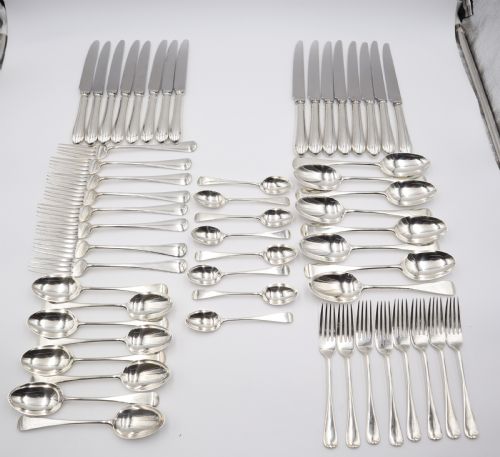
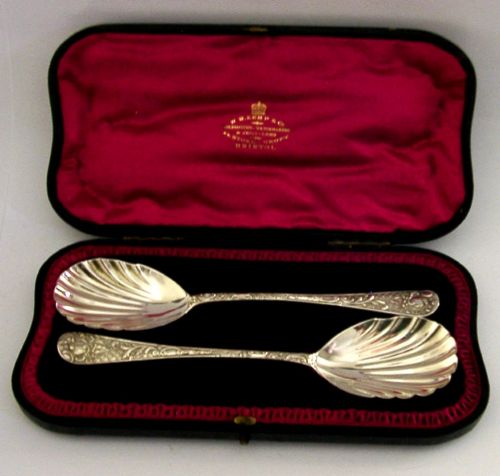
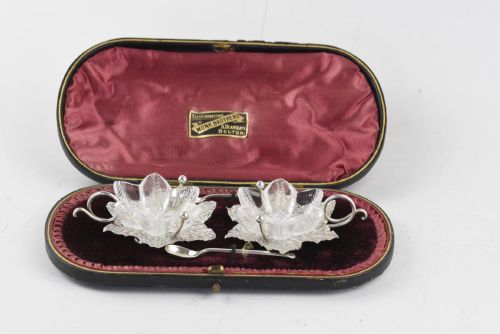
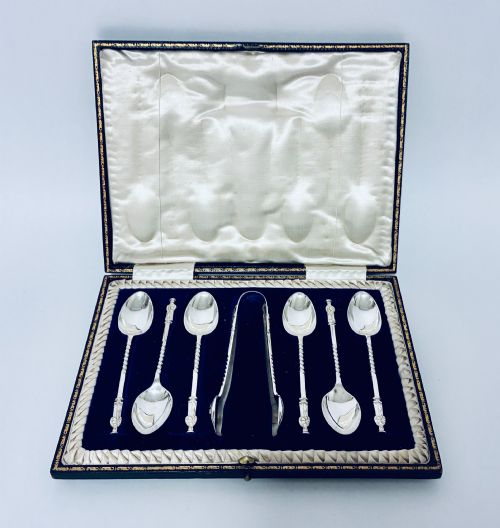
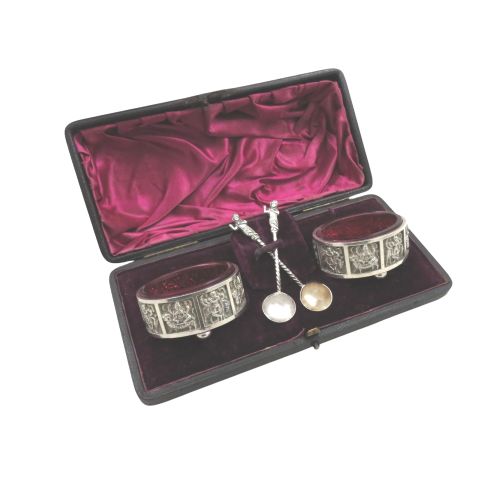
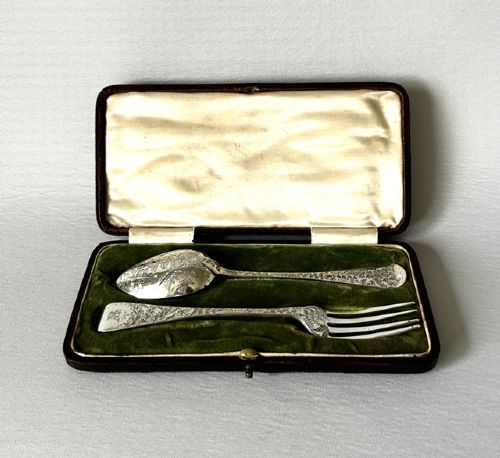
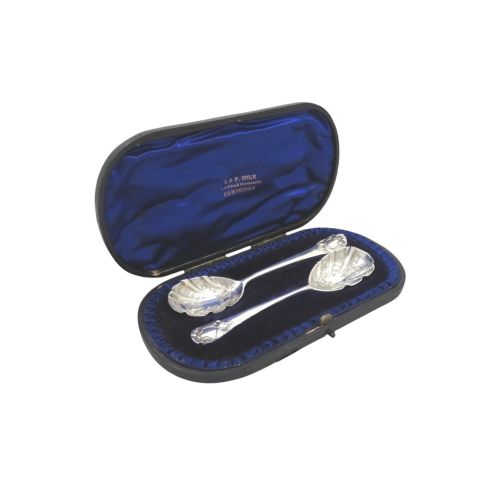
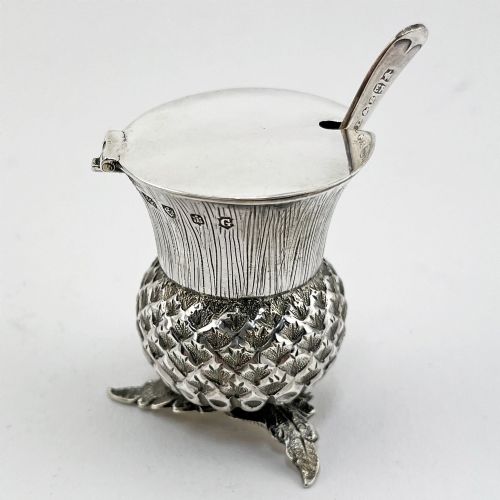
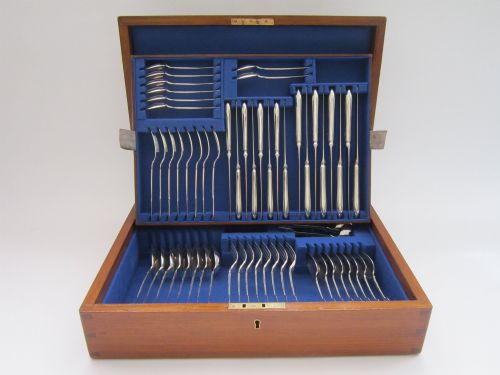
Victorian sterling silver spoons cover a broad spectrum of dining and serving implements, ranging from everyday flatware to decorative caddy spoons, marrow scoops and sauce ladles. Many examples survive in fitted presentation cases lined with velvet, silk or satin, often paired with matching salt cellars or sugar sifters.
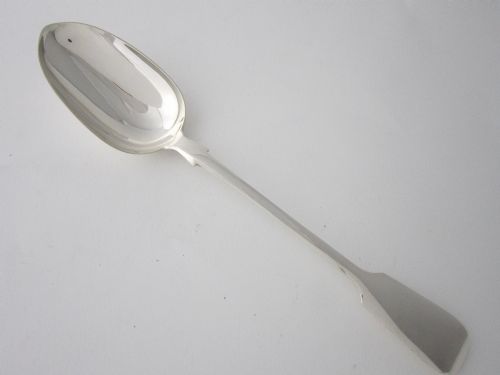
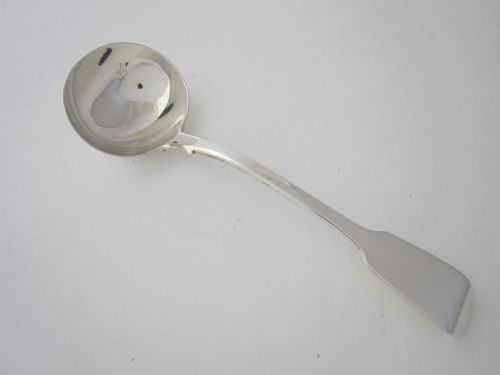
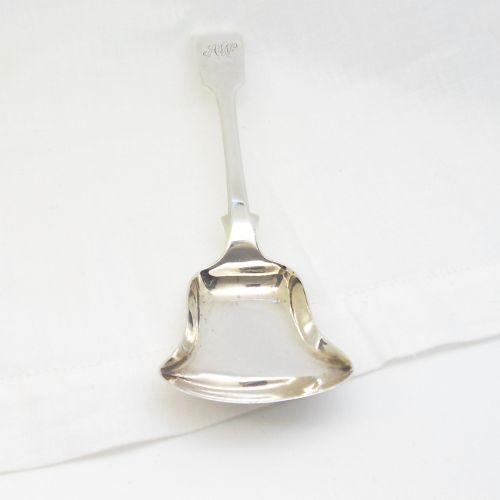
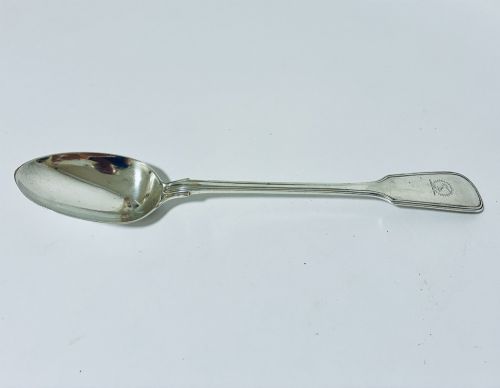
The selection on this page draws heavily from the nineteenth century, featuring Fiddle pattern stems alongside elaborate Aesthetic Movement designs, berry spoons with repoussé fruit bowls, and figural Apostle spoons. Makers utilised traditional forms while applying Renaissance, Rococo Revival and medieval revival motifs to handle terminals and bowls.
How They Were Made
Silversmiths formed these implements from solid sterling silver, employing techniques such as hammering, casting, and piercing to achieve structural integrity and intricate ornamentation. Handles frequently display engraved detailing, chased botanical motifs or applied cast figures.
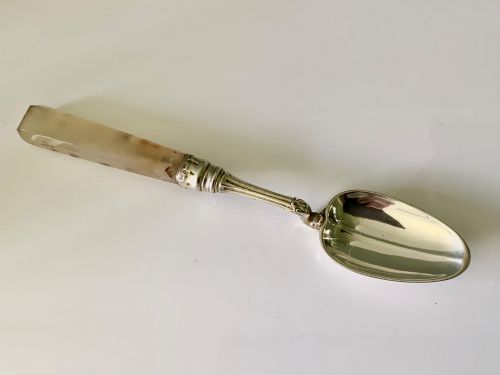
Many cased sets incorporate auxiliary materials alongside the silver, including glass liners for salt cellars, agate handles, and protective outer boxes covered in leather or leatherette.
Some Victorian dining spoons feature unexpected horse hoof terminals alongside traditional floral engraving.
What Varies in Quality
The calibre of a piece rests on the thickness of the silver gauge and the crispness of the chased or cast ornamentation. Heavier items demonstrate greater durability and a more substantial feel in the hand, while finer casting preserves the sharp relief of figural details and engraved foliage without softening.
Presentation also influences the overall standard, particularly complete original sets housed in fitted cases with intact fabric linings and matching components, as opposed to assembled or incomplete groupings.
Martin Hall & Co·John Walton·Charles & George Fox·Hamilton & Inches·William Comyns
The Victorian Sterling Silver Spoons Glossary
- Fiddle pattern
- A popular nineteenth-century flatware handle design featuring a narrow stem that broadens symmetrically near the terminal into a shape resembling a violin.
- Berry spoon
- A serving spoon, often dating from the Georgian period onward, later retrofitted or originally manufactured with chased and engraved fruit and leaf motifs inside the bowl.
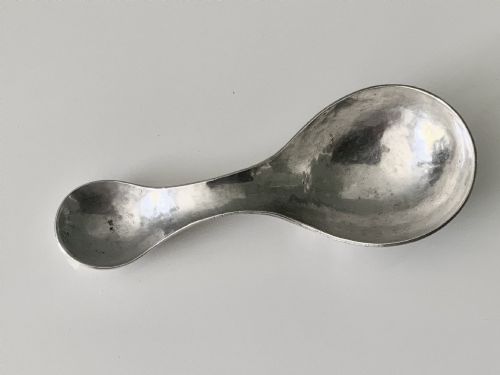
- Caddy spoon
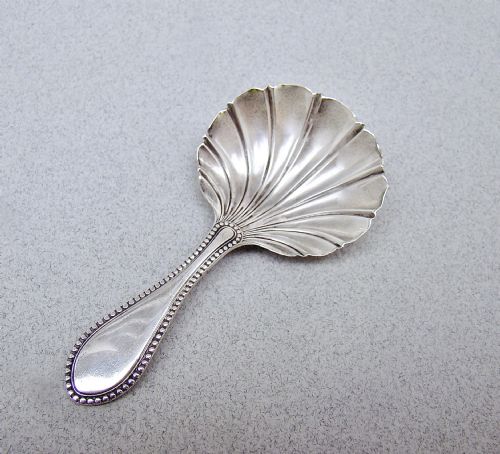
- A short spoon specifically designed for measuring loose tea leaves from a caddy, frequently featuring a shallow, shell-shaped or floral bowl.
- Apostle spoon
- A decorative spoon with a terminal cast in the figure of an apostle or saint, popular as a christening gift or collector's piece during the Victorian revival periods.
- Marrow scoop
- A narrow, double-ended spoon designed for extracting bone marrow, featuring trough-like channels of differing widths.
Victorian Sterling Silver Spoons: Frequently Asked Questions
How do I clean Victorian silver spoons?
Wash the silver gently in warm water with a mild, phosphate-free washing-up liquid and dry it thoroughly with a soft cotton cloth. Avoid harsh chemical dips or abrasive cloths that can strip away the aged patina and fine engraved details.
Store the pieces away from rubber or damp environments to prevent tarnishing. If necessary, use a specialist silver polish applied with minimal pressure.
Were these spoons used daily or displayed?
Many items, such as Fiddle pattern tablespoons and teaspoons, saw regular daily use in nineteenth-century dining rooms. Others, like cased berry spoons and christening sets, were intended for special occasions or presentation gifts.
Cased sets frequently survived in better condition because they spent decades stored away in velvet-lined boxes. Everyday flatware shows the characteristic micro-scratches of frequent washing and handling.
How can I tell the date of a spoon?
British silver bears hallmarks stamped directly into the metal, typically including a maker's mark, a lion passant indicating sterling standard, a city assay mark, and a date letter corresponding to the exact year of testing. These official stamps provide a reliable method for dating items.
Stylistic indicators, such as Aesthetic Movement engraving or Fiddle pattern proportions, offer a secondary guide to the decade of manufacture when hallmarks are rubbed or unclear.
What is the difference between a serving spoon and a tablespoon?
Serving spoons are generally larger and heavier than standard tablespoons, designed specifically for dishing out vegetables, sauces or berries at the table. Their bowls often feature ornate piercing, repoussé fruit work, or wider proportions.
Standard tablespoons formed part of everyday cutlery services for eating or initial food transfer. Serving spoons were frequently produced as matched pairs and kept in fitted presentation cases.