


Cased Victorian Silver Spoons
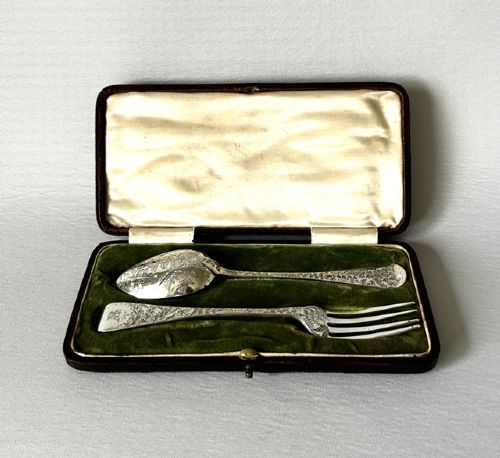
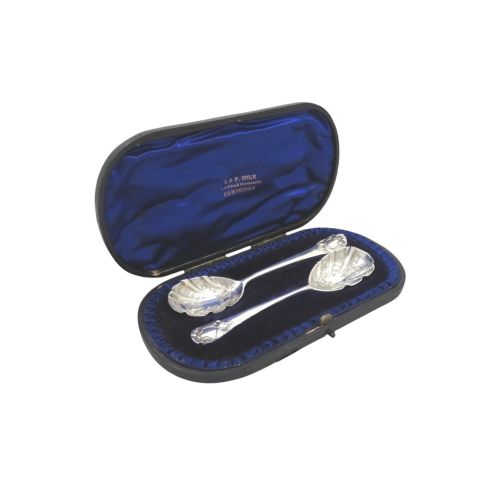
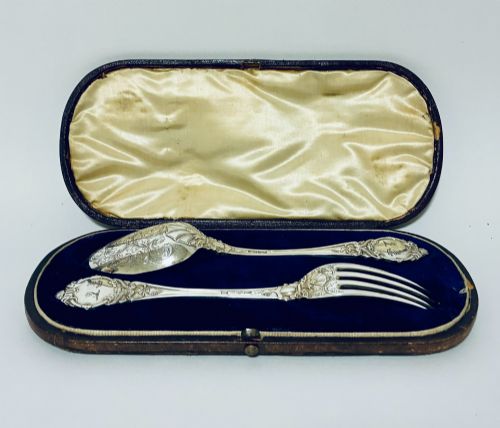
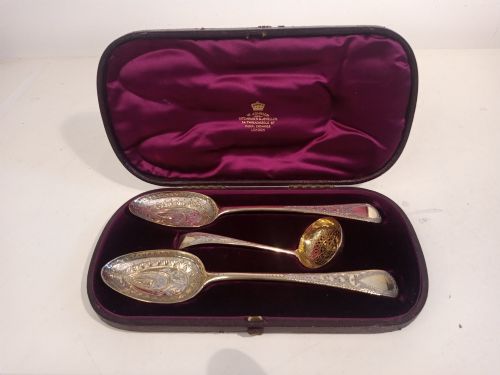
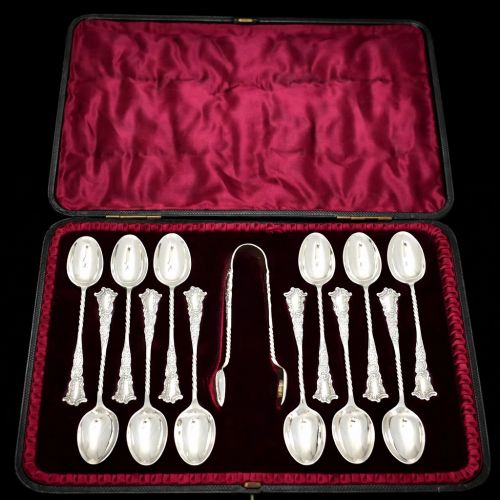
These cased victorian silver spoons bring together matched cutlery and fitted presentation boxes, offering a glimpse into nineteenth-century dining traditions.
Cased Victorian Silver Spoons
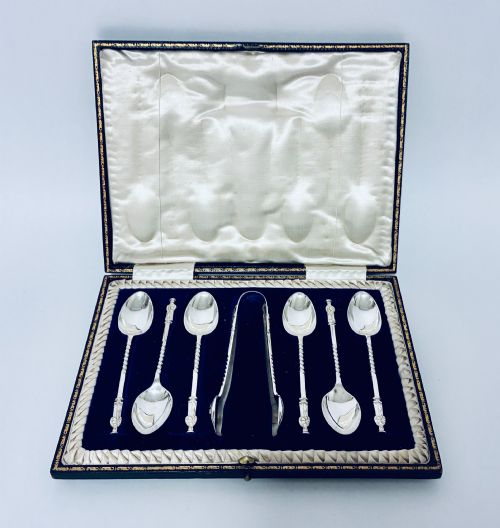
When searching for cased victorian silver spoons, buyers encounter complete sets designed for specific domestic rituals like christenings, tea services, and salt cellars. The inventory shows pairings ranging from single presentation pieces to sets of six teaspoons alongside sugar tongs.
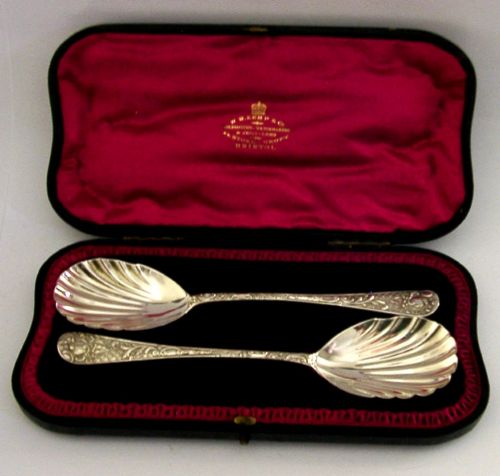
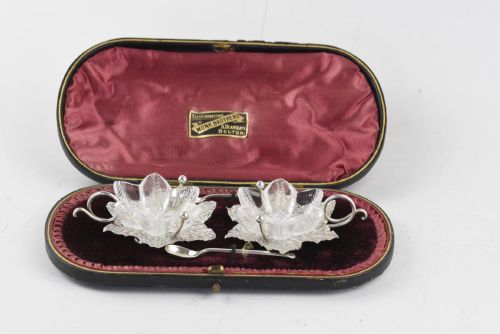
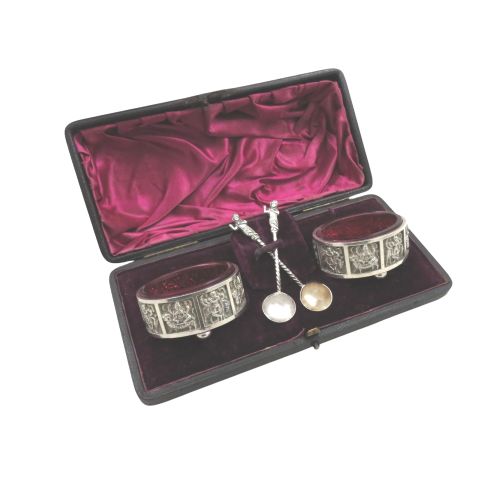
Most items originate from the Victorian period, with production dates stretching from the 1870s into the early twentieth century. Forms include berry spoons, Apostle spoons, fruit knives, and salt cellars accompanied by matched spoons.
Presentation containers feature prominently in the material record. These fitted velvet, silk, leather, and leatherette boxes protect the silver contents while indicating the intended use for formal dining or ceremonial gifting.
How they were made
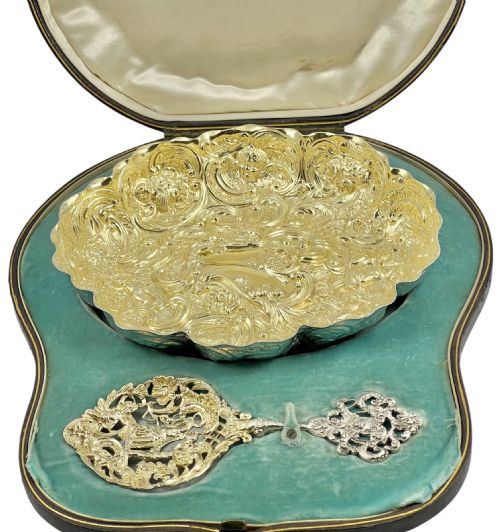
Makers utilised sterling silver and silver plate for the cutlery itself, frequently applying silver gilt finishes to dessert and berry spoons. Engraving and repoussé techniques decorate handles and bowl backs with floral motifs, Hindu deities, and bird figures.
Enclosures consist of rigid wooden carcasses lined with plush velvet or smooth satin to cradle each utensil securely. Outer coverings utilise textured leather or leatherette, often secured with brass clasps or hinged mechanisms.
Object forms span salt cellars, Apostle spoons, fruit knives, berry spoons, and complete christening sets.
What varies in quality
Distinctions in quality depend on the crispness of the hand-engraved details upon the silver surface and the structural integrity of the protective case. Heavy-gauge sterling silver retains its form better over time compared to thinner metal or worn silver plate.
The condition of the internal silk and velvet linings affects overall desirability. Complete sets retaining their original fitted presentation box without replacement utensils command greater interest from collectors.
D and A·Hukin and Heath·Robert Stebbings·Thomas Harwood and Co·John Round·George Unite·Robert Pringle and Sons
The Cased Victorian Silver Spoons Glossary
- Sterling silver
- An alloy containing 92.5 percent silver by weight, used for durable domestic silverware. British pieces typically display standard assay office hallmarks.
- Silver-gilt
- A layer of gold applied to the surface of a silver object. This technique provides a rich yellow appearance on the bowls of dessert and berry spoons.
- Apostle spoon
- A spoon featuring a figure of an Apostle at the terminal of the handle. These traditional designs often appear in fitted sets with matching tongs.
- Salt cellar
- A small open bowl used to hold salt at the dining table, frequently paired with tiny bespoke spoons in Victorian cased sets.
- Berry spoon
- A large serving spoon with fruit and foliage embossed or engraved across the bowl. They gained popularity during the late nineteenth century for serving soft fruits.
Cased Victorian Silver Spoons: Frequently Asked Questions
What were cased spoons used for?
Victorian households utilised these matched utensils for specific dining occasions and formal presentations. Common uses included serving berries, eating fruit, dispensing sugar, and christening gifts.
The protective cases ensured the silver remained untarnished and undamaged when stored between formal dinners or family milestones.
How do I identify a Victorian set?
Examine the pieces for official British assay office hallmarks stamped directly into the metal. These small marks indicate the town of testing, the standard of silver, and the date letter.
The stylistic cues, such as Aesthetic Movement engraving or Art Nouveau curves, further help date the manufacture alongside the fitted box.
Are the cases original to the spoons?
Most surviving examples feature custom-moulded interiors that match the exact contours of the enclosed cutlery. Velvet and satin recesses hold each spoon and tong securely in place.
Discrepancies in fit or mismatched maker marks between the box and silver suggest a later pairing rather than factory-original presentation.
How should I store cased silver?
Keep the presentation boxes in a stable environment away from direct sunlight and excessive humidity. The original velvet and leatherette materials react poorly to damp conditions.
Avoid aggressive polishing of silver-gilt surfaces, as excessive cleaning wears away the thin gold layer over decades of maintenance.