



Antique Sterling Salt Pots
These antique sterling salt pots bring character to the dining table through a range of Victorian and Edwardian forms.
Antique Sterling Salt Pots
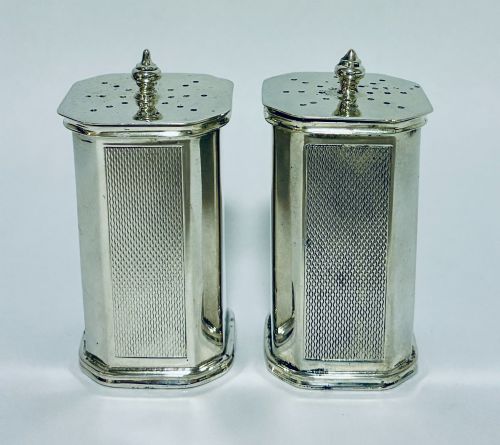
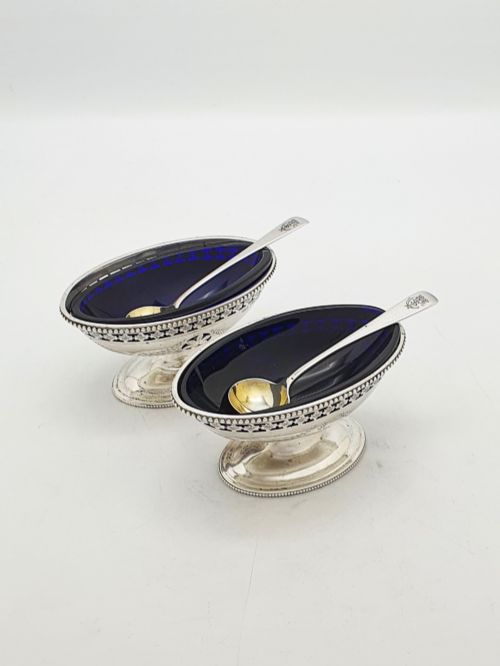
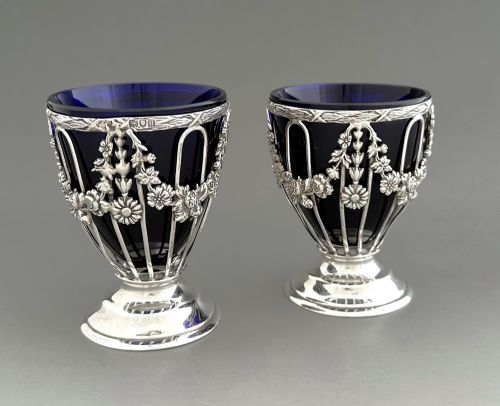
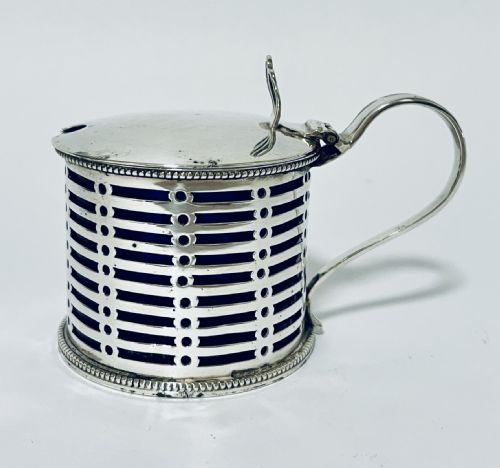
When you search for antique sterling salt pots, you are looking at small vessels designed for holding table salt alongside pepper pots and mustard pots. These pieces appear frequently as open salt cellars with coloured glass liners or as part of larger condiment sets.
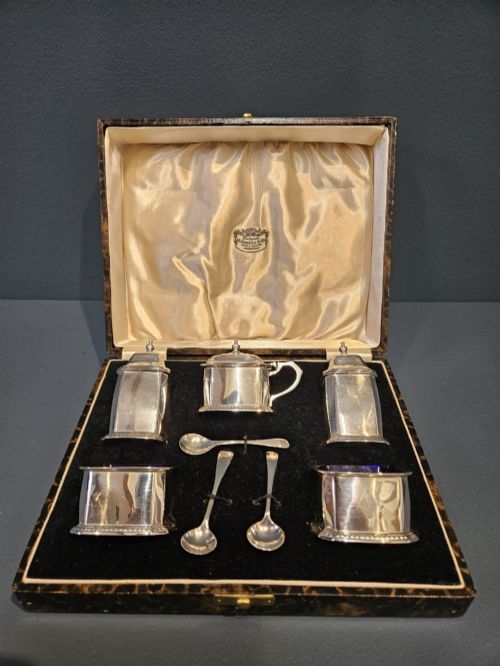
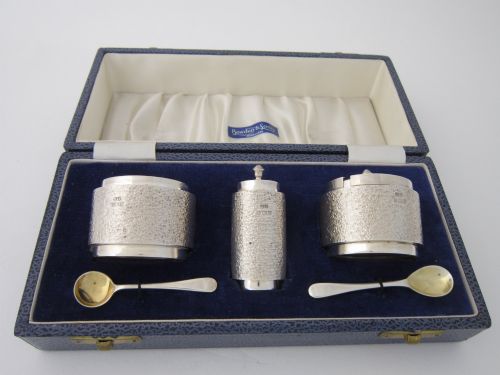
The selections span the Victorian, Edwardian, and Art Deco periods, alongside Georgian style reproductions. You will encounter both solitary salt cellars and paired items, often accompanied by matching spoons and fitted presentation cases.
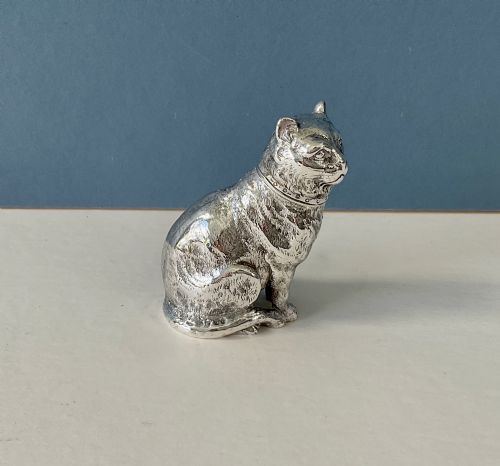
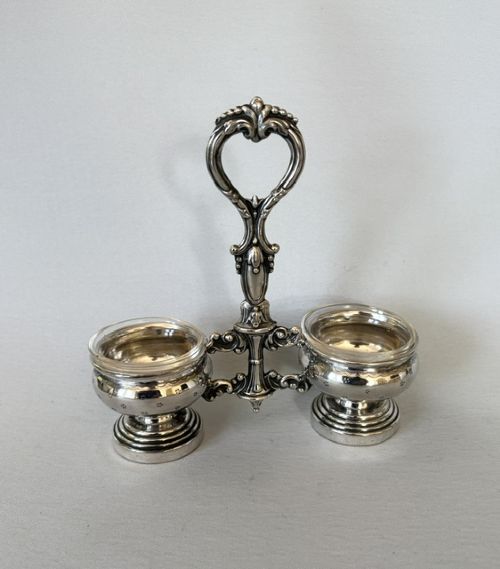
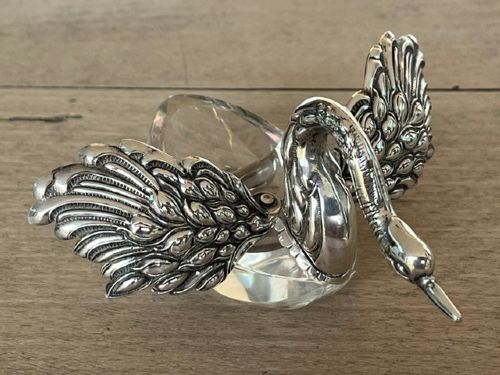
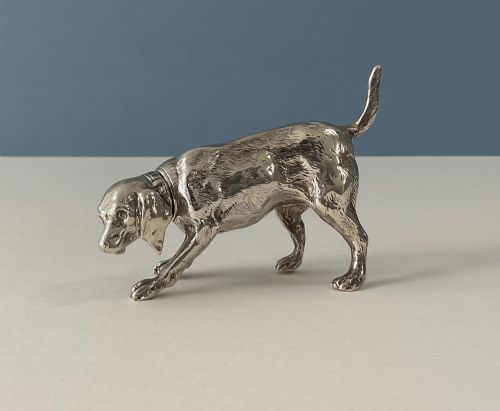
Makers produced these dining accessories in various forms, ranging from traditional open salt tubs and wirework condiment stands to elaborate novelty figures. The evidence shows animal designs including cats, dogs, owls, chicks, and birds, as well as figural pieces.
Materials and construction
Silversmiths constructed these pieces primarily from sterling silver, shaping the metal through casting, piercing, and wirework techniques. Many items incorporate glass components, specifically cobalt glass and cut crystal inserts, which sit inside the open silver frames to hold the salt.
Novelty and figural items rely on detailed casting work to model animals and characters with moveable elements. Additional materials such as velvet, satin, silk, and glass bottles appear in fitted boxes and multi-bottle cruet frames from the nineteenth and twentieth centuries.
Dining tables gained personality through silver pepper pots shaped as owls, chicks, and Mr Punch's dog Toby.
Judging the standard of execution
The presence of original matching components, including cobalt glass liners and fitted presentation boxes, distinguishes superior specimens. The execution of delicate piercing and secure joints indicates the level of craftsmanship invested in the object.
William Neale·Sampson Mordan·Wilmot Manufacturing Co·Bricks & Sons
The Antique Sterling Salt Pots Glossary
- Salt cellar
- An open vessel designed to hold table salt before the invention of the free-running shaker. These pieces often contain cobalt glass liners to protect the silver from corrosion.
- Cruet set
- A matched group of condiment containers holding salt, pepper, mustard, and sometimes oil or vinegar. They sit together on a stand or within a fitted box.
- Condiment pot
- A general term encompassing mustard pots, salt cellars, and pepper pots used at the dining table. They appear in sterling silver across Victorian and Edwardian styles.
- Novelty silver
- Silver items modelled into playful or unusual shapes such as animals or figures. These pieces were popular during the Victorian and Edwardian periods.
- Wirework
- Metalwork constructed from thin strands of silver soldered together into open frameworks. This technique appears in decorative condiment tubs and stands.
Antique Sterling Salt Pots: Frequently Asked Questions
What is a salt cellar?
A salt cellar is an open dish or tub placed on the dining table to hold salt. Guests used small spoons to sprinkle the salt onto their food.
These vessels frequently feature blue glass liners to prevent the salt from tarnishing the sterling silver frame.
How do I date a silver salt pot?
Dating relies upon hallmarks stamped into the silver, which indicate the assay office, date letter, and maker's mark. Style elements such as Victorian piercing or Art Deco geometric lines also help determine the period.
Matching boxes and original fitted cases often provide additional clues regarding the manufacturing era.
Were salt pots used in sets?
Silversmiths frequently produced salt cellars in pairs or as part of larger condiment sets that included pepper pots and mustard pots. These matched collections often came housed in velvet or satin lined presentation boxes.
Individual pieces also appear, sometimes gathered into cruet stands with multiple glass bottles.
How do I care for silver salt pots?
Sterling silver requires gentle cleaning with a specialised silver cloth to remove tarnish without scratching the metal surface. Glass liners should be removed and washed separately in warm soapy water.
Storing pieces away from damp environments helps preserve both the silver and any accompanying silk or velvet linings.