


Victorian Sterling Salt Dips
Victorian sterling salt dips are small open tableware vessels crafted to hold condiments at the dining table, offering refined silver work and coloured glass.
Victorian Sterling Salt Dips
Victorian sterling salt dips are small open tableware vessels designed to sit upon the dining table for individual portions of salt. The pieces seen here span the Victorian era, alongside related examples from the Georgian period and Edwardian years.
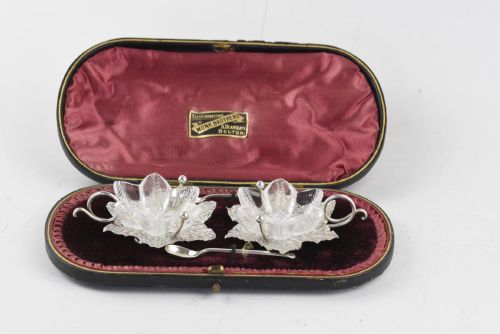
Buyers will most frequently encounter open salt cellars, salt bowls, and small dishes formed in pairs or larger matched sets, often accompanied by their original spoons and fitted cases lined with velvet, leather, or silk.
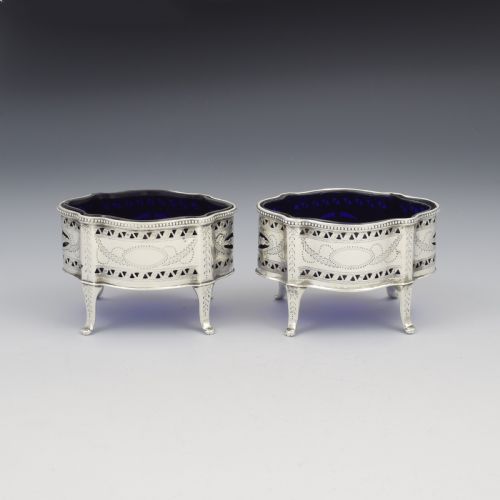
The forms encompass traditional cauldron shapes, six-lobed bowls, serpentine profiles, and figural bird designs, reflecting the varied aesthetic tastes of nineteenth-century silversmiths.
How they were made
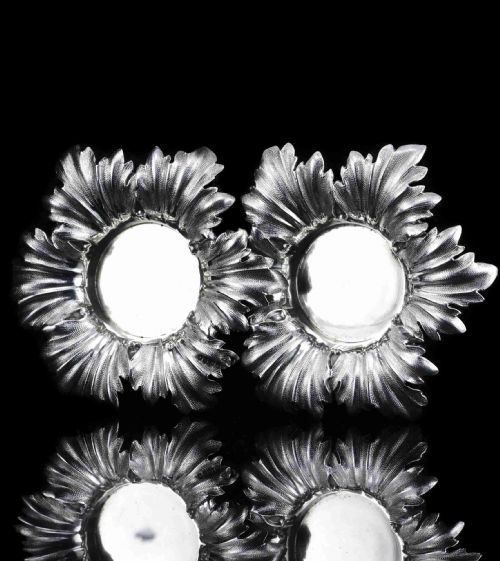
Silversmiths utilised sterling silver and solid silver to form the body of each salt dip, frequently employing techniques such as piercing and foliate chasing to create ornate exterior decoration.
Many open silver designs incorporate fitted liners made from cobalt glass, which protected the metal from corrosion caused by salt and provided a striking contrast of blue against polished silver.
Some interiors feature a gold wash known as vermeil, adding a warm metallic layer that further guarded the silver surface from chemical reactions.
Listings feature sterling silver, cobalt glass, vermeil, velvet, leather, and silk across periods spanning the Georgian era to Edwardian times.
What varies in quality
The distinction between standard examples and the finest pieces lies in the crispness and depth of the chased decoration, particularly where intricate foliate patterns are hand-worked into the silver body.
Completeness dictates much of the desirability, with full matched sets accompanied by their original spoons, intact cobalt glass liners, and fitted presentation cases representing the highest tier of preservation.
Barnards·Thomas Smily·Michael Alexandrovich Romanov·Vale Brothers and Sermon
The Victorian Sterling Salt Dips Glossary
- Sterling silver
- A silver alloy containing 92.5 percent pure silver by mass, forming the primary metal standard for these tablewares. British assay offices marked this standard with the lion passant.
- Cobalt glass
- A deep blue glass produced by adding cobalt oxide to the melt, commonly used for the removable liners inside open silver salt cellars. It provides a vibrant colour contrast against the metal.
- Vermeil
- Sterling silver that has been plated with a thin layer of gold on the interior surface. This technique prevents the salt from tarnishing the silver directly.
- Cauldron salt
- A small round salt cellar raised on three short feet, styled after a traditional cooking pot. This form was widely produced throughout the nineteenth century.
- Foliate chasing
- A method of ornamenting metal by hammering tools from the outside to push the silver into leaf and plant motifs without removing material. This creates high-relief surface texture.
Victorian Sterling Salt Dips: Frequently Asked Questions
How were salt dips used at the dinner table?
Diners used small spoons to transfer salt from the open dip onto the edge of their individual dinner plates.
They sat beside each place setting or were shared between two guests down the length of the table.
Why do some salt dips have blue glass liners?
The removable glass liner protected the sterling silver from the corrosive chemical action of salt.
Cobalt glass was chosen because the deep blue colour looked decorative against the polished metal exterior.
How do I identify Victorian salt dips?
Examination of the base typically reveals hallmarks indicating the town of assay, the silver standard, and the date letter.
Stylistic markers such as pierced work, foliate chasing, and heavy tripod feet also point to nineteenth-century manufacture.
Are original spoons usually included with these sets?
Some surviving sets retain their matching condiment spoons, while others have been gathered together over time.
Complete sets accompanied by fitted presentation cases lined with silk or velvet are less common.
Can I use antique salt dips for everyday dining?
These pieces function well for modern table service provided they are handled with care and washed promptly after use.
Emptying the salt immediately prevents any prolonged chemical contact with the silver or glass.