


Cased Sterling Salt Set
These fitted cased sterling salt set groupings bring formal nineteenth and twentieth century dining to the table in sterling silver and blue glass.
Cased Sterling Salt Set
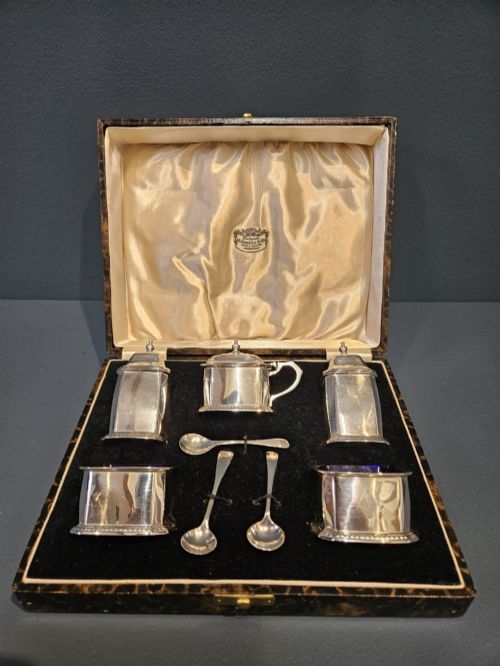
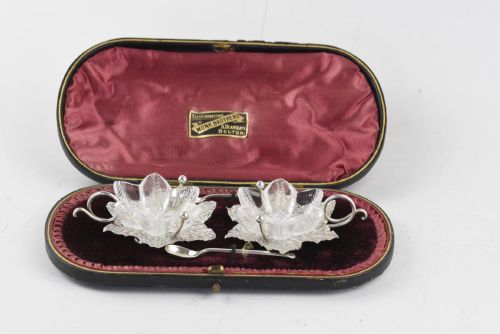
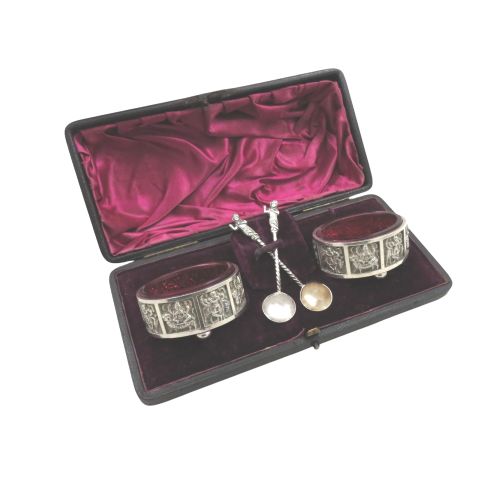
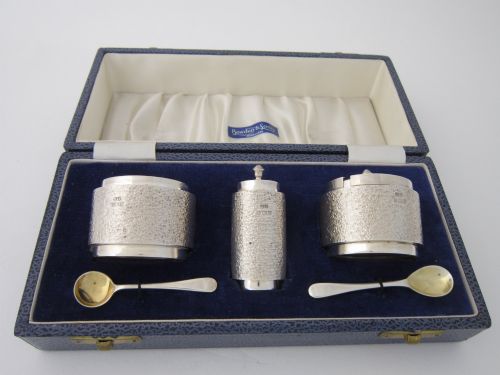
A cased sterling salt set brings together matched silver salt cellars, condiment sets and cruet sets housed in fitted boxes lined with velvet, satin, silk or leather. The items span the Victorian, Edwardian, Art Deco and Mid-Century Modern periods, reflecting changing dining fashions across several decades. Buyers encounter everything from simple pairs of salt cellars with matched spoons to larger five-piece cruet sets created by established makers.
Victorian examples often showcase ornate motifs such as Hindu deities or bird designs, while later Edwardian and Art Deco sets favour geometric lines and streamlined shapes. Most groupings include fitted presentation cases that protect the silver vessels and spoons when not in use on the dining table. The inclusion of original fitted boxes makes these sets particularly practical for display and storage.
How they were made
Silversmiths shaped the salt cellars and condiment vessels from sterling silver, employing traditional techniques of casting, hammering and piercing. Many pieces incorporate fitted blue glass liners designed to protect the silver from the corrosive effects of salt. Spoons were cast and finished to match the primary vessels, often featuring detailed bowls and stems.
The presentation cases combine sturdy wooden or cardboard carcases covered in leather or textured cloth, lined on the interior with velvet, satin or silk. These interiors were moulded precisely to hold the salt cellars, spoons and cruet components securely in place. Metal clasps and hinges completed the cases to ensure safe closure.
Listings for this phrase feature sterling silver items spanning the Victorian, Edwardian, Art Deco and Mid-Century Modern periods, alongside fitted cases lined with silk and velvet.
What varies in quality
Quality in a cased sterling salt set rests upon the crispness of the silversmith's chasing and the completeness of the original fitted components. Sets that retain their matching spoons and undamaged blue glass liners command greater interest than those assembled later from mismatched parts. The weight of the sterling silver and the precision of the hallmarks stamped on each piece further distinguish finer work from standard production.
The condition and integrity of the presentation case also influence the overall character of the set. Boxes with intact leather exteriors, unblemished silk or velvet linings, and working clasps demonstrate careful preservation over generations. Finer cases reflect superior craftsmanship in their internal moulding and exterior finishing.
William Neale·Bricks And Sons·Wilmot Manufacturing Co·Viners
The Cased Sterling Salt Set Glossary
- Sterling silver
- A silver alloy containing 92.5 percent pure silver and 7.5 percent other metals, usually copper, chosen for durability. This standard alloy forms the body of the salt cellars and cruet pieces.
- Cruet set
- A matched collection of small vessels designed to hold condiments such as salt, pepper, mustard and vinegar for the dining table. These sets are frequently housed together in fitted boxes.
- Blue glass liner
- A removable vessel inserted into an open silver salt cellar to prevent direct contact between the salt and the metal. These liners are shaped to fit the interior cavity precisely.
- Hallmark
- A series of official marks stamped onto precious metal items to guarantee the purity of the silver, the maker, and the year of assay. English silver bears specific town and date marks.
- Salt cellar
- A small open bowl or container placed on the dining table to hold salt for individual use. They are often accompanied by small condiment spoons.
Cased Sterling Salt Set: Frequently Asked Questions
What pieces belong in a complete set?
A standard set typically includes matching salt cellars, condiment pots, and small spoons designed for table service. Many configurations also incorporate pepper shakers or mustard pots.
Fitted presentation boxes often contain dedicated slots for every individual component, indicating whether the grouping remains complete.
How should sterling salt cellars be cleaned?
Silver components require gentle cleaning with a specialised silver cloth to remove tarnish without damaging the surface. Abrasive cleaners must be avoided to preserve fine details and hallmarks.
Glass liners can be removed and washed separately in warm soapy water before being dried and returned to the silver vessels.
Why do salt cellars have glass liners?
Salt is highly corrosive to silver over extended periods and causes pitting if left in direct contact with the metal. Removable blue glass liners protect the interior of the silver bowls from chemical damage.
These coloured liners also provide a striking visual contrast against the polished sterling silver when viewed on the dining table.
How do I identify the date of a set?
English silver carries a series of stamped hallmarks that indicate the assay office, the standard of silver, and a specific date letter corresponding to the year of manufacture. Examining the base or rim of the salt cellars usually reveals these marks.
Stylistic cues such as Art Deco geometric forms or Victorian ornamentation also help narrow down the period of production.