
Cased Silver Cutlery
These cased silver cutlery sets bring fitted elegance to formal dining tables and gift-giving traditions alike.

What cased silver cutlery sets are
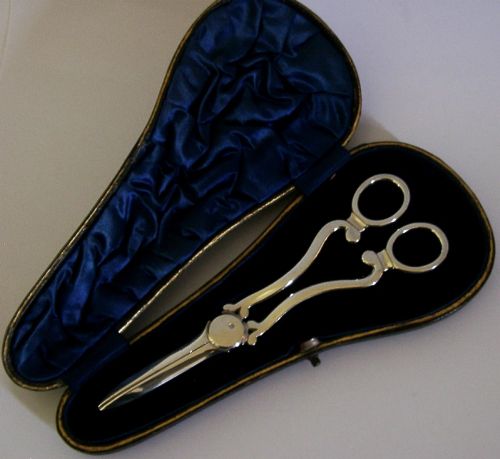
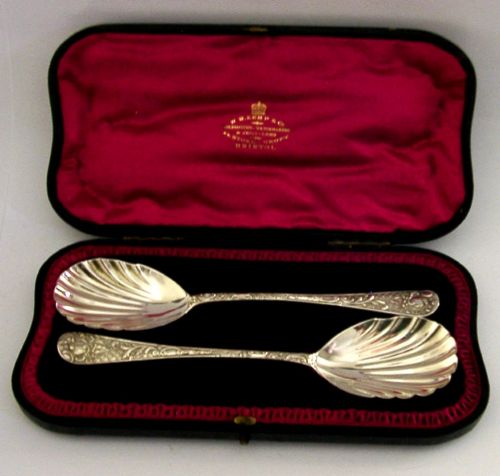
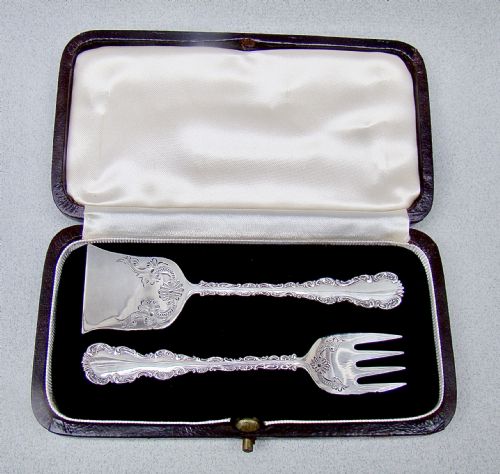
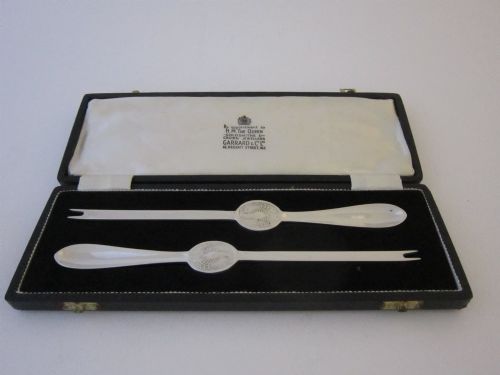
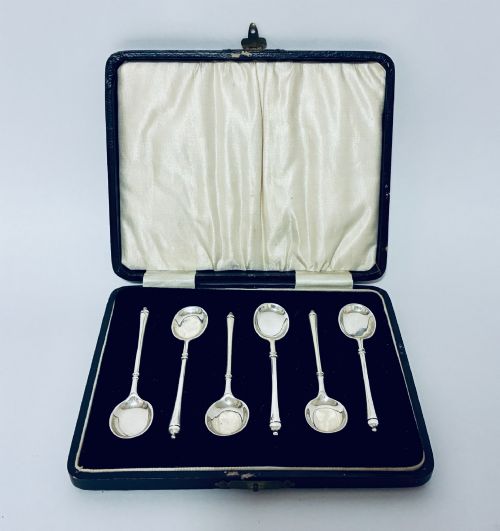
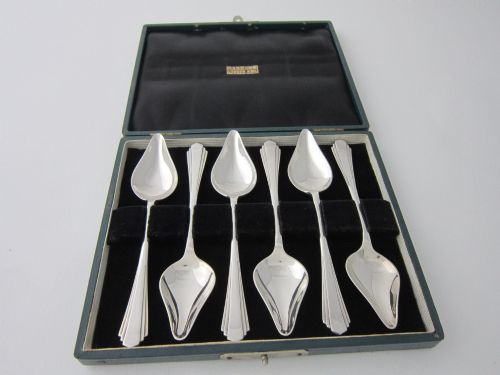
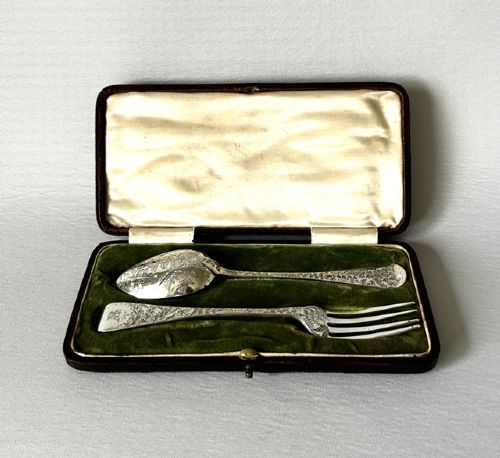
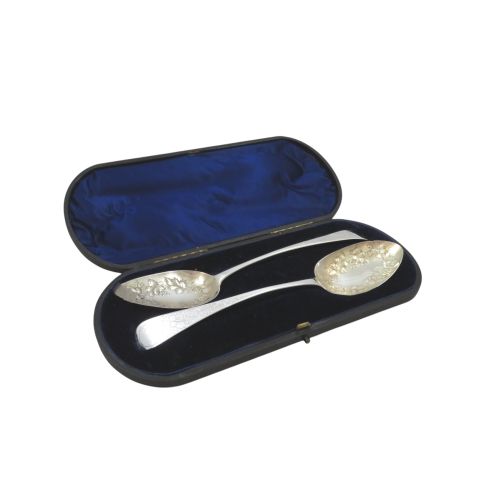
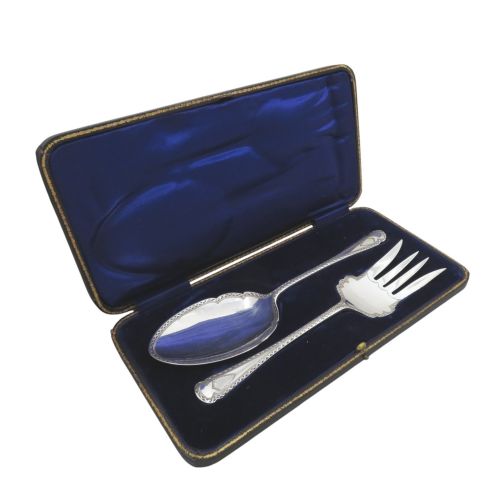
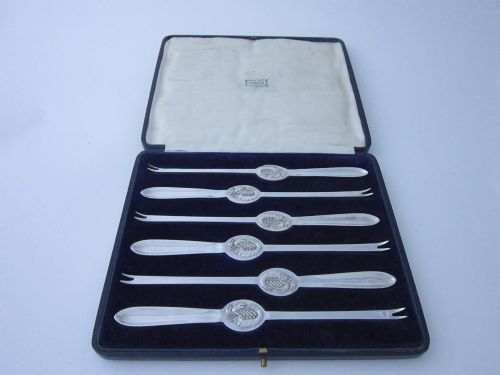
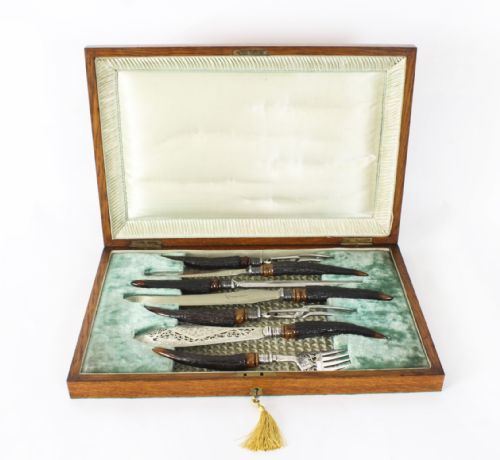
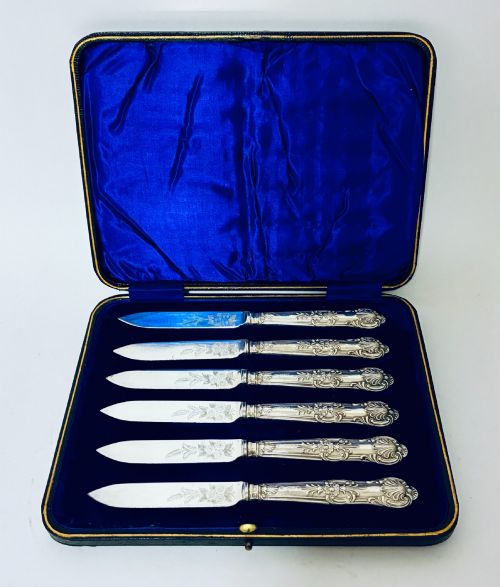
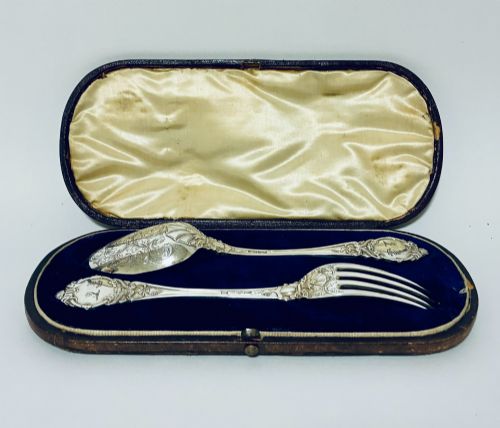
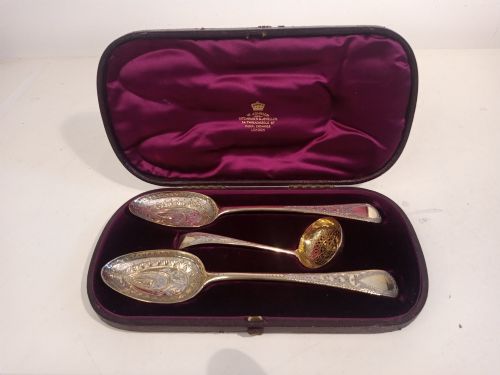
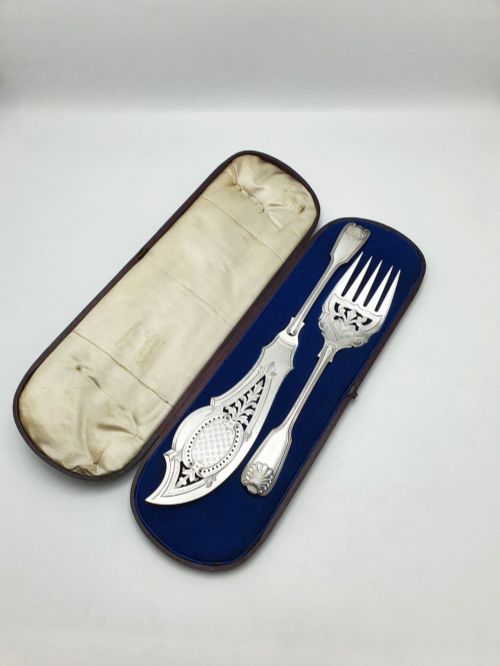
When you search for cased silver cutlery, you are looking at fitted boxes housing matching utensils made for specific dining rituals like dessert, tea, fruit, or fish. The sets on this page include fruit knives, berry spoons, sugar sifters, teaspoons, sugar tongs, fish cutlery, cutlery rests, and christening sets.
The pieces span the Victorian and Edwardian eras, alongside pieces dated 1800, 1900, and 1910, reflecting formal dining habits of the nineteenth and early twentieth centuries. You will encounter both smaller specialised sets, such as six-piece fruit knife sets or teaspoon collections, and larger comprehensive cased canteens.
Origin and form vary widely across these discoveries, ranging from English solid sterling silver to French pieces by Souche-Lapparra, alongside silver-plated large canteens. Fitted boxes protect these utensils, often lined with velvet or silk to cradle each specific blade, handle, and prong securely.
How they were made
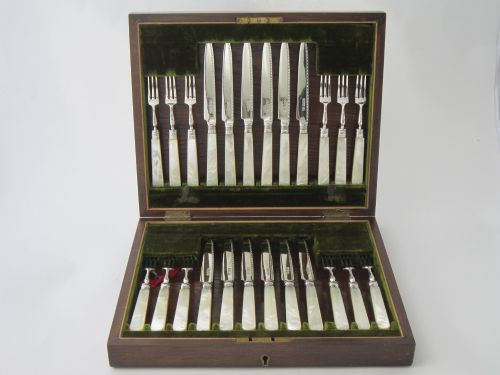
Utensils in these sets combine solid silver or sterling silver with materials like mother-of-pearl, steel, and silver-gilt, shaped into matched flatware, cutlery, and rests. Handles are often fashioned from mother-of-pearl or solid silver, while working edges such as knife blades utilise steel or silver-gilt.
Storage boxes themselves show careful construction, utilising durable outer coverings of leatherette paired with tactile internal linings of silk and velvet. Each case is purpose-built with dedicated slots and recesses to hold exact counts of teaspoons, tongs, or larger dessert knives.
Retail Price Guide 2026
Typical UK retail prices for cased silver cutlery, calculated from the Sellingantiques database of over a million retail prices indexed since 2003. This retail price guide relies exclusively on Sellingantiques data; no external sources or auction records are used, so the figures do not describe the wider market.
Materials recorded across the inventory include velvet, silk, silver, sterling silver, steel, silver-gilt, and leatherette.
What varies in quality
Quality in these sets rests upon the harmony between the utensils and their fitted housing, distinguishing grand comprehensive canteens from modest teaspoon collections. The choice of materials dictates the tier, with solid sterling silver and mother-of-pearl sitting above silver-plated alternatives.
The interior presentation elevates finer examples, where well-preserved silk and velvet linings protect complete matched assemblages without replacement pieces. Maker execution and the complexity of the service, such as a complete fish or dessert set versus a basic spoon pairing, define the upper echelon.
Souche-Lapparra
The Cased Silver Cutlery Glossary
- Sterling silver
- An alloy containing a high proportion of pure silver by weight, widely utilised for durable tableware and flatware. It bears hallmarks that reveal its assay office and year of creation.
- Silver-gilt
- Silver that has been coated with a thin layer of gold on its surface, often applied to the bowls of spoons or interior parts of serving pieces for a rich two-tone appearance.
- Mother-of-pearl
- The iridescent internal layer of certain mollusc shells, carved and polished to form smooth, tactile knife handles. It brings a pale, shimmering contrast to the polished metal blades.
- Cutlery rest
- A small support placed upon the table to keep carving knives and forks elevated between courses, preventing the blades from touching the tablecloth. These are frequently found in matched pairs within fitted boxes.
- Sugar sifter
- A specialised spoon featuring a perforated bowl designed for dusting loose sugar over desserts or fruit. They often appear alongside berry spoons and sugar tongs in nineteenth-century serving sets.
Frequently Asked Questions
What is cased silver cutlery used for?
These matched sets were designed for specific dining courses and domestic rituals, including serving afternoon tea, fruit, fish, or desserts. Fitted boxes kept the delicate silver, steel, and mother-of-pearl components organised and protected between formal meals.
They also served as important presentation pieces for weddings, christenings, and significant anniversaries. The dedicated cases ensured that complete sets remained together across generations of family dining.
How do I care for silver cutlery?
Regular, gentle cleaning with appropriate silver polish preserves the shine of sterling silver and silver-gilt without wearing away fine hallmarks or engraving. Hand washing in warm, soapy water is essential, avoiding harsh dishwashers that can damage organic handle materials like mother-of-pearl.
Storing the items back within their original silk or velvet-lined cases prevents unnecessary tarnishing and protects the pieces from knocks. Keeping the leatherette outer boxes away from excessive moisture ensures the internal linings remain intact.
How do I date cased cutlery sets?
Dating relies heavily upon official hallmarks stamped into the silver components, which indicate the assay office, standard, and specific year of production. Stylistic clues, such as the shape of knife blades and the construction of the fitted case, also point towards Victorian, Edwardian, or later periods.
Compares can be made with archival pieces from known eras, noting changes in handle materials and box designs over time. Consulting the specific assay marks provides the most precise chronological anchor.
What are fruit knives used for?
Fruit knives in these sets were created for cutting acidic fruits at the dining table, preventing the juice from tarnishing standard steel cutlery. The combination of silver or silver-gilt blades and mother-of-pearl handles offered both chemical resistance and refined aesthetics.
They are typically smaller than main course cutlery and form part of specialised dessert or fruit services. Their presence in fitted boxes indicates a formal approach to post-meal hospitality.