


Silver Tea Knives
Silver tea knives bring genuine refinement to the afternoon table, pairing polished handles with sharp blades.
Silver Tea Knives
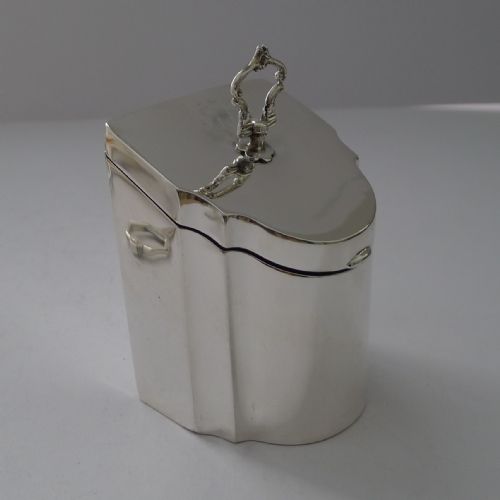
Silver tea knives are specialised cutlery designed for the afternoon tea table, appearing as matched sets or individual pieces alongside caddy forms and butter knives. These implements frequently emerge from the Victorian, Edwardian, and George V periods, reflecting the domestic habits of the late nineteenth and early twentieth centuries.
Origins span British provincial assay offices, notably Sheffield and Birmingham, alongside French workshops producing silver gilt variations. The forms range from simple handled cutlery to novelty designs featuring animal motifs and Prince of Wales feathers.
How They Were Made
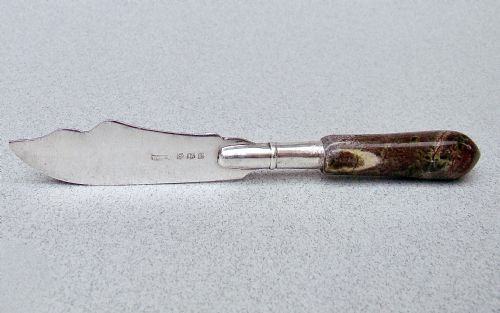
Handles combine organic materials such as mother of pearl and agate with sterling silver, fixed securely to metal working ends. The materials demand careful shaping and polishing to sit comfortably in the hand during use.
Blades utilise steel or solid silver, sometimes finished with a rich silver gilt layer in French examples. Sheffield and Birmingham workshops applied traditional hallmarking to sterling components, recording the assay office and date of manufacture.
Among the cutlery lie miniature butter knives and novelty tea knives adorned with tiny carved animals and Prince of Wales feathers.
What Varies in Quality
Quality reveals itself in the harmony between the handle material and the metal blade, with superior examples showing seamless construction and crisp hallmark stamping. The choice of handle material, from iridescent mother of pearl to banded agate, elevates the visual presence of individual pieces.
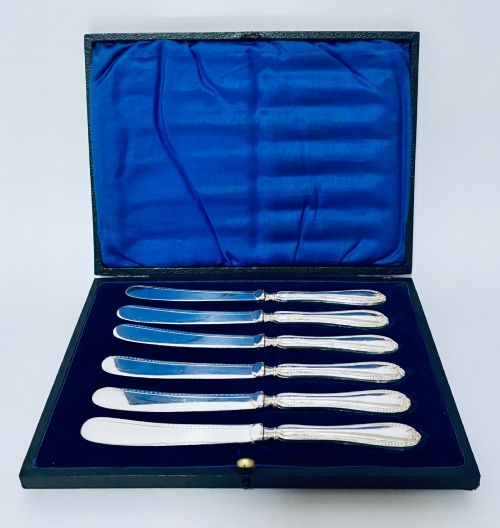
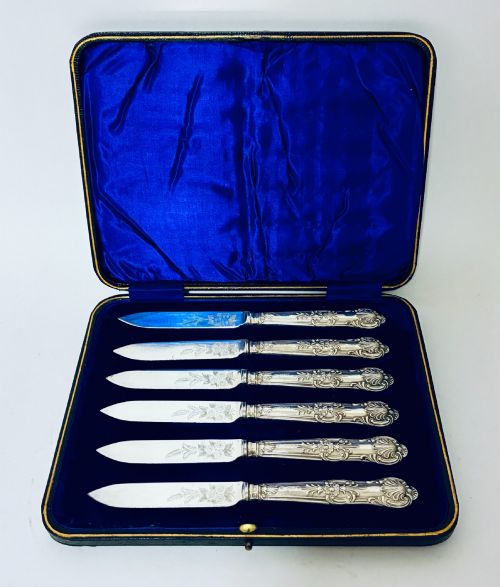
The survival of the original fitted case, complete with intact satin or velvet linings, distinguishes complete cabinet sets from loose utensils. Superior sets maintain uniform matching across all six pieces, whereas assembled groups show subtle variations in maker marks or handle grain.
Vale and St John
The Silver Tea Knives Glossary
- Sterling silver
- A silver alloy containing 92.5 percent pure silver and 7.5 percent other metals, usually copper, chosen for durability in cutlery. British pieces carry standard lion passant hallmarks.
- Mother of pearl
- The iridescent internal layer of pearl oyster shells, shaped into smooth panels for knife handles. It provides a luminous, tactile grip that contrasts with polished metal.
- Agate
- A decorative quartz variety used for handles on miniature butter knives and specialty cutlery. Its natural banding creates distinctive patterns across each piece.
- Silver gilt
- Silver covered with a thin layer of gold, creating a warm, rich surface tone. French examples frequently employ this technique on tea and fruit knives.
- Assay office
- An official body charged with testing the purity of precious metals and stamping items with hallmarks. Sheffield and Birmingham are prominent examples seen on this cutlery.
Silver Tea Knives: Frequently Asked Questions
What were silver tea knives used for?
These knives served at the afternoon tea table for slicing soft cakes, spreading butter, or handling fruit. Their smaller scale suited delicate tableware rather than heavy dining.
Over time, boxed sets became popular wedding gifts, preserved in velvet-lined presentation cases rather than everyday service.
How do I care for antique silver knives?
Gentle hand washing in warm soapy water protects organic handle materials like mother of pearl and agate from damage. Avoid harsh dips that strip the character from older metal surfaces.
Storage in fitted boxes or anti-tarnish rolls prevents unnecessary exposure to air, keeping the silver bright between uses.
Are cased sets always complete?
Boxed sets sometimes show replacement pieces accumulated over decades of use, which can alter the uniformity of a service. Inspecting individual handles and maker marks reveals whether the set started life together.
Original fitted boxes lined with silk or velvet add considerable context to Edwardian and Victorian cutlery groups.
How do I date an Edwardian tea knife?
Makers stamped official hallmarks directly onto the silver elements, recording the assay office city, the standard mark, and a specific date letter. Sheffield and Birmingham pieces carry clear stamps that pinpoint the exact year of production.
Stylistic cues, such as the introduction of steel blades paired with mother of pearl, also point toward early twentieth-century manufacturing trends.