


Antique Tea Knives
These antique tea knives are silver-handled butter knives, fruit knives, and cased sets spanning the Victorian, Edwardian, and George periods.
Antique Tea Knives
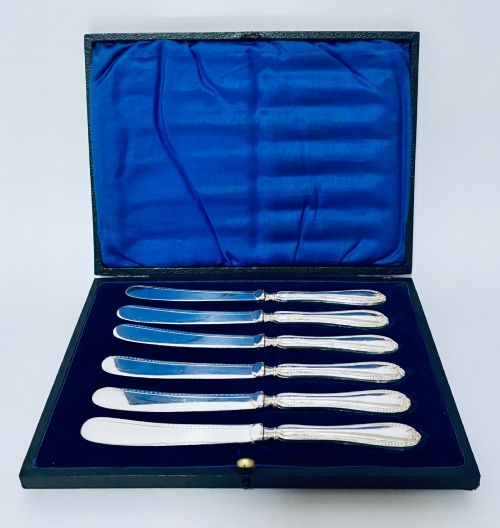
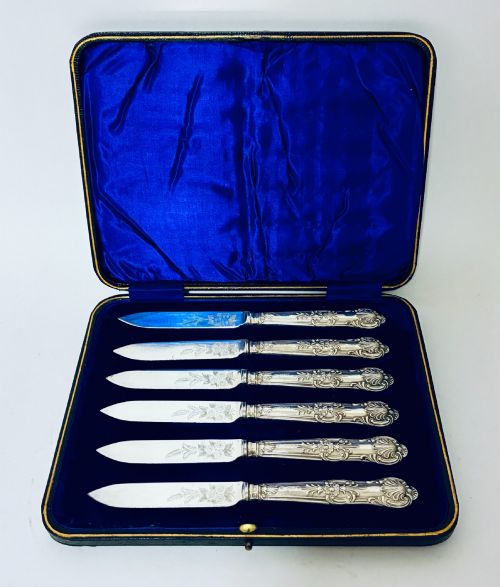
When you search for antique tea knives, you encounter silver-handled butter knives, fruit knives, and cased sets spanning the Victorian, Edwardian, and George periods. These pieces include single knives, sets of six, and fitted storage boxes in knife box forms.
You are most likely to meet silver-handled butter knives from the Victorian and Edwardian eras on this page. Makers produced these utensils in matched sets or as part of larger cutlery sets alongside pickle forks and jam spoons.
How they were made
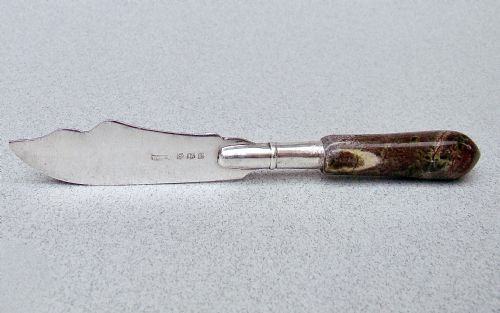
Silversmiths combined sterling silver blades and handles with natural materials such as mother of pearl and agate. Steel was also utilised for blades in cased sets alongside pearl handles.
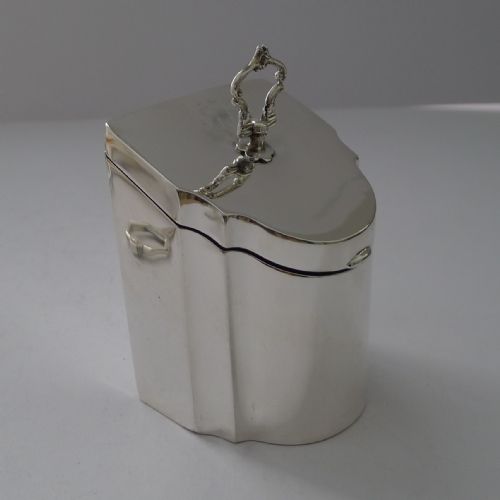
Storage boxes and knife box forms relied on figured mahogany, shaped with serpentine contours. Velvet and silk frequently lined the interiors of these cased sets and storage boxes to protect the cutlery.
Listings feature sterling silver, steel, mother of pearl, agate, mahogany, velvet, and silk across Victorian, Edwardian, and George periods.
What varies in quality
The standard of manufacture depends on the choice of materials, such as finely figured mahogany or lustrous mother of pearl handles. Pieces bearing clear assay office hallmarks from towns like Sheffield and Birmingham indicate higher workshop standards.
Completeness within cased sets or matched groups of six alters the desirability of the cutlery. The precision of the serpentine shaping on storage boxes further separates standard production from superior examples.
Vale and St John
The Antique Tea Knives Glossary
- Butter Knife
- A small utensil designed specifically for spreading butter at the tea table, often featuring a silver blade and handle. These pieces frequently appear in matched sets of six.
- Mother of Pearl
- The iridescent inner layer of mollusc shell used for knife handles. This organic material provides a smooth texture and creamy tone.
- Agate
- A decorative chalcedony stone utilised for handles on miniature butter knives. Its natural banding creates distinctive patterns on each piece.
- Knife Box Form
- A storage container shaped to imitate traditional knife boxes, housing silverware or tea equipment. These boxes often employ figured mahogany.
- Hallmark
- Official marks stamped onto silver items to denote the standard of the metal, the assay office, and the year of manufacture. These stamps provide precise dating evidence for Victorian and Edwardian pieces.
Antique Tea Knives: Frequently Asked Questions
What are antique tea knives used for?
These utensils served dining and tea table functions, specifically for spreading butter or slicing fruit during formal meals. Sets of six provided matching cutlery for guests.
Individual pieces like butter knives and fruit knives complemented broader silver services and tea caddies during the Victorian and Edwardian periods.
How do I date antique tea knives?
Dating relies on identifying the hallmarks stamped into the silver components by assay offices in locations such as Sheffield and Birmingham. These official marks record the exact year of production.
Stylistic indicators, including the transition from Victorian ornamentation to Edwardian designs and George V minimalism, also help narrow the period.
What materials are used in these knives?
Handles incorporate sterling silver, mother of pearl, and agate, paired with silver or steel blades. Storage boxes utilise figured mahogany with velvet and silk linings.
These material combinations reflect the prevailing tastes and manufacturing capabilities of the nineteenth and early twentieth centuries.
How should I care for silver handled knives?
Silver components require gentle cleaning with appropriate metal polishes to maintain their finish without damaging the hallmarks. Mother of pearl and agate handles should be kept away from harsh chemicals.
Store cased sets and individual knives in their fitted velvet or silk-lined boxes to protect the materials from abrasion.