
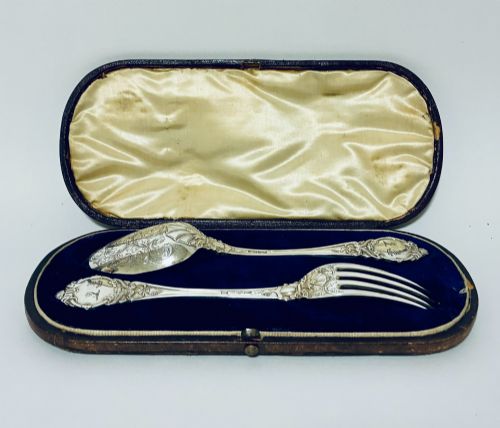
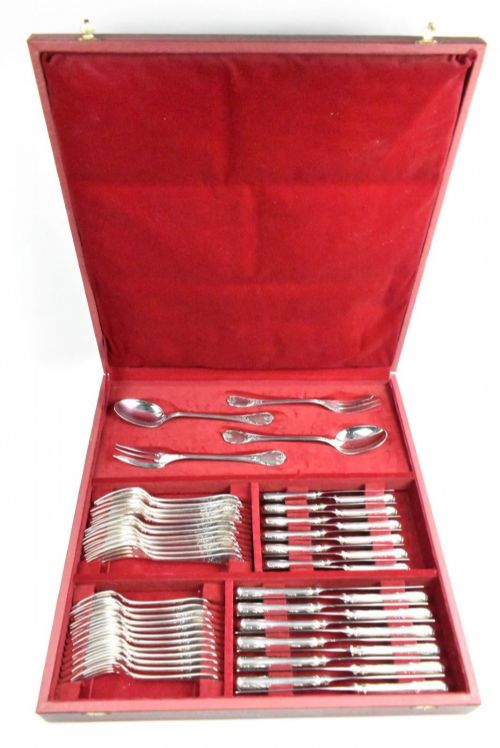
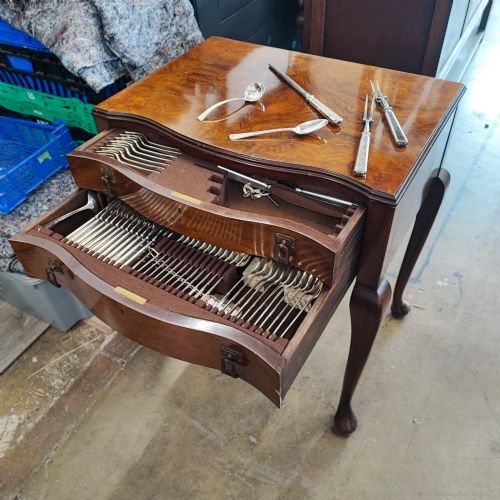


Boxed Cutlery Set
A boxed cutlery set brings together matched implements and fitted housing, offering both functional service and secure storage for the dining table.

Identifying a boxed cutlery set
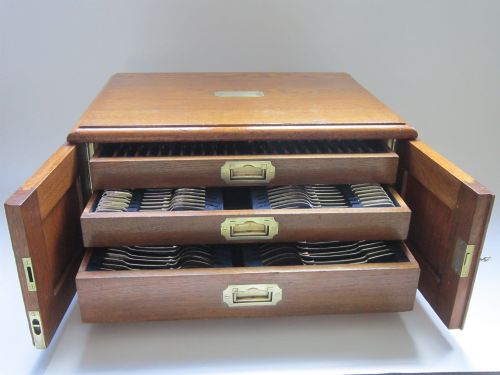
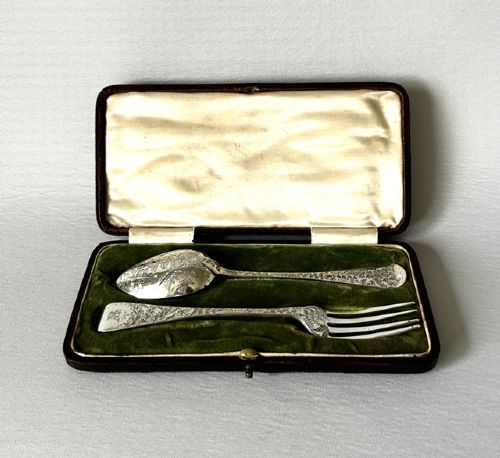
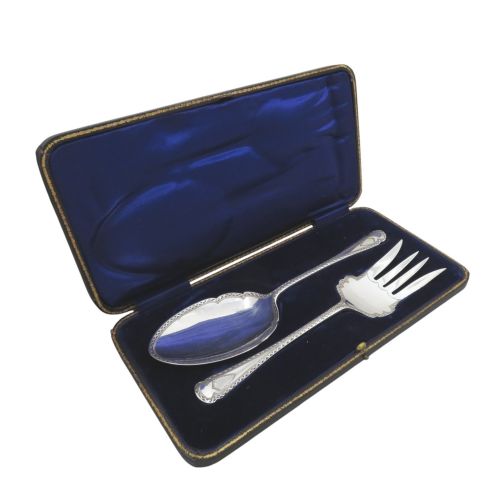
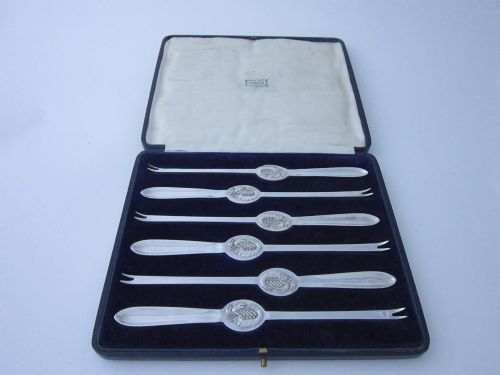
A boxed cutlery set combines coordinated eating implements with a dedicated fitted case, ranging from individual butter knives to extensive service arrangements. These pieces emerge primarily from the Edwardian period through the 1920s, reflecting the formal dining habits of their eras.
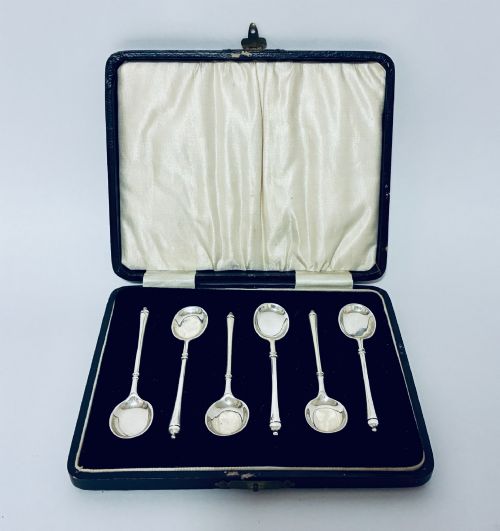
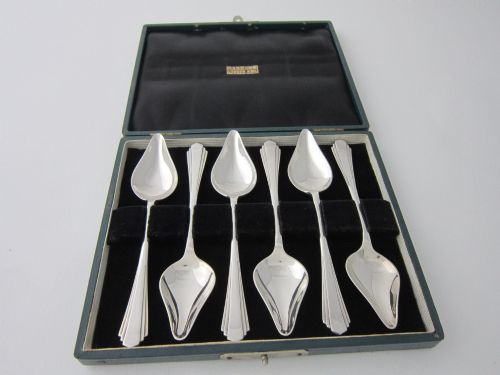
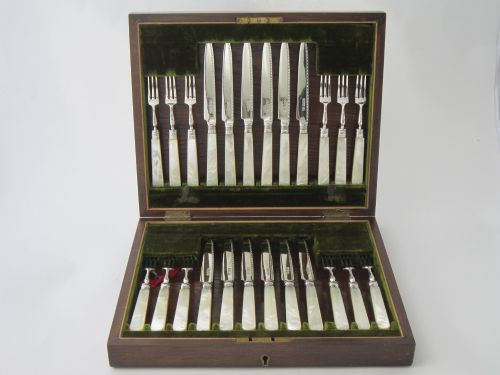
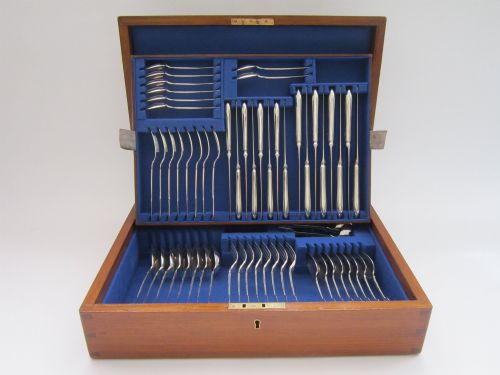
The most common versions encountered on this page include smaller service sets, such as butter knives and fish sets, alongside larger canteens. Pieces span diverse stylistic influences including Art Deco, Rococo Revival, and Edwardian designs.
Originating from makers and retailers across different European and British centres, these sets preserve complete dining services within their original housings. The inclusion of fitted cases protects the metal surfaces from tarnish and wear over decades of use.
Materials and construction
Internal presentation relies on tactile textile elements, incorporating velvet, silk, satin, and various fabrics to line the fitted slots and secure each individual piece. Wooden outer canteens provide structural protection while displaying polished grain surfaces suited to domestic display.
Retail Price Guide 2026
Typical UK retail prices for boxed cutlery set, calculated from the Sellingantiques database of over a million retail prices indexed since 2003. This retail price guide relies exclusively on Sellingantiques data; no external sources or auction records are used, so the figures do not describe the wider market.
Listings feature items dated to 1910 and 1920 alongside Edwardian examples.
Assessing quality and craftsmanship
The distinction between standard domestic sets and finer examples lies in the integrity of the materials and the precision of the fitted case. Superior sets feature substantial metal gauges, fully articulated handles, and robust wooden construction rather than lightweight veneers.
Internal lining materials also indicate tier, where heavy silk, velvet, or satin fitted precisely to each implement signals superior production. Complete sets retaining every original element within an uncompromised case demonstrate higher collector value than partial assortments.
Christofle Marly·Waring & Gillows·Georg Jensen·Jules Albrecht Geneve·Firths Sheffield
The Boxed Cutlery Set Glossary
- Canteen
- A fitted wooden box or chest designed specifically to hold a complete service of cutlery in dedicated slots. These storage pieces often feature multiple internal tiers or Lift-out trays.
- Silver gilt
- Silver objects that have been coated with a thin layer of gold on the surface, providing a rich golden tone over the underlying metal. This finish appears frequently on dessert and fruit service pieces.
- Pistol grip
- A style of handle shaped to resemble the butt of a flintlock pistol, offering an ergonomic curved grip. This form became popular on silver and plated dining knives during earlier centuries and continued into later revivals.
- Flatware
- General term for dining utensils used for eating, such as forks, spoons, and knives. In boxed sets, these implements share a unified decorative pattern.
Frequently Asked Questions
How do I clean tarnished silver cutlery?
Silver and silver plate require gentle cleaning with specialised polishes and soft cloths to avoid removing the metal layer. Avoid harsh abrasives that scratch delicate surfaces on antique handles.
Store pieces inside their lined cases after cleaning to reduce exposure to air and slow future tarnishing.
Can these sets be used daily?
Many sets remain robust enough for regular dining, though hand washing protects delicate wooden cases and textile linings. Silver-plated and steel implements function well for modern meals.
Consider the presence of delicate velvet or silk linings when deciding whether to store frequently used sets on the dining table or in a cabinet.
What periods do these pieces represent?
The available selection centres primarily on the Edwardian era and the 1920s, incorporating styles from Rococo Revival to Art Deco. These decades produced varied dining services housed in fitted wooden boxes.
Design motifs and case construction help indicate the specific manufacturing decade of each set.
Why are some sets incomplete?
Individual pieces often became separated or lost over decades of domestic use and household moves. Replacement implements rarely match the exact patina and wear of the original service.
Complete sets retain higher integrity because every component belongs to the original production run.