



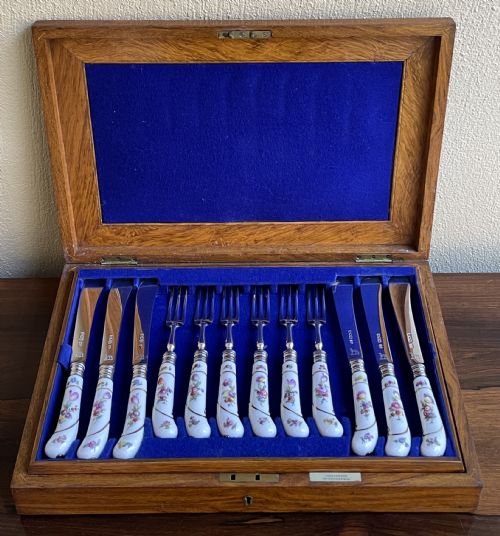
Silver Handled Knives
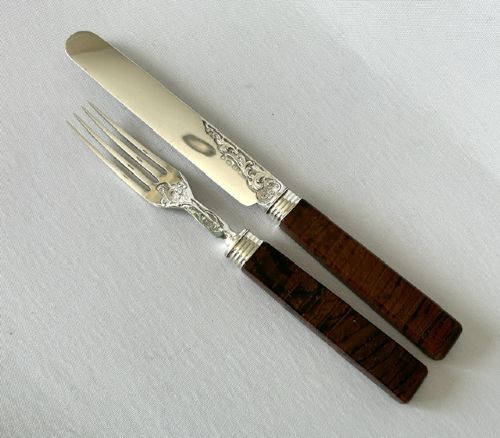
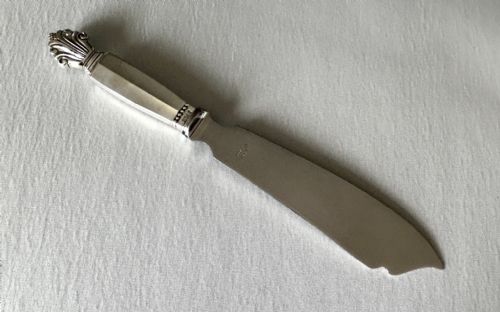
When you search for silver handled knives, you find implements spanning the Georgian, Victorian, and Edwardian periods intended for dining, dessert, and butter.
Silver Handled Knives
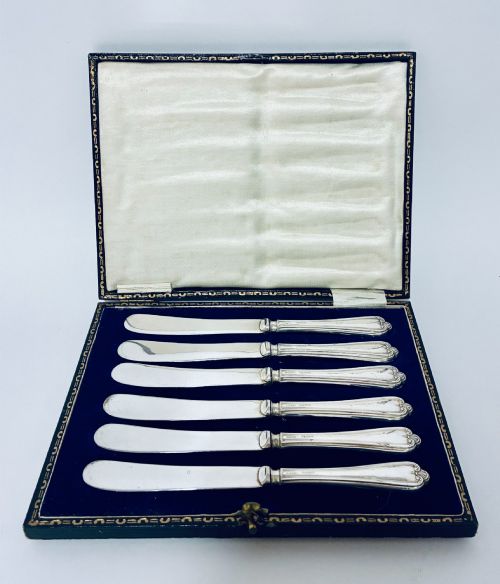
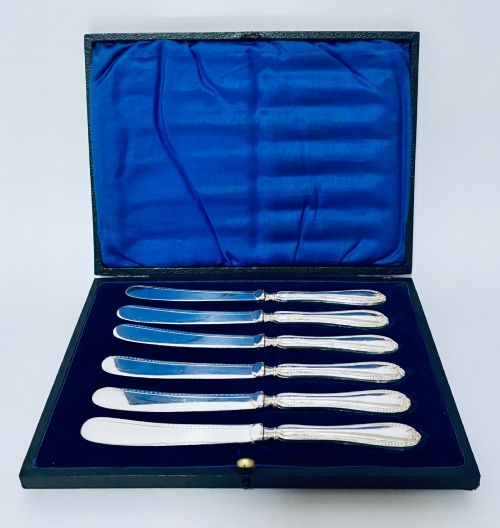
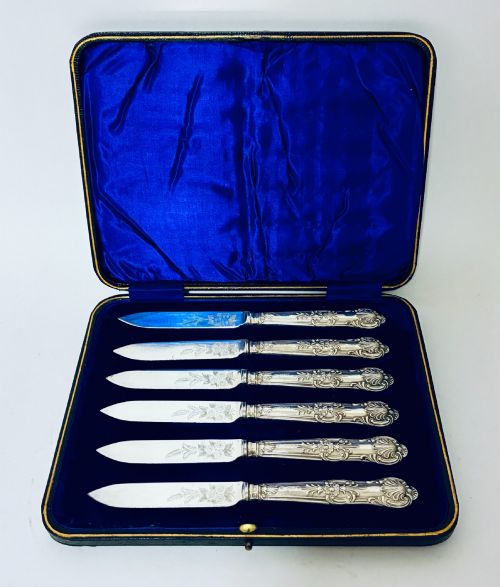
Buyers searching for silver handled knives encounter a broad category that includes fruit knives, butter knives, dessert sets, and larger dining cutlery. These pieces surface frequently in boxed sets from the Victorian and Edwardian eras, as well as individual pieces dating back to the Georgian period.
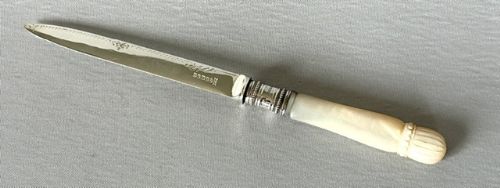
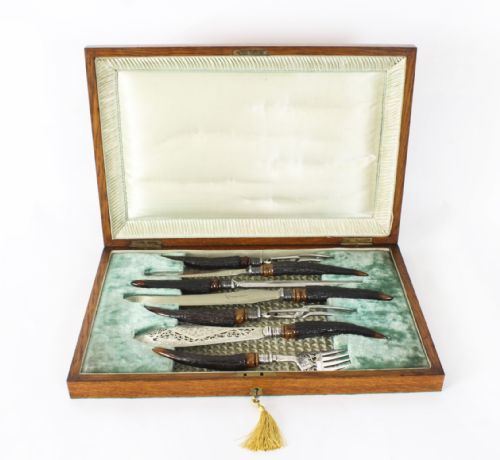
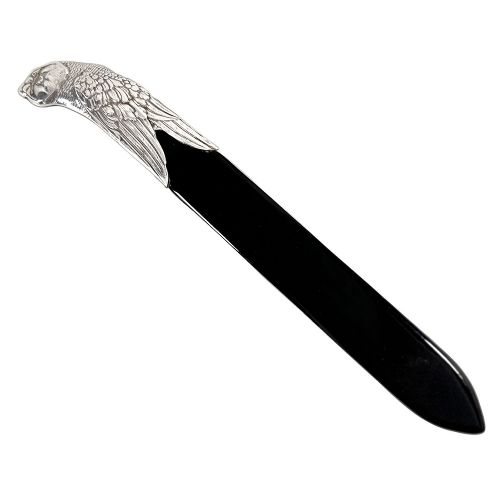
The assortment on this page also extends to related tabletop items such as letter openers, fish servers, and carving sets that share the same characteristic metal handles. The forms reflect the specific domestic habits of their respective periods, from formal tea tables to substantial daily dining.
How they were made
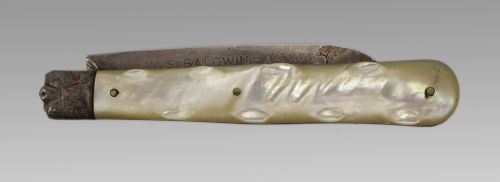
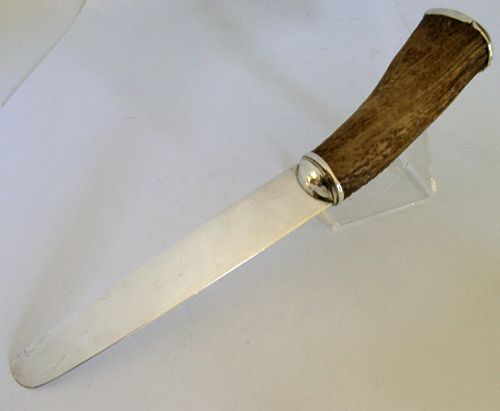
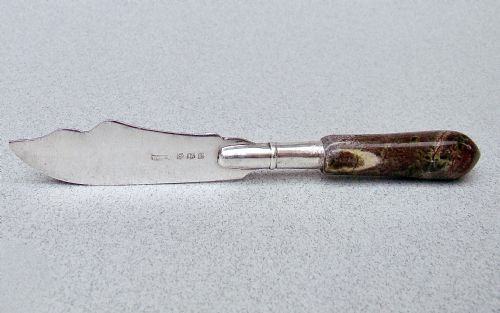
Makers combined sterling silver or silver plate for the handles with durable steel blades, or occasionally cast silver blades for fruit and dessert pieces. Handles were frequently shaped from organic materials such as mother-of-pearl, agate, horn, tortoiseshell, and antler alongside solid silver.
Techniques varied from cast shell designs and pistol grips to engraved detailing and fitted wooden or leather presentation cases. Specialised workshop methods accounted for the joining of metal handles to steel or silver working ends.
Listings feature items from the 18th Century through the mid-20th Century, incorporating materials like agate, horn, velvet, and mother-of-pearl.
What varies in quality
Quality differences appear in the crispness of the handle chasing, the material integrity of organic elements like agate and mother-of-pearl, and the presence of clear hallmarks. Full matching sets in original fitted boxes demonstrate a higher degree of original curation than assembled collections.
The distinction between solid sterling silver handles and silver plate over base metal influences the grade of the piece, as does the skill involved in specialised forms like novelty letter openers or provincial Scottish dirks.
Moses Brent·Sampson Mordan and Co·A Barrett·Walker and Hall·Harrison Brothers·Vale and John·Jowika
The Silver Handled Knives Glossary
- Hallmark
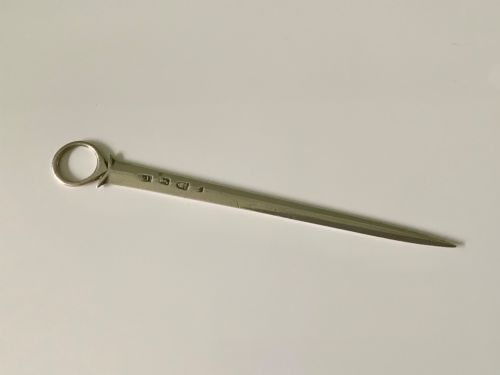
- Official stamps punched into precious metals indicating the assay office, standard of silver, and date letter. These marks allow collectors to date the piece precisely.
- Sterling silver
- An alloy containing 92.5 percent silver by mass, with the remainder being other metals, usually copper. It represents the standard for quality British silver goods.
- Pistol grip
- A handle shape curving outward like the butt of a flintlock pistol, common on Georgian and Victorian dining cutlery for an ergonomic hold.
- Mother-of-pearl
- The iridescent inner layer of mollusc shells used widely for decorative knife handles throughout the nineteenth century.
- Assay office
- A statutory body that tested the purity of precious metals and applied official hallmarks. Towns such as Sheffield, Birmingham, and London maintained prominent offices.
Silver Handled Knives: Frequently Asked Questions
How do I clean silver handles?
Use a soft microfibre cloth and a mild silver polish designed to lift tarnish without abrasive rubbing. Avoid getting polish into crevices or onto organic handle materials like mother-of-pearl and horn.
Store the pieces away from rubber bands and damp environments to prevent future corrosion or discolouration on both the silver and the steel blades.
Were these used for everyday dining?
Many sets, particularly those from the Victorian and Edwardian periods, were reserved for specific courses like fruit, fish, or butter during formal meals. Others served as desk accessories or travel cutlery for camping and campaign use.
Their survival in fitted boxes often indicates they saw limited, special-occasion usage rather than rough daily service.
How can I tell the period?
Examine the hallmarks for specific date letters and assay office symbols, which provide a precise year of manufacture. Stylistic clues such as Art Deco geometric lines or heavy Victorian chasing also point to distinct eras.
Handle materials like celluloid or mid-century stainless steel components indicate later twentieth-century production compared to earlier horn and agate.
Can I use antique knives for food?
Many possess steel blades that react poorly to acidic foods like citrus fruits, which can stain or pit the metal over time. Hand washing promptly after use helps preserve the metal surface.
Delicate handle attachments on older pieces mean modern dishwashers should be avoided entirely to prevent structural damage.