




Vintage Fish Servers
These vintage fish servers bring elegance to the dining table with matching knives and forks designed specifically for course service.

Vintage Fish Servers
When you search for vintage fish servers, you encounter matching pairs and individual slices created for serving fish courses. These utensils date from the Georgian, Victorian, Edwardian, and mid-century periods.
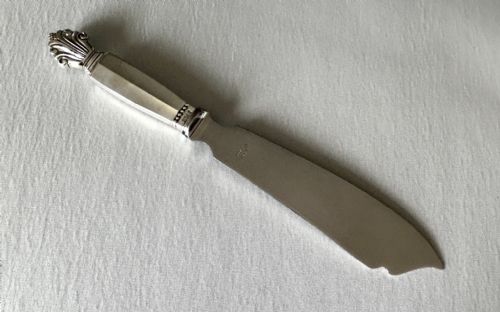
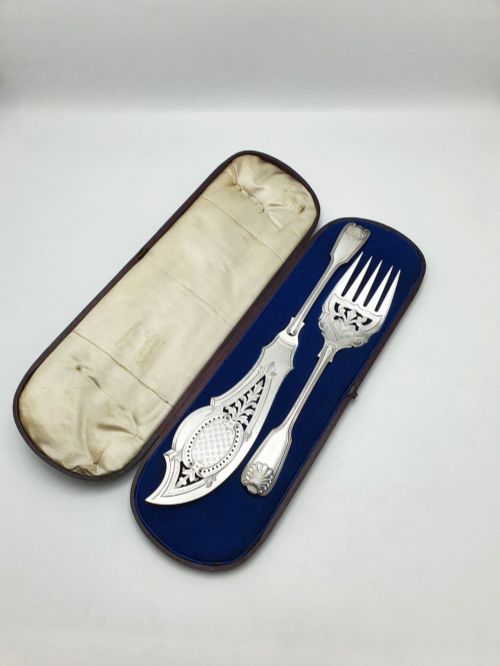
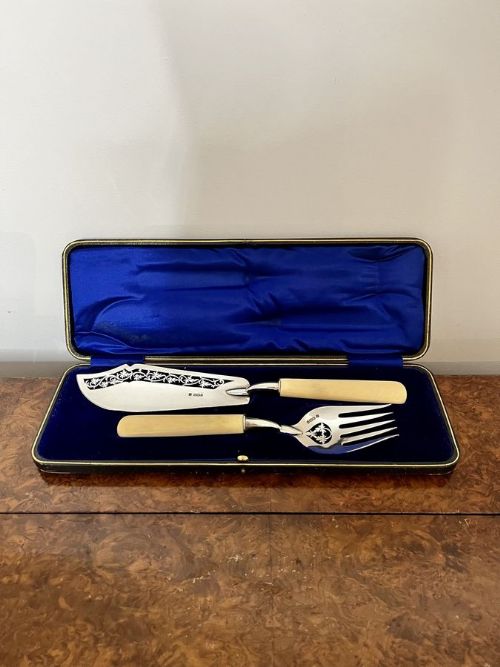
The pieces on this page include engraved Victorian silver-plated sets, Georgian silver slices, Edwardian cutlery sets by Waring & Gillows, and mid-century designs. You will frequently find servers paired with forks in presentation boxes or fitted cases.
Forms range from broad pierced blades to specific sardine forks and serving knives. Originating from various British and international makers, these utensils reflect formal dining traditions of the nineteenth and twentieth centuries.
How they were made
Maker construction combines sterling silver or silver plate with organic handle materials such as mother-of-pearl, antler, horn, and velvet-lined presentation boxes. Blades and tines often feature detailed hand engraving, including hunting scenes and botanical motifs.
Handles utilise natural textures and metals, secured to the utensils through traditional silversmithing techniques. Mid-century and Edwardian examples demonstrate shifts towards streamlined forms while maintaining functional balance for dining use.
Some Victorian fish sets feature hand-engraved hunting dogs bounding across the blade, ready to retrieve your supper before it reaches the plate.
What varies in quality
Quality rests in the crispness of the blade engraving and the integrity of natural handle materials like antler and horn. Pieces retaining their original fitted presentation boxes command greater interest from collectors.
The weight of the silver or silver plate and the balance between handle and blade distinguish standard production from superior workshop output. Maker attribution, such as work by Georg Jensen, Waring & Gillows, or Alvin, elevates the standing of an individual set.
Georg Jensen·Waring & Gillows·Alvin
The Vintage Fish Servers Glossary
- Silver plate
- A base metal coated with a thin layer of pure silver. This technique provided the appearance of solid silver at a more accessible cost during the Victorian era.
- Antler handle
- A natural handle material fashioned from deer antler. It offers a tactile grip and a distinctive textured appearance.
- Old Orange Blossom pattern
- A specific decorative motif found on silver flatware. It displays floral engraving typical of late nineteenth and early twentieth-century design.
Vintage Fish Servers: Frequently Asked Questions
What are vintage fish servers used for?
These servers were designed for carving and serving whole fish at the dining table during formal meals. The broad blade supports delicate fish flesh while the matching fork assists with portioning.
Today, collectors utilise them for dinner parties or display them within traditional dining room settings.
How do I care for silver fish servers?
Hand washing in warm soapy water with a soft cloth preserves the finish of silver and silver plate. Avoid abrasive cleaners that can damage engraved details on the blade.
Store pieces in tarnish-resistant cloth or fitted boxes to protect handles made from delicate materials like mother-of-pearl and horn.
How do I identify the period of fish servers?
Stylistic details such as heavy floral engraving point towards Victorian manufacture, while cleaner lines often suggest mid-century modern design. Maker marks and hallmarks stamped on the metal provide precise chronological indicators.
Boxed sets and accompanying paperwork also help date the utensils to specific eras like the Edwardian period.
Are fish servers made of solid silver?
Many examples use sterling silver for the blades and tines, whilst others consist of silver plate over a base metal. Handle materials vary widely between solid silver, mother-of-pearl, antler, and horn.
Examining the metal stamps helps determine whether a piece is sterling or plated.