



Fish Knives and Forks
These fish knives and forks are table implements for serving and eating seafood, combining practical utility with Victorian and Edwardian craftsmanship.

Fish Knives and Forks
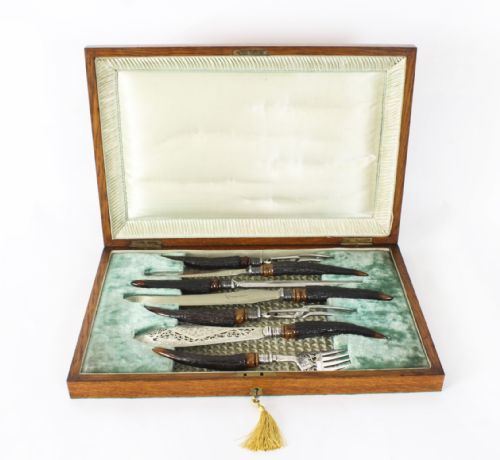
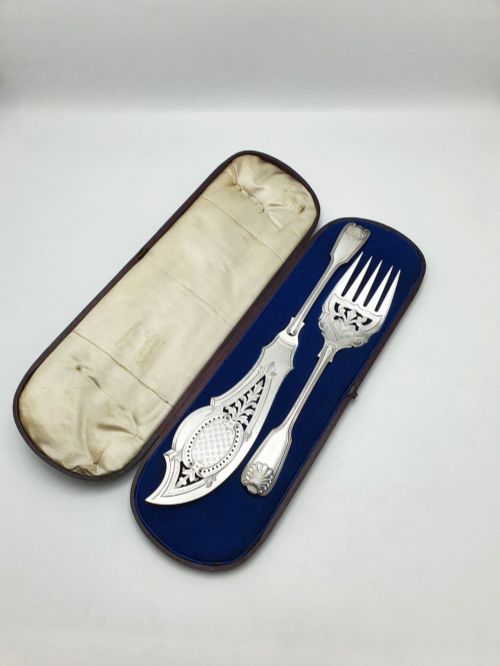
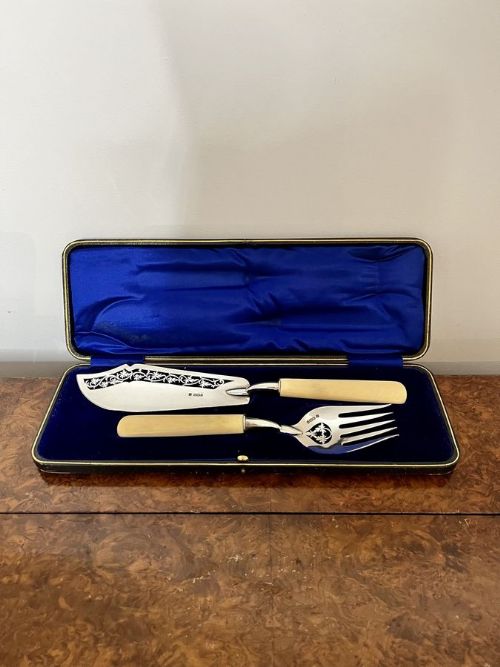
When you search for fish knives and forks, you encounter matched canteens, boxed sets for six or twelve persons, and individual serving sets. The forms span the Victorian and Edwardian periods, stretching from the 1860s through the early twentieth century.
Silver plate and sterling silver dominate the selections, often paired with handles of bone, stag antler, horn, or mother of pearl. You will frequently find them housed in fitted oak or velvet-lined boxes designed to protect the metalwork.
The decorative execution ranges from engraved blades depicting hunting scenes to figural carvings with glass eyes. Sets appear in patterns such as Albany and Kings, reflecting the formal dining habits of their respective decades.
How they were made
Craftsmen utilised sterling silver and durable silver plate for blades and prongs, combining them with organic handle materials like mother of pearl, bone, and stag antler. Steel components also appear in specific carving configurations.
Engraving and chasing transformed plain metal surfaces into detailed scenes of wildlife, floral motifs, or geometric patterns. Makers secured handles to metallic collars using traditional pinning methods suited to daily dining.
The listings span the Victorian, Edwardian, and Art Deco styles, utilising silver plate, sterling silver, bone, horn, and mother of pearl.
What varies in quality
The distinction between standard production and superior execution lies in the depth of hand-engraving on the blades and the intricacy of handle carving. Figural elements and specialised materials like mother of pearl elevate a set above basic plated wares.
The integrity of the original fitted presentation case and the completeness of full matching sets for twelve persons dictate the standing of a grouping within its period.
Waring and Gillows·WMF·Walker and Hall·Martin Hall
The Fish Knives and Forks Glossary
- Silver Plate
- A base metal coated with a thin layer of silver through electroplating or older processes. This technique provided the appearance of solid silver at a lower cost during the nineteenth century.
- Sterling Silver
- An alloy containing a high proportion of pure silver combined with other metals to ensure durability. Pieces marked thus meet legal fineness standards.
- Mother of Pearl
- The iridescent inner layer of certain mollusc shells used for knife handles. It offers a smooth tactile quality and a distinctive shimmering appearance.
- Stag Antler
- The shed horn of a deer utilised for knife and fork handles. It provides a textured, robust grip with natural variations in colour and form.
- Canteen
- A fitted box or cabinet designed to hold a complete set of cutlery securely. These containers often feature velvet or satin linings.
Fish Knives and Forks: Frequently Asked Questions
How were fish knives and forks used?
These implements were designed for the specific course of eating fish at formal nineteenth and twentieth century dinners. The broad blade of the knife assisted in separating flesh from bone without a traditional cutting edge, while the matching fork managed portions.
Dining etiquette of the period required dedicated flatware for fish to prevent transferring odours to other courses. Sets often included matching servers for the host to portion larger catches at the table.
How do I care for silver plated sets?
Maintenance involves gentle cleaning with appropriate silver polishes that do not abrade plated surfaces or organic handles. Avoid submerging sets with bone, antler, or mother of pearl in hot water.
Storage in original fitted boxes or anti-tarnish rolls preserves the metal and prevents unnecessary scratching between uses.
How can I tell Victorian sets apart?
Victorian examples often display heavier engraving, Gothic influences, or naturalistic antler and bone grips. Hallmarks on sterling pieces or specific registry marks help narrow down the decade of production.
Edwardian items frequently introduce lighter handling and simpler floral motifs, moving away from the denser ornamentation of earlier decades.
Can I use these for modern dining?
These pieces function adequately for contemporary meals, though hand washing remains essential to protect vintage handles and plating. They bring historical character to special occasion dining.
Canteens configured for six or twelve persons allow for practical usage when hosting gatherings.