


Silver Fish Cutlery
Silver fish cutlery encompasses specialised servers and sets designed for dining, ranging from solid sterling silver slices to plated canteens with mother of pearl handles.

Silver Fish Cutlery
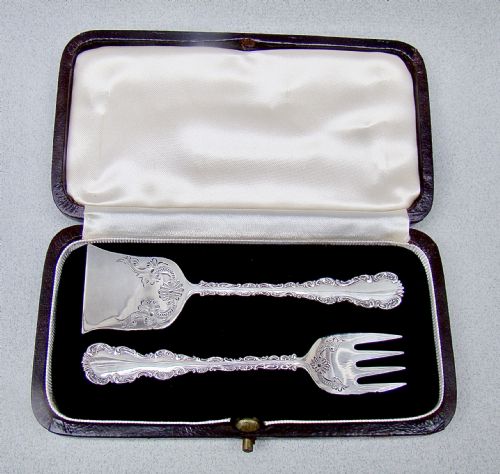
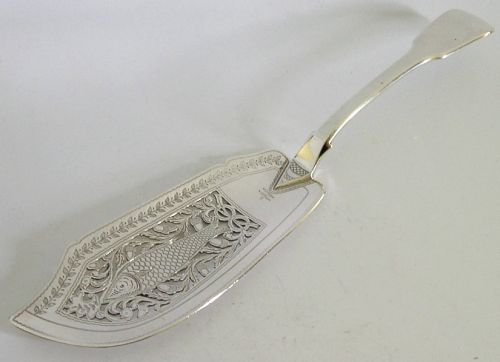
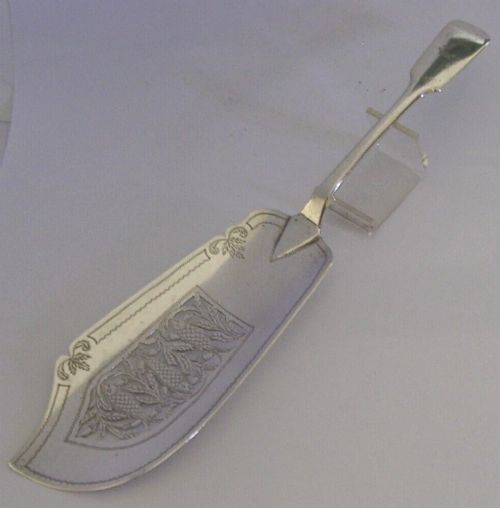
Silver fish cutlery covers dedicated implements for serving and consuming fish, including individual knives and forks alongside larger servers like fish slices and sardine forks. When searching for silver fish cutlery, buyers encounter various forms from the Georgian, Victorian, and Edwardian eras.
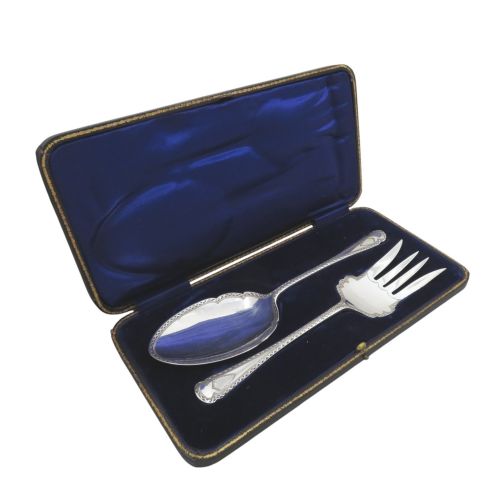
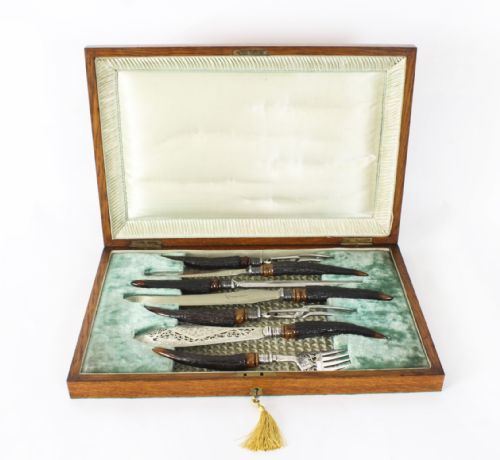
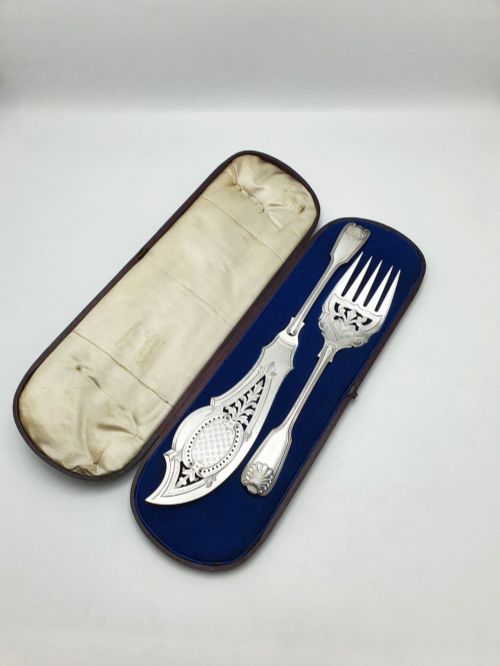
The pieces on this page appear as individual cased sets, canteens, and matched pairs in materials such as sterling silver and silver plate. Victorian and Edwardian examples predominate, frequently accompanied by fitted mahogany or oak cases.
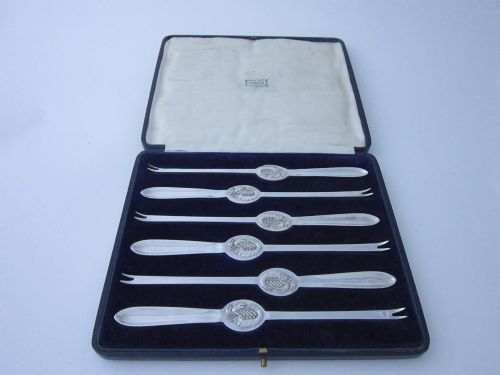
Serving pieces include pierced fish servers and specialised picks for lobster and seafood. These items reflect the formal dining practices of the nineteenth and early twentieth centuries.
How they were made
Manufacturers utilised sterling silver and silver plate for blades, tines, and servers, pairing them with organic handles carved from mother of pearl, bone, and antler horn. Metalwork techniques involved piercing, engraving, and casting in patterns such as Queens and Fiddle.
Cased sets often feature custom-fitted wooden boxes lined in velvet or silk to protect the polished metal and delicate handle materials. Makers applied detailed chasing and crest engravings directly onto the silver surfaces.
Some Edwardian sets come equipped with dedicated lobster picks for navigating stubborn seafood shells.
What varies in quality
Quality rests in the weight of the silver, the crispness of the pierced and engraved decoration on the blade, and the selection of handle materials like mother of pearl. Pieces by documented makers or those retaining original fitted velvet-lined cases command higher regard.
Substantial gauge sterling silver differs from silver plate over base metal, while master craftsmanship shows in balanced weight and securely fitted organic handles.
Henry Wilkinson·Suckling Ltd·Waring & Gillows·Mappin & Webb·Alvin
The Silver Fish Cutlery Glossary
- Fish slice
- A broad, flat serving utensil with a pierced blade designed for lifting fish portions at the table. These often feature elaborate engravings of aquatic motifs or scrollwork.
- Mother of pearl
- An iridescent inner layer of mollusc shell utilised for cutlery handles during the Victorian and Edwardian periods. It provides a smooth, tactile grip.
- Fiddle pattern
- A traditional cutlery handle shape characterised by a narrow stem that broadens into a shoulder before terminating in a square, fiddle-like end.
- Sardine server
- A specialised fork or small slice shaped specifically for lifting whole tinned or fresh sardines without breaking them.
- Queens pattern
- An ornate, heavily embossed nineteenth-century silverware design featuring shell and scroll borders along the handle edges.
Silver Fish Cutlery: Frequently Asked Questions
What is silver fish cutlery used for?
Silver fish cutlery comprises knives, forks, and servers specifically shaped for eating and serving fish courses during formal meals. The broad knife blade easily separates fish flesh from bones without metal reactions affecting the flavour.
Larger serving pieces like fish slices allow hosts to transfer delicate fillets or whole fish portions onto individual plates cleanly.
How do I clean silver fish cutlery?
Clean sterling silver and silver plate pieces using a dedicated silver polish and a soft cloth, avoiding abrasive pads that scratch the metal surface. Care must be taken around organic handles like mother of pearl, bone, and antler horn to prevent moisture damage.
Store the items in dry conditions, ideally inside their original fitted wooden canteens lined with velvet or silk to minimise tarnishing.
How do I date Victorian fish cutlery?
Dating Victorian fish cutlery involves examining the hallmarks stamped into the metal, which indicate the assay office, year letter, and maker's mark. Stylistic clues such as handle materials and engraving depth also help narrow down the production era.
Pieces accompanied by original mahogany or oak cases often carry retailer plaques or hallmarks corresponding to the late nineteenth century.
Are bone handles different from mother of pearl?
Bone handles are opaque, creamy white, and show a porous grain under close inspection, whereas mother of pearl displays a natural iridescent sheen with shimmering colours. Both materials were popular choices for Victorian and Edwardian cutlery.
Mother of pearl requires gentler handling during cleaning to preserve its fragile crystalline structure compared to sturdier bone.