





Silver Dessert Knives
Silver dessert knives are refined table implements that bring period elegance to the dining table.
Silver Dessert Knives
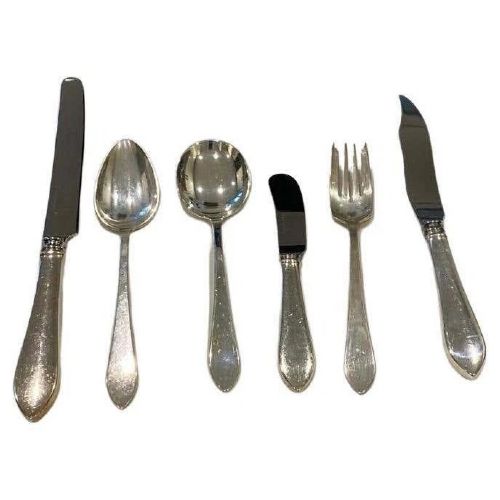
Silver dessert knives are specialised cutlery designed for the final course of a meal, often appearing in matched sets within fitted boxes. When searching for silver dessert knives, you encounter pieces spanning the Victorian, Edwardian and Art Deco periods, ranging from the early nineteenth century onwards.
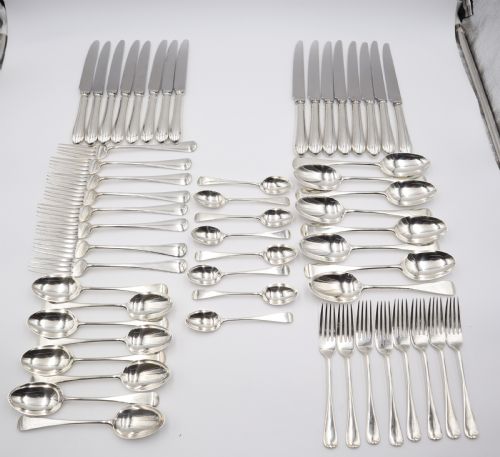
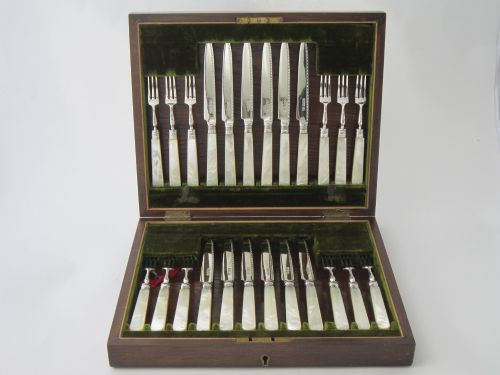
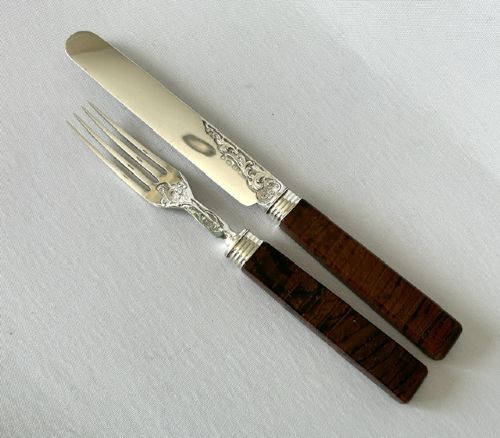
The selections include both loose pieces and comprehensive cased sets, sometimes accompanied by matching forks. Many examples feature decorative handles made from mother of pearl or various woods, paired with blades of silver or steel.
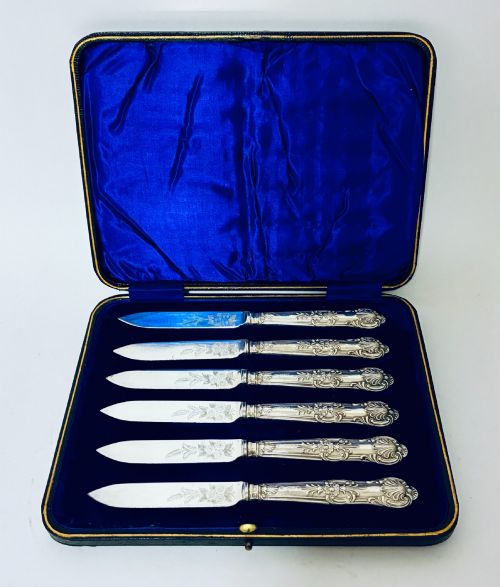
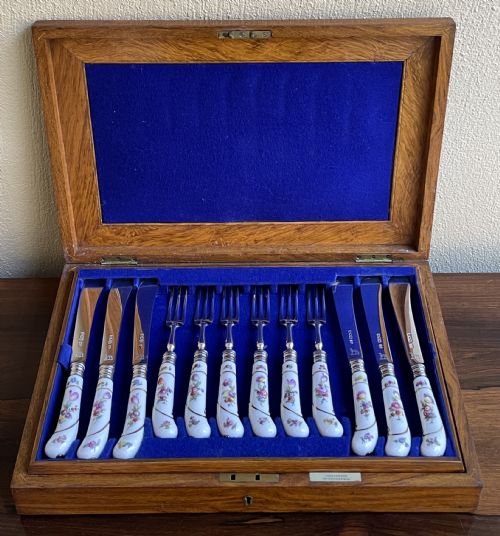
The origins of these items vary from British provincial workshops to major makers in Sheffield and London, alongside continental European pieces. Sets often survive in fitted presentation cases lined with velvet or leatherette, preserving them for daily use or display.
Materials and Construction
Makers utilised solid silver or silver gilt for handles and blades, frequently combining them with steel for the cutting edges to ensure durability. Silver ferrules secure the junction between the handle and the blade.
Handles frequently incorporate natural materials such as mother of pearl, alongside various woods and composition substances. These materials are shaped and polished to fit comfortably in the hand.
Presentation cases employ sturdy timber carcases, such as mahogany, lined internally with velvet or leatherette to protect the cutlery sets during storage and transport.
Fruit acids could tarnish ordinary steel, making silver and mother of pearl the polite Victorian choice for slicing an after-dinner peach.
Judging Quality
Quality rests in the harmony of the set and the integrity of the materials, where uniform handles and crisp hallmarks indicate superior workshop standards. Complete cased sets retain greater cohesion than assembled groups of mixed origin.
The presence of specialised decorative techniques, such as silver gilding or Queens pattern moulding on the metalwork, elevates the status of a set. Finer examples display meticulous attention to the fit between the handle, ferrule, and blade.
Moses Brent·Aaron Hadfield·Mappin & Webb
The Silver Dessert Knives Glossary
- Silver gilt
- Silver that has been coated with a thin layer of gold on its surface. This technique provides a rich, warm tone to the cutlery.
- Ferrule
- The metal band that joins the handle of a knife to its blade. It provides structural strength and a neat finish.
- Mother of pearl
- The iridescent internal layer of certain mollusc shells used for knife handles. It offers a luminous, decorative surface.
- Queens pattern
- A traditional ornate cutlery pattern featuring shell and scroll motifs. It represents a decorative style found on nineteenth-century silver.
- Canteen
- A fitted box or case designed to store a set of cutlery. These containers often feature velvet or leatherette linings.
Frequently Asked Questions
What are silver dessert knives?
Silver dessert knives are small cutlery pieces intended for eating fruit, cheese, or sweets at the end of a meal. They bridge the gap between utility and display.
Many examples survive in original presentation boxes complete with matching forks, reflecting formal dining customs of the nineteenth and early twentieth centuries.
How do I clean silver dessert knives?
Clean silver dessert knives gently using a specialised silver cloth to remove tarnish without harming the metal or handle materials. Avoid abrasive cleaners.
Submerging pieces with mother of pearl or wood handles in water should be avoided, as moisture can damage organic materials over time.
Were dessert knives used with forks?
Many dessert knives were produced as part of matched sets that included matching dessert forks. These sets were designed for the final course.
Some surviving sets appear alongside forks in fitted mahogany canteens, while others exist as loose knives or smaller groups.
What materials are used for handles?
Handles are formed from solid silver, silver gilt, mother of pearl, various woods, and composition materials. Each material imparts a distinct visual character.
Mother of pearl and silver are the most frequently encountered handle materials across Victorian and Edwardian examples.