

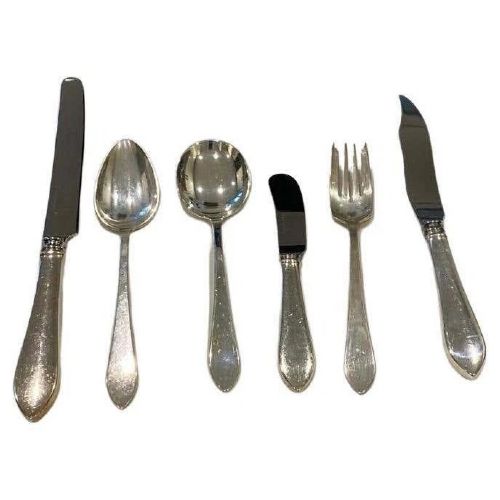


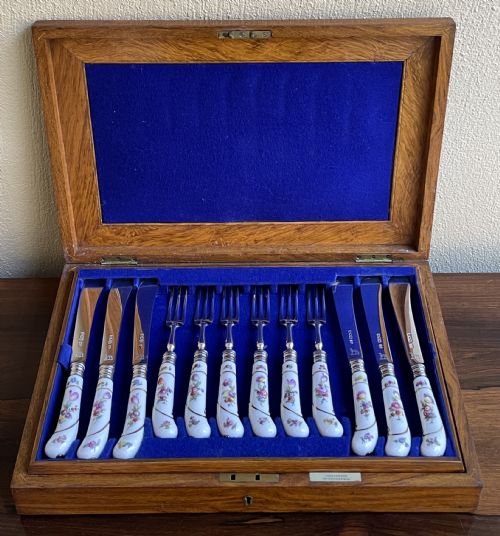


Antique Dessert Knives
These antique dessert knives span the Georgian, Victorian, and Edwardian eras, offering refined table settings through finely crafted sterling silver, steel, and mother of pearl.
Antique Dessert Knives
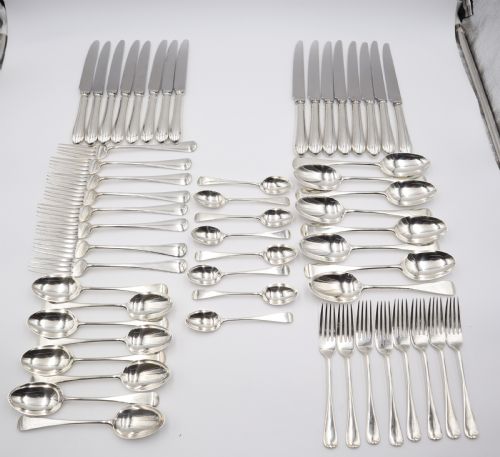
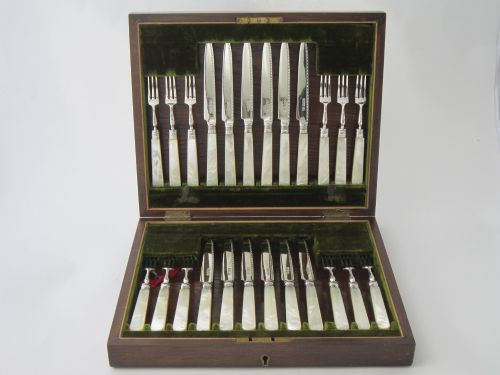
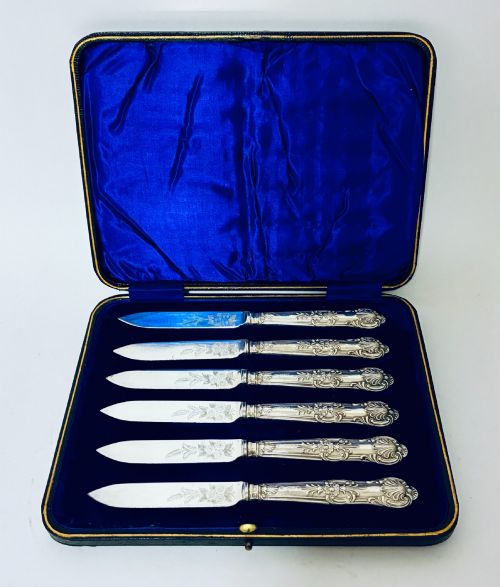
Antique dessert knives are specialised tableware designed for the final course of a meal, appearing frequently across this selection as cased sets or individual serving pieces. The evidence shows forms ranging from fruit knives and cheese cutlery to comprehensive cased canteens spanning the Georgian, Victorian, and Edwardian periods.
Buyers meeting these pieces on this page will encounter both sterling silver and silver plate constructions, often paired with handles of mother of pearl or wood. Styles stretch from traditional Georgian and Victorian designs to later Art Deco iterations from the 1920s and 1930s.
How they were made
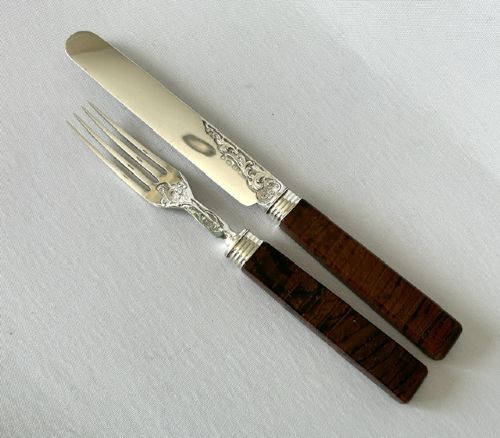
Makers utilised sterling silver and silver plate for blades and ferrules, frequently combining them with durable steel cutting edges. Handles were shaped from natural materials like mother of pearl and agate, as well as timber housed within oak canteens.
Techniques relied on traditional metalworking and blade fitting, incorporating cast silver elements and intricate handle shaping to secure the organic materials to the metal tangs.
Object types recorded in the evidence range from single fruit knives and serving cutlery to twelve-person canteens and cased sets.
What varies in quality
Quality rests upon the integrity of the materials, distinguishing solid sterling silver and silver gilt from plated alternatives. The precision of the handle attachment to the blade and the preservation of natural materials like mother of pearl or agate dictate the tier of the piece.
The presence of original fitted boxes, such as oak canteens, alongside complete matched sets elevates the standing of the cutlery compared to assembled or loose pieces.
Tiffany·Carrington·Aaron Hadfield
The Antique Dessert Knives Glossary
- Sterling silver
- A silver alloy containing 92.5 percent pure silver by mass, widely utilised across Victorian and Edwardian cutlery sets.
- Silver plate
- A layer of silver applied to a base metal core, seen on French cake dessert servers and various serving pieces.
- Mother of pearl
- The iridescent internal layer of pearl oyster shells, shaped into smooth handle scales for fruit and dessert knives.
- Canteen
- A fitted box or cabinet designed specifically to store a complete set of cutlery securely.
- Ferrule
- The small metal ring or cap that joins the knife blade securely to its handle.
Antique Dessert Knives: Frequently Asked Questions
What are antique dessert knives used for?
These knives were traditionally utilised for the dessert or fruit course following the main meal, handling items like fruit, cheese, and pastries.
They appear both as individual service pieces and within larger cased canteens meant for twelve persons or smaller gatherings.
How do I date an antique dessert knife?
Dating relies upon hallmarks stamped onto the silver components, alongside stylistic markers from the Georgian, Victorian, Edwardian, or Art Deco periods.
Materials such as mother of pearl and specific patterns like Coburg or Queens also point toward precise manufacturing decades.
Are these knives made of solid silver?
The evidence shows a mix of solid sterling silver, silver gilt, and silver plate across the listed items.
Blades and handles frequently combine sterling silver with steel cutting edges or natural mother of pearl scales.
How should I store a cased set?
Original oak canteens and fitted boxes provide the ideal environment to protect the metal and mother of pearl from unnecessary friction and tarnish.
Keeping the sets dry and resting within their original slots preserves both the blades and the fitted linings.