
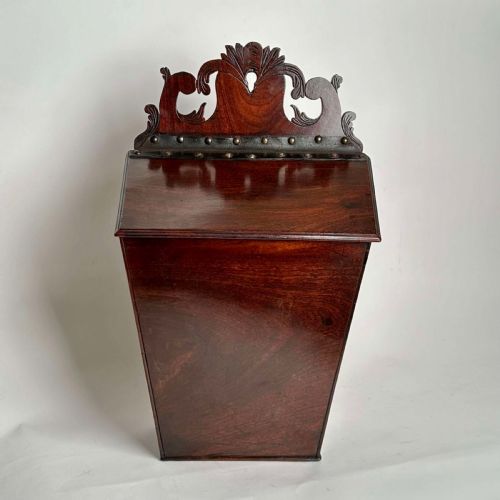


Mahogany Cased Knives
Mahogany cased knives are handsome desk-sized storage pieces and fitted cases designed to hold dining cutlery, appearing here mostly in Georgian and Edwardian forms.
Mahogany Cased Knives
When you search for mahogany cased knives, you encounter upright knife boxes, cutlery boxes, and occasional fitted canteens designed to keep dining steel protected and orderly. The examples on this page are predominantly Georgian, including George III iterations, alongside Edwardian sets.
Forms range from sloped-lid knife boxes and stationery cabinets to cased sets containing steel and mother-of-pearl knives. Most pieces rely on rich mahogany timbers, sometimes embellished with boxwood inlay.
The dominant survival from these eras is the knife box, constructed to sit on a sideboard or serving table during formal meals. They span from standard domestic sizes to unusually large stationery cabinets.
How they were made
Cabinetmakers constructed these knife boxes and cased sets primarily using solid mahogany, frequently incorporating brass fittings such as hinges, escutcheons, and carrying handles. Internal fitments often utilised secondary timbers like satinwood and boxwood inlay for contrast and decoration.
Cutlery components within these cases combine polished steel blades with natural materials such as bone and mother of pearl for the handles. Joinery techniques reflect traditional period cabinet making, ensuring rigid housing for upright blades.
Some knife boxes were built so steeply angled that opening them feels like launching a small mahogany ship.
What varies in quality
The distinction between ordinary and superior mahogany cased knives lies in the choice of timber figure, the crispness of the boxwood inlay, and the retention of original brass hardware. Finer boxes display deeply grained mahogany and precise geometric stringing.
Completeness dictates standing within the category, with full sets of fitted knives or matching pairs carrying greater integrity. Original interior compartments and sound structural timber elevate a piece above altered examples.
The Mahogany Cased Knives Glossary
- Knife box
- A sloping, upright wooden container designed to hold dining knives vertically on a sideboard. These boxes often feature serpentine or sloping fronts.
- Inlay
- A decorative technique where contrasting materials like boxwood or satinwood are embedded into the mahogany surface. This creates fine borders and geometric patterns.
- Escutcheon
- A protective brass plate surrounding a keyhole on the lid or front of the case. It prevents the wood from splintering around the lock.
- Canteen
- A fitted box, chest, or case designed specifically to store a complete set of cutlery. These interiors use lined slots to secure each knife and fork.
- Mother of pearl
- An iridescent inner shell layer utilised for knife handles in Edwardian and Georgian cased sets. It offers durability alongside decorative lustre.
Mahogany Cased Knives: Frequently Asked Questions
What is a mahogany knife box?
A mahogany knife box is an upright, lidded container built in the Georgian or Edwardian eras to store dining cutlery safely.
They typically sat upon sideboards in dining rooms and feature tailored internal partitions for vertical blade storage.
How do I date these pieces?
Dating relies on stylistic markers such as serpentine fronts, boxwood stringing, and brass hardware typical of Georgian or Edwardian periods.
Construction methods and timber selection also assist in determining whether a piece dates to the eighteenth or early twentieth century.
Were these boxes only for cutlery?
While originally built for knives and forks, many survive adapted as stationery boxes or general desk accessories.
The sloping lid and divided interior made them easily repurposed for paper storage in later centuries.
What materials are inside the cases?
Interiors often feature secondary woods like satinwood and boxwood alongside fitted wooden blocks pierced to hold blades.
Complete sets also include steel knives with handles fashioned from bone or mother of pearl.