


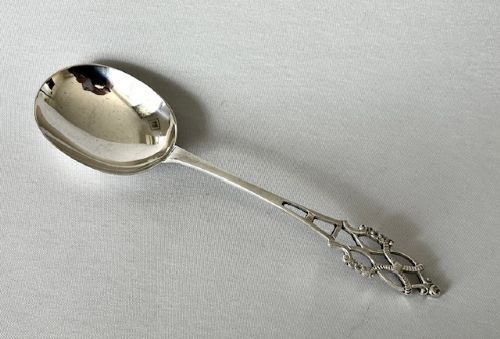

Silver Handled Cutlery
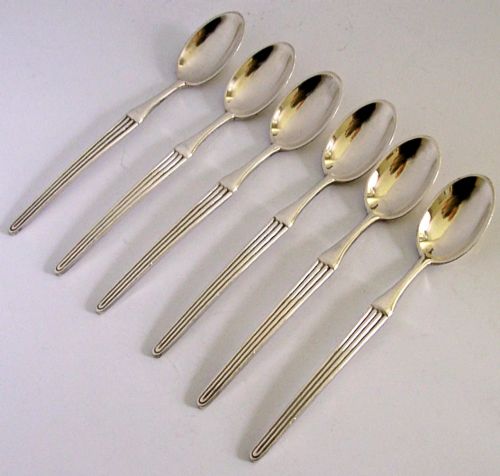
Silver handled cutlery brings together the gleam of precious metal and the tactile warmth of natural grips for the dining table.
Silver Handled Cutlery
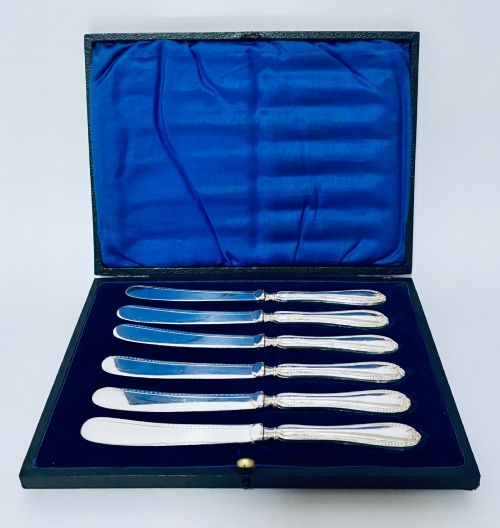
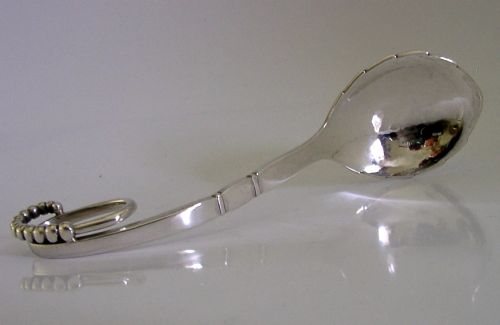
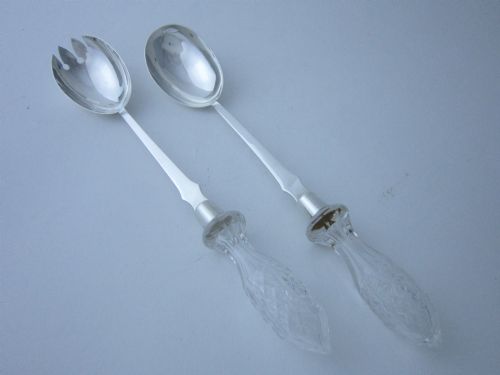
When you search for silver handled cutlery, you encounter an array of dining utensils designed with metallic shafts and contrasting grips. The pieces available span individual fruit knives and butter knives to large serving sets, fish servers, and canteens.
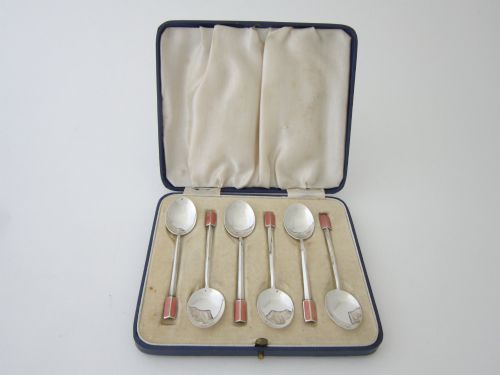
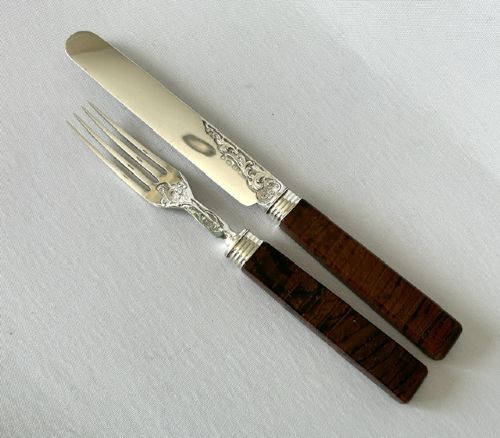
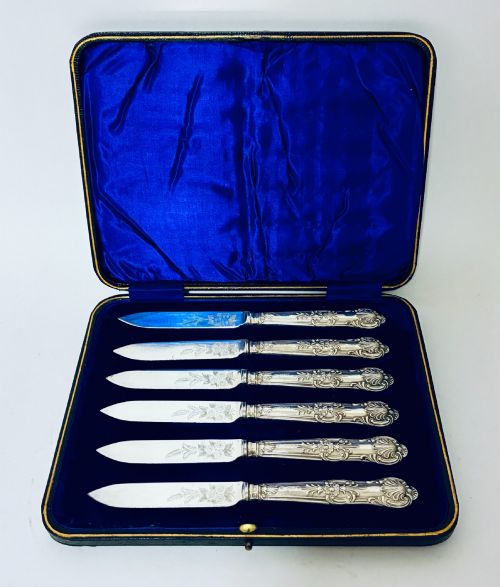
Victorian and Edwardian examples dominate the selection, bringing nineteenth and early twentieth century craftsmanship directly to the table. You will frequently find boxed sets intended for dessert, fruit, or cheese courses alongside singular serving utensils.
Origins vary from English workshops in Sheffield and Birmingham to continental makers, encompassing solid sterling silver, silver plate, and silver gilt. Each design reflects the functional dining requirements of its specific period.
Materials and Construction
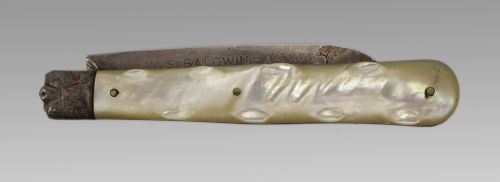
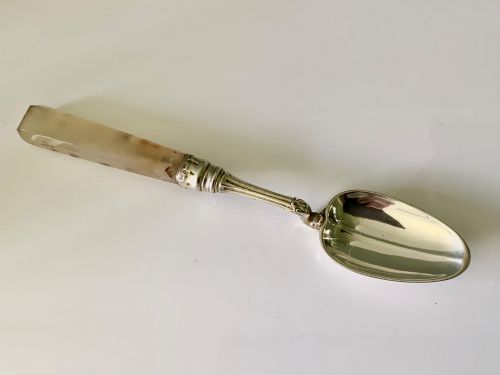
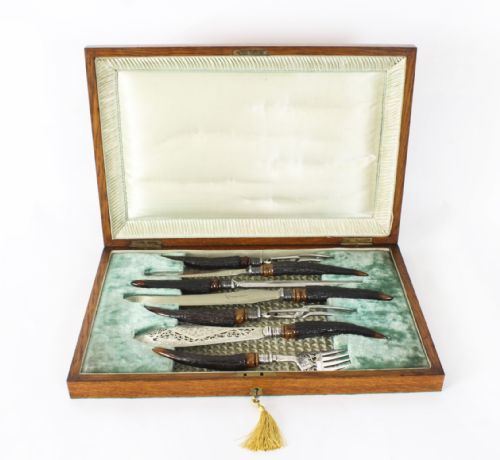
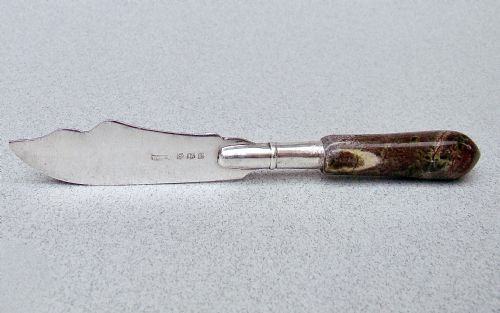
Makers paired silver or silver plate with organic grip materials such as mother of pearl, horn, antler, and agate. These tactile substances required careful shaping and pinning to secure them to the metal tangs of the blades and prongs.
Blades and shafts utilised sterling silver, silver gilt, or steel, often finished with hand engraving, chasing, or rat tail detailing. Workshop production balanced durable functional utility with decorative ornamentation suitable for formal dining.
Golf enthusiasts can dine with a dedicated cake knife shaped like a golf club from the early twentieth century.
Markers of Distinction
Quality rests upon the crispness of the hand engraving on the blades and the seamless integration where the handle meets the bolster. Superior examples display harmonious proportions between the metal working and the organic grip material.
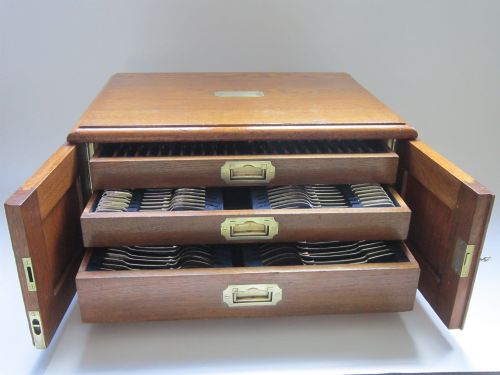
The survival of original fitted wooden boxes and canteens elevates a set, protecting the delicate handles and silver surfaces over generations of use.
Georg Jensen·Vale and John·William Devenport·Amy Sandheim·Sebastian Crespell·Jowika·Carrington
The Silver Handled Cutlery Glossary
- Sterling silver
- A silver alloy containing 92.5 percent pure silver and 7.5 percent other metals, usually copper, ensuring durability for cutlery. This standard is frequently verified by British hallmark stamps.
- Silver plate
- A base metal foundation coated with a thin layer of silver through electroplating or old Sheffield plating techniques. It provided an accessible alternative to solid silver dining wares.
- Mother of pearl
- The iridescent internal layer of pearl oyster shells, shaped into smooth scales for knife and fork grips. Its natural lustre made it a favourite for Edwardian and Victorian dessert sets.
- Fiddle pattern
- A nineteenth century cutlery profile featuring a narrow stem that broadens into a fiddle shape near the terminal. It remains a hallmark of traditional British dining canteens.
- Rat tail
- A traditional strengthening tongue of metal extending down the back of a spoon bowl from the handle. This functional feature originates from earlier silversmithing methods.
Silver Handled Cutlery: Frequently Asked Questions
How do I clean silver handled cutlery?
Wash the pieces gently by hand in warm soapy water and dry them immediately with a soft cloth. Avoid submerging organic handles like mother of pearl or horn in hot water for extended periods.
Keep abrasive polishes away from plated surfaces and organic grips to preserve the original finish. Store the utensils in dry conditions, ideally within lined boxes or canteens.
Can I use antique cutlery for daily dining?
Many sets remain robust enough for regular use, particularly solid silver or sturdy silver plate designs. Care must be taken with delicate materials like mother of pearl or antique horn.
Hand washing is essential for preserving these older pieces, as modern dishwashers will damage organic handles and erode silver surfaces over time.
What is the difference between solid silver and silver plate?
Solid silver consists of the same precious metal throughout, often bearing official hallmarks indicating purity and origin. Silver plate involves a thin coating of silver applied over a base metal core.
Examination of wear points often reveals the underlying base metal on plated items, whereas solid silver maintains its composition right through the metal.
How are periods identified on these utensils?
Hallmarks stamped onto the metal provide definitive date letters, standard marks, and maker's initials for British pieces. Stylistic clues such as naturalistic leaf motifs or clean Arts and Crafts lines also point to specific eras.
Box construction and the choice of grip materials help narrow down the decade of production when official stamps are absent.