




Silver Teaspoons Set
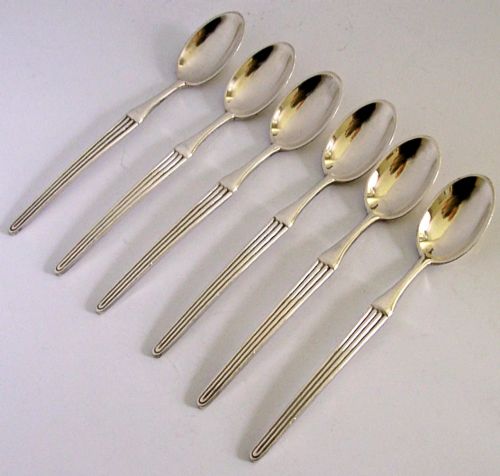
Silver teaspoons set offerings bring together matched eating utensils formed in sterling and solid silver across multiple historic periods.
Understanding silver teaspoons set options
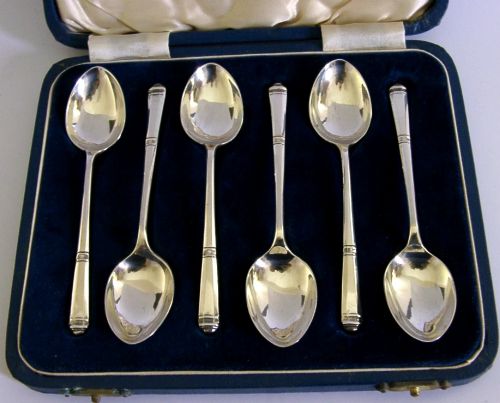
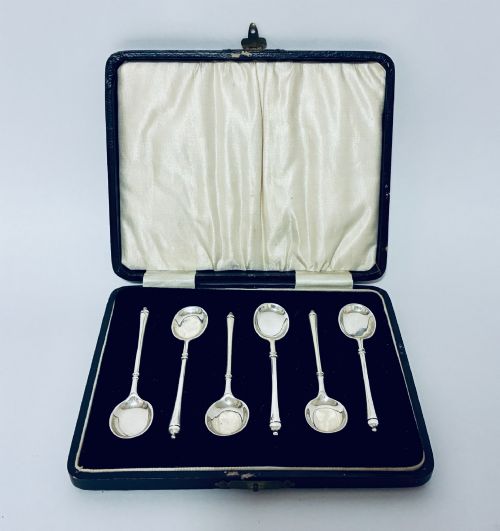
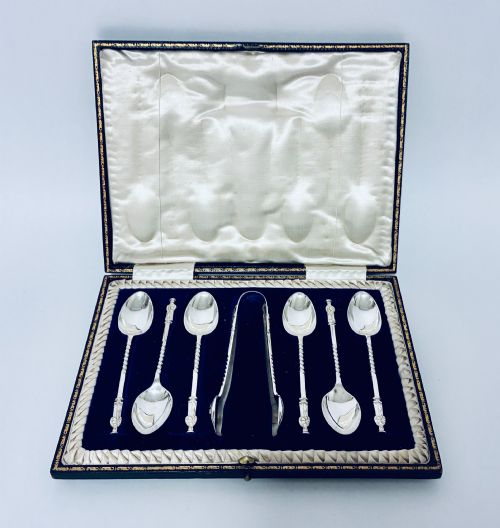
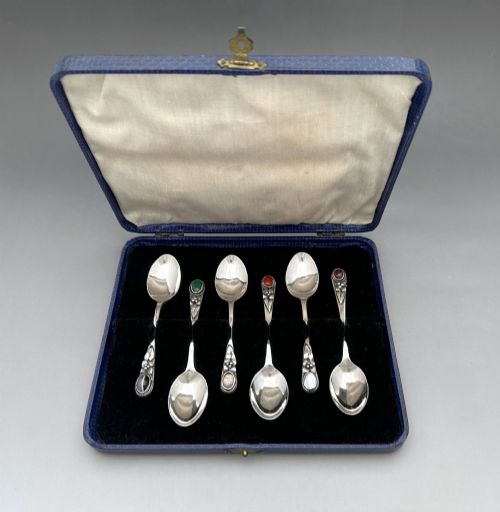
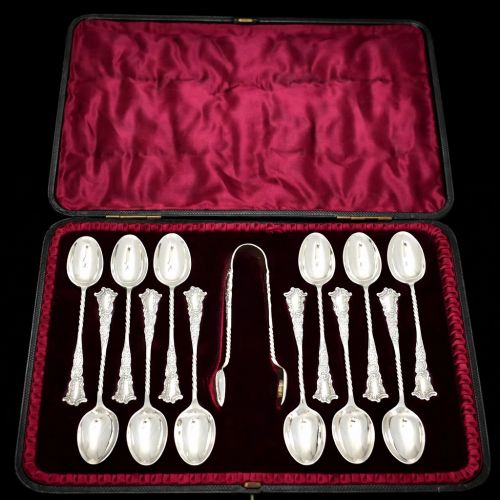
A silver teaspoons set comprises matched eating implements gathered for service, frequently accompanied by matching sugar tongs or presented within dedicated fitted cases lined with silk, satin, or velvet. These collections appear across various historic eras, including Georgian, Victorian, Edwardian, Art Nouveau, Art Deco, and mid-century modern periods.
Buyers most commonly encounter sets of six spoons, though larger groupings of twelve or smaller gatherings of three or four also emerge. These utensils span English, Scottish, Irish, Dutch, and provincial origins, reflecting regional manufacturing traditions from London, Sheffield, Chester, Birmingham, Glasgow, Dublin, Dundee, and Perth.
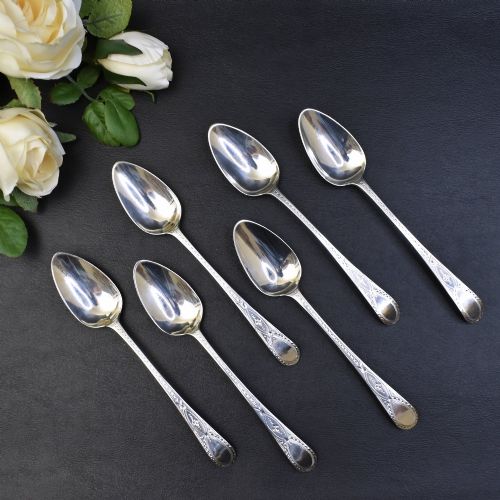
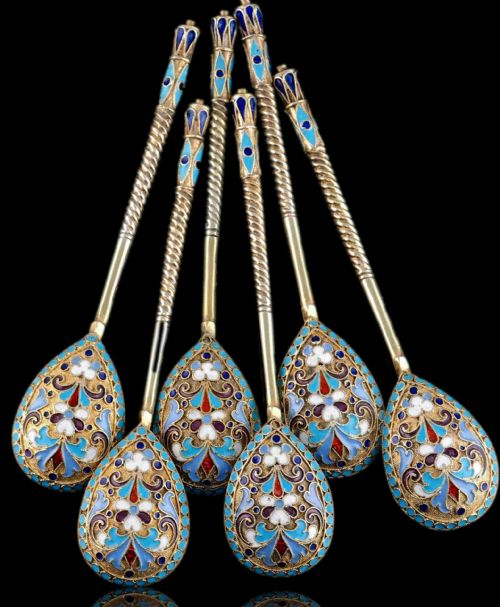
Forms range from plain utilitarian designs to pieces featuring decorative elements such as engine turning, bright cutting, engraving, picture backs, enamel work, and figural finials including hunting animals or the Onslow pattern. Many survive in original leatherette or fabric-lined presentation boxes that protect the metal from tarnish and wear.
Materials and construction methods
These items rely primarily on solid silver or sterling silver, fashioned through traditional silversmithing techniques that involve casting, hammering, and drawing the metal into bowls and handles. Makers applied surface decoration through hand engraving, stamping, engine turning, or bright-cut carving.
Fitted presentation packaging incorporates structural wooden or card bases covered in leatherette, housing interior beds shaped to hold each spoon and set of tongs securely against linings of silk, satin, velvet, or similar soft textiles.
Retail Price Guide 2026
Typical UK retail prices for silver teaspoons set, calculated from the Sellingantiques database of over a million retail prices indexed since 2003. This retail price guide relies exclusively on Sellingantiques data; no external sources or auction records are used, so the figures do not describe the wider market.
Several sets feature hunting animal finials perched at the top of the handle, ready to keep watch over your afternoon tea.
Differentiating quality across examples
Quality rests on the crispness of the original silversmith's work, where hand-engraved bright cutting, deep engine turning, and distinct hallmarks remain sharp and unrubbed through generations of polishing. Complete sets that retain their matching sugar tongs and original fitted boxes command higher regard than assembled or unboxed groups.
The distinction between provincial Scottish or Irish pieces and standard metropolitan production lies in the scarcity of local assay offices and the specific regional punch marks applied by individual makers working outside major manufacturing centres.
Amy Sandheim·William Eley II·Lee & Wigfull·Bateman·Walker & Hall
The Silver Teaspoons Set Glossary
- Hallmark
- Official marks stamped into precious metals indicating the standard of silver, the assay office, and the year of manufacture. These small symbols allow researchers to date British pieces precisely.
- Bright cut
- A style of engraving executed with faceted cutting tools that leave bright, light-reflecting geometric or floral patterns across the surface of the silver. It gained widespread popularity during the late eighteenth and nineteenth centuries.
- Engine turned
- A mechanical method of engraving precise geometric patterns onto metal surfaces using a lathe. This technique creates uniform, textured designs common on Art Deco flatware.
- Picture back
- A spoon featuring a stamped or engraved scene, portrait, or animal on the reverse side of the bowl. These decorative additions appeared frequently on eighteenth-century teaspoons.
- Assay office
- An official body charged with testing the purity of precious metal items and stamping them with statutory hallmarks. Prominent British offices include London, Sheffield, Chester, Edinburgh, and Dublin.
- Finial
- The decorative ornamental feature at the very top of a spoon handle. These range from simple geometric terminals to cast animals or heraldic motifs.
Frequently Asked Questions
How many spoons are usually in a set?
Most surviving groupings consist of six spoons, intended for domestic tea service. Larger groupings of twelve or smaller gatherings of three or four also appear.
Sets frequently include matching sugar tongs designed to accompany the spoons within a fitted presentation box.
Were these always sold in boxes?
Many sets survive in original fitted cases lined with velvet, silk, satin, or leatherette. These boxes were tailored specifically to hold the spoons and any associated tongs securely.
Other sets accumulated over time or lost their original packaging, arriving without fitted enclosures.
How do I identify the date of a set?
Dating relies on the statutory hallmarks stamped directly onto the silver. These marks typically include a maker's mark, a standard mark for sterling silver, an assay office symbol, and a date letter.
Matching these punch marks against published assay records reveals the exact year and location of manufacture.
What are provincial silver teaspoons?
Provincial pieces originate from silversmiths working outside major official assay towns like London or Sheffield. Scottish towns such as Dundee, Perth, and Glasgow produced distinctive regional flatware.
These items often carry unique maker marks and regional punch combinations rather than standard London assay office stamps.