


Boxed Silver Teaspoons
These boxed silver teaspoons bring matched sets of fine metalwork straight from the dining table into fitted presentation cases.
Identifying boxed silver teaspoons
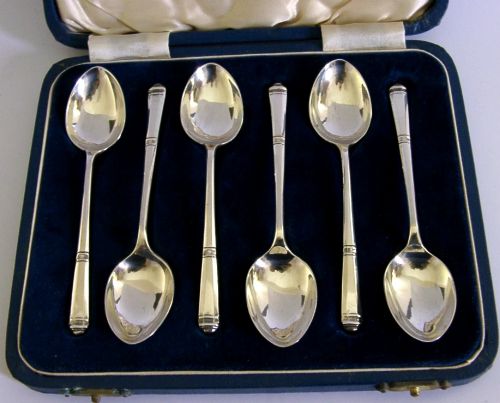
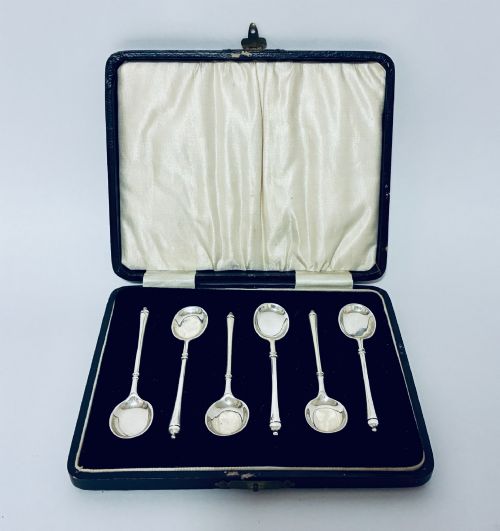
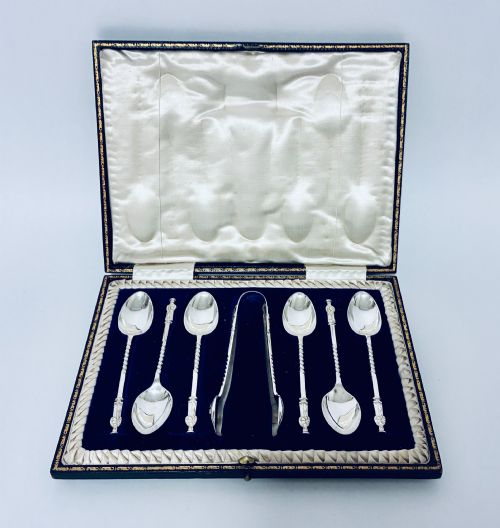
When you search for boxed silver teaspoons, you encounter matched sets of small spoons housed in fitted presentation cases, often accompanied by matching sugar tongs. The pieces appearing here span the Edwardian period, the Art Deco era, and the nineteen-thirties, reflecting both domestic British makers and continental workshops. You are most likely to meet sets of six or twelve spoons, resting snugly in velvet or silk-lined compartments.
The forms range from plain polished bowls to elaborately decorated terminals, including specialist sporting themes such as golf and sailing club commemoratives. Many sets feature matching sugar tongs nestled alongside the spoons in the fitted box, creating a complete serving service. These presentation sets were traditionally given as wedding presents or prizes, which accounts for their survival in such well-preserved condition.
Materials and construction
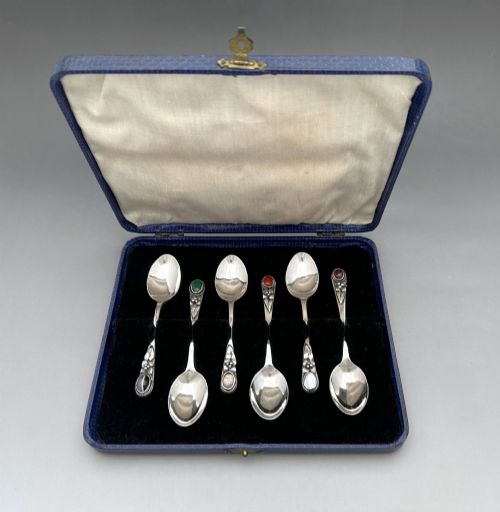
These items are constructed from solid silver or silver-gilt, utilising vermeil techniques to apply a rich gold layer over the silver base. The bowls and handles frequently incorporate coloured enamel work, adding vibrant hues of blue, green, or white to the metallic surface. Artisans shaped the metal through traditional silversmithing methods, ensuring each spoon in a matched set maintained identical dimensions and balance.
The presentation cases themselves are built from rigid frames covered in textured materials and lined internally with padded silk, satin, or velvet. These fitted interiors were custom-made to cradle each spoon and pair of tongs securely, preventing movement and wear during storage. Hinges and clasps on the boxes are typically made from brass or base metal, designed to keep the set safely enclosed.
Retail Price Guide 2026
Typical UK retail prices for boxed silver teaspoons, calculated from the Sellingantiques database of over a million retail prices indexed since 2003. This retail price guide relies exclusively on Sellingantiques data; no external sources or auction records are used, so the figures do not describe the wider market.
Listings for boxed silver teaspoons span the Edwardian period, the Art Deco era, and nineteen-thirty, utilising materials including silver-gilt, enamel, silk, and velvet.
Assessing quality in boxed sets
Quality rests heavily on the completeness and originality of the fitted box, particularly whether the original silk and velvet linings remain intact and clean. Sets that include matching sugar tongs alongside the full complement of spoons command greater interest than partial groups. The precision of the silver work and the complexity of any applied enamel further distinguish standard utility sets from finer presentation pieces.
The reputation of the maker and the crispness of the hallmarks stamped into the silver dictate the upper tier of these items. Pieces featuring specialised regional motifs, such as yacht club commissions or named sporting themes, show a higher degree of bespoke craftsmanship. Ultimately, the survival of the original case in sound structural order preserves the historical context of the set.
Amy Sandheim
The Boxed Silver Teaspoons Glossary
- Silver-gilt
- Silver that has been coated with a thin layer of gold, also known as vermeil. This technique adds a warm yellow tone to the metal.
- Enamel
- A glassy substance fused to the surface of the silver through firing, creating colourful decorative patterns on the handles or bowls.
- Onslow pattern
- A distinct spoon handle design featuring a scrolled scroll terminal that curves downward, popular in British silver. This style offers a comfortable grip and a formal appearance.
- Hallmark
- A series of stamped marks on precious metals indicating the standard of purity, the assay office, and the year of manufacture. These symbols provide a reliable method for dating British and international silver.
- Sugar tongs
- Small spring-action implements included in many boxed sets for handling sugar lumps. They match the pattern and metal of the accompanying teaspoons.
Frequently Asked Questions
What are boxed silver teaspoons?
These items are matched sets of small spoons manufactured from silver, often including matching sugar tongs, housed in custom-fitted presentation boxes. They were produced in various styles from the Edwardian era through the Art Deco period.
The fitted cases were designed to protect the delicate metalwork and any applied enamel from tarnishing and physical damage during storage.
How were these spoon sets used?
They were utilised primarily for serving afternoon tea, specifically for stirring sugar or milk into cups. The accompanying tongs were employed to transfer sugar lumps from a bowl.
Because they were kept in presentation boxes rather than everyday drawers, many sets survived with minimal wear and intact linings.
How do I date boxed silver teaspoons?
Dating relies on reading the hallmarks stamped into the silver, which reveal the assay office and year letter. Stylistic indicators, such as geometric Art Deco handles or Edwardian proportions, also help narrow the period.
The typography and construction style of the presentation box can provide additional clues to the manufacturing date.
How do I care for silver with enamel?
Enamelled silver requires gentle cleaning with specialised mild silver cloths, avoiding harsh abrasive dips that can damage the glass surface. The pieces should be stored dry inside their fitted boxes to prevent moisture accumulation.
Careful handling ensures the fragile enamel sections remain secure within their silver settings over time.