



Silver Enamel Teaspoons
Silver enamel teaspoons bring bright colour and crisp metalwork to the table, and collectors prize them for their miniature scale and varied designs.
Silver Enamel Teaspoons
Silver enamel teaspoons combine precious metal with vibrant glass-based surfaces, appearing mostly as matched sets intended for after-dinner service or display. When collectors search for silver enamel teaspoons, they encounter examples spanning the late nineteenth century through the mid twentieth century.
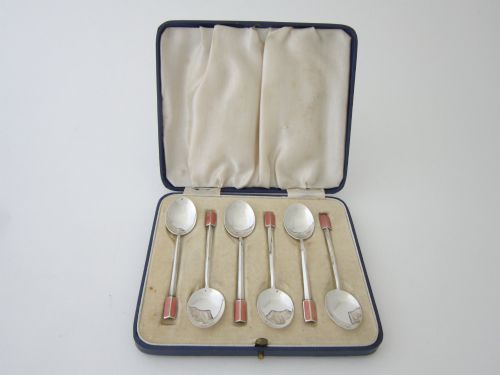
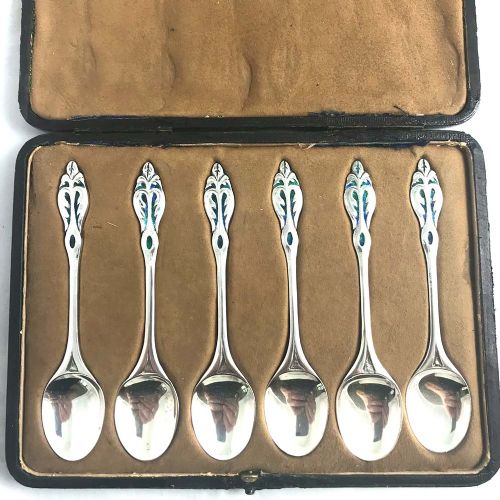
The objects take several forms, including standard teaspoons, coffee spoons, and specialised designs with decorative handles. Many survive in original fitted cases of leatherette or satin, often linked to prominent retailers or specific clubs.
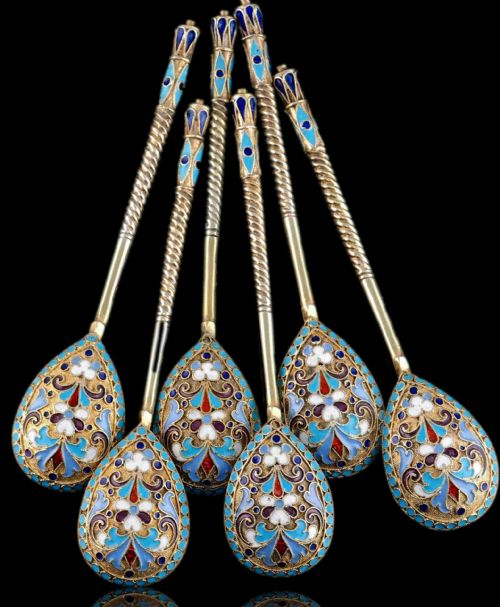
Styles range from organic floral motifs of the Art Nouveau period to geometric patterns of the Art Deco era and intricate traditional Russian cloisonné work. British, Scandinavian, Russian, and American workshops all contributed distinct aesthetic traditions to this category.
Materials and construction
Silversmiths formed the spoons from solid silver, sterling silver, or silver gilt, sometimes applying gold wash over the silver base to create a rich warm tone. Handles and bowl backs frequently incorporate engine-turned patterns or cast detailing to provide a secure foundation for the glass layer.
Vitreous enamel, including translucent guilloché and opaque cloisonné techniques, was fused to the metal by firing powdered glass at high temperatures. Artisans utilised fine metal wires to outline individual colour cells in cloisonné pieces, whilst guilloché relied on mechanical engraving beneath translucent coloured enamel.
Silver Enamel Teaspoons Retail Price Guide 2026
Typical asking prices for silver enamel teaspoons among the pieces listed under this phrase on Sellingantiques today, from the lower quarter to the upper quarter. They describe what is for sale here now, not the wider market.
The documented objects include specialised coffee spoons, card suit motifs, and commemorative club pieces housed in original leatherette cases.
Assessing quality and craftsmanship
Quality rests upon the precision of the metalwork and the clarity of the vitreous enamel surface. Superior pieces demonstrate uniform enamel thickness without bubbling or shrinkage around the retaining metal borders.
The complexity of the decorative technique heavily influences the standing of an item, distinguishing simple monochrome bowls from multi-coloured basse-taille or intricate cloisonné work. Complete cased sets bearing clear hallmarks and maker marks command greater attention from collectors.
Dmitrii Nikolaevich Nikolaev·David Andersen·Vasily Agafonov·Liberty and Co·Simon Groth·Georg Jensen
The Silver Enamel Teaspoons Glossary
- Cloisonne
- An enamelling technique where thin metal wires are soldered to the metal base to create compartments filled with coloured glass paste. These compartments are then fired and polished flat.
- Guilloche
- A decorative mechanical engraving technique that etches precise repeating patterns into metal before a translucent enamel layer is applied over the top. This allows the underlying pattern to show through the colour.
- Silver Gilt
- Silver objects that have been coated with a thin layer of gold on the surface. This finish protects the silver from tarnishing and adds a rich yellow hue.
- Basse Taille
- A transparent enamelling method where the metal ground is hammered or engraved in low relief so that light reflects differently through varying depths of coloured glass.
Silver Enamel Teaspoons: Frequently Asked Questions
How should I clean silver enamel teaspoons?
Clean the spoons gently using warm water and mild soap with a soft cloth. Avoid harsh chemical dips or abrasive silver polishes that can scratch the delicate glass surface.
Dry each piece thoroughly immediately after washing to protect any exposed metal and prevent moisture damage to the fitted presentation cases.
Were these spoons meant for everyday use?
Most surviving cased sets were produced for formal hospitality, guest tea service, or as presentation gifts. Their delicate enamel bowls meant owners typically reserved them for special occasions rather than daily dining.
Today, collectors tend to display them in cabinets or use them cautiously for light desserts and after-dinner coffee.
How do I identify Art Deco pieces?
Art Deco spoons typically feature geometric patterns, clean parallel lines, and stepped motifs. The enamel colours often include bright contrasting shades arranged in strict symmetrical layouts.
Manufacturing dates for these items generally centre around the interwar decades of the twentieth century.
What does cased set mean?
A cased set refers to a collection of spoons housed in a fitted box specifically designed to hold them securely. These boxes are usually lined with satin or velvet and covered in leatherette.
Finding spoons in their original fitted housing often indicates higher original value and better preservation.
Are Russian enamel spoons different?
Russian pieces from the late nineteenth century frequently utilise heavy cloisonné work with complex floral patterns and muted earth tones alongside bright hues. They are typically marked with standard purity stamps and specific maker initials from workshops in Moscow or St Petersburg.
These items differ visibly in weight and decorative density from lighter British or Scandinavian tea spoons of later decades.