


Vintage Tea Spoon
These vintage tea spoon selections bring together sterling silver and enamel designs spanning Georgian, Victorian, and mid-century periods.
Vintage Tea Spoon
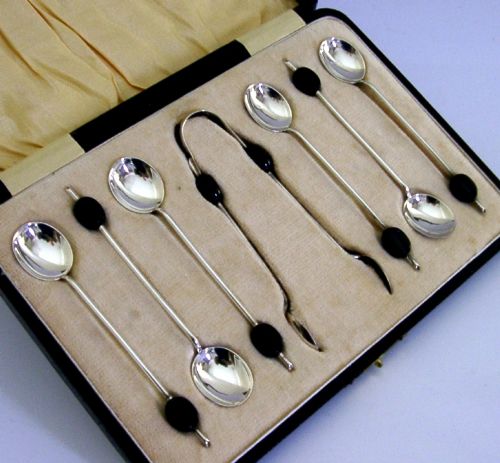
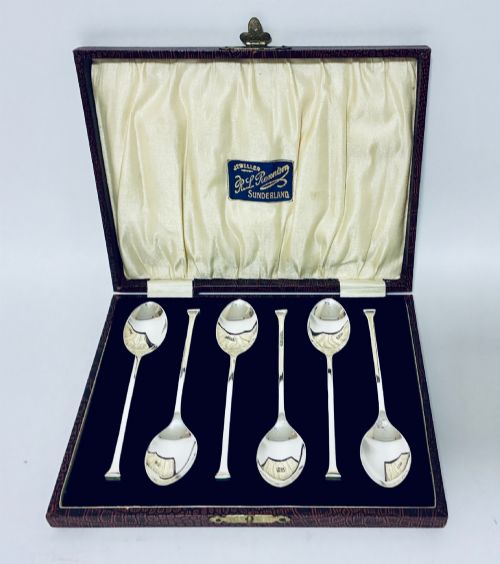
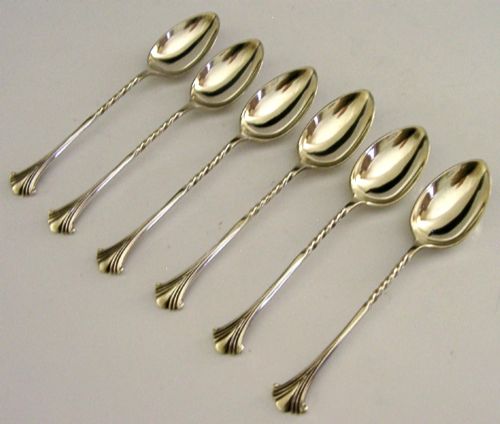
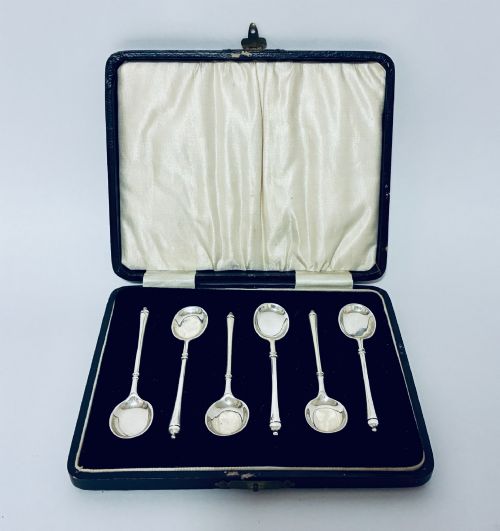
A vintage tea spoon encompasses smaller eating and serving implements, frequently appearing alongside caddy spoons and specialist sets. You will encounter individual examples alongside cased sets of six, often including sugar tongs or butter knives.
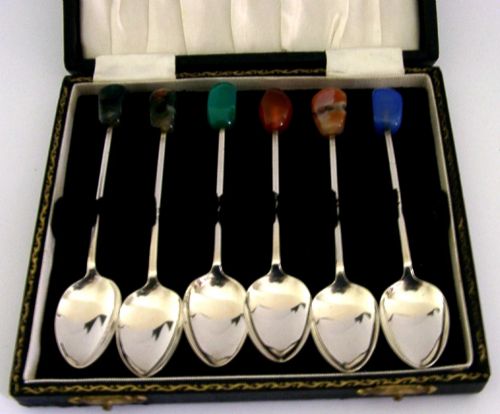
The material range spans solid sterling silver and silver gilt, frequently paired with vitreous enamel decoration or housed in fitted boxes lined with silk, velvet, or satin. Certain pieces incorporate hard wood or leatherette outer cases.
Origins stretch from Georgian and Victorian eras through Edwardian, Art Deco, and Mid-Century Modern periods. Danish and Dutch smiths appear alongside English provincial makers from Birmingham and Sheffield.
Materials and construction
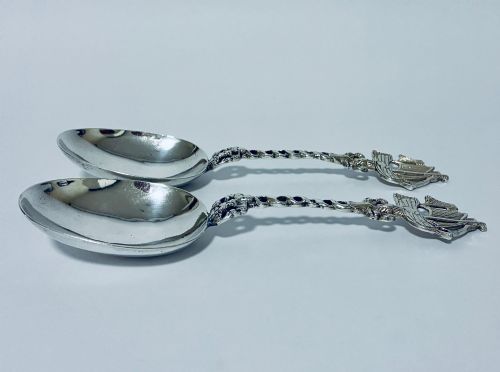
Metals are dominated by sterling silver and silver gilt, shaped through casting, hammering, and double striking to impart crisp relief on handles and bowls. Silversmiths utilised traditional hand-working methods to form shell bowls, figural terminals, and articulated joints.
Enamel work provides vibrant colour contrasts on Art Deco and Scandinavian pieces, fused directly to silver bases through kiln firing. Fitted presentation cases utilise wooden foundations wrapped in leatherette and lined with plush textiles to protect the silver within.
Vintage Tea Spoon Retail Price Guide 2026
Typical asking prices for vintage tea spoon among the pieces listed under this phrase on Sellingantiques today, from the lower quarter to the upper quarter. They describe what is for sale here now, not the wider market.
Materials documented across the inventory include sterling silver, silver gilt, enamel, velvet, satin, silk, leatherette, and hard wood.
Evaluating craftsmanship and condition
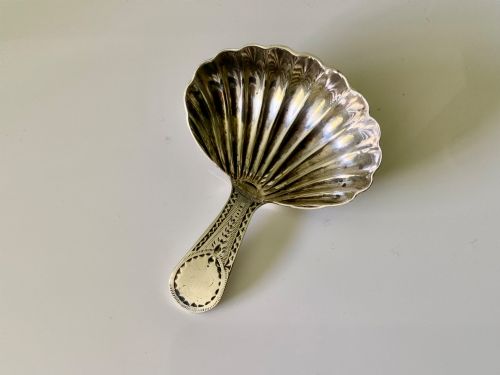
Quality rests in the crispness of the original chasing and engraving, particularly on Georgian shell bowls and Edwardian handles. Superior examples maintain sharp definition without smoothing from decades of polishing.
The integrity of applied enamel and the survival of matching fitted cases elevate specific sets. Complete sets of six with original tongs or caddy spoons demonstrate higher initial workshop investment.
Deakin & Francis·David Andersen·Georg Jensen·Liberty
The Vintage Tea Spoon Glossary
- Caddy spoon
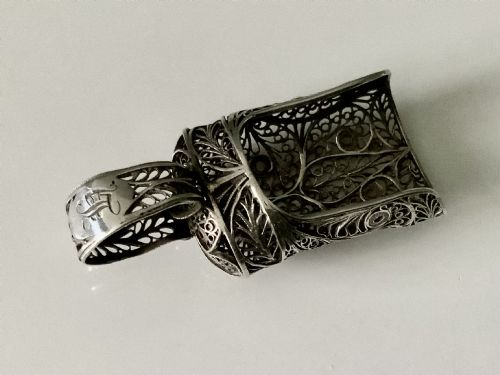
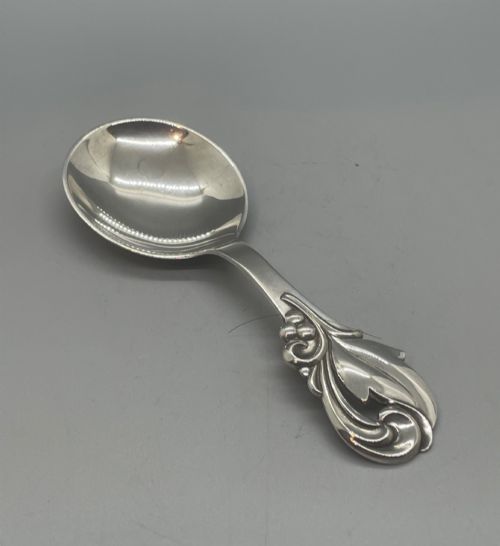
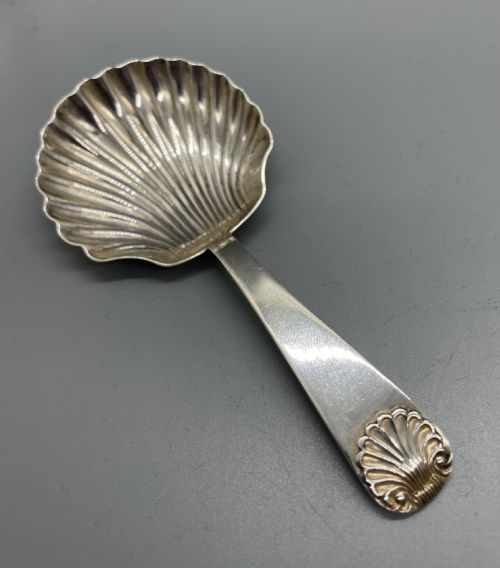
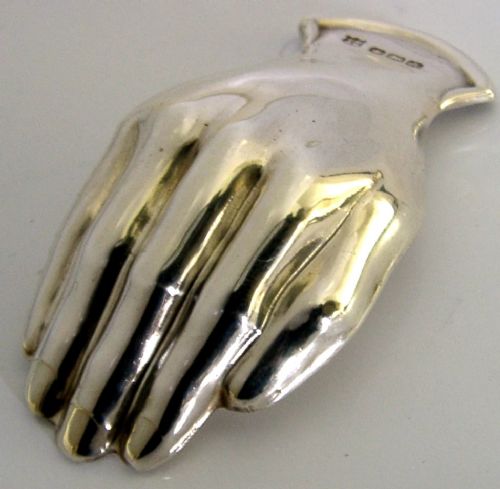
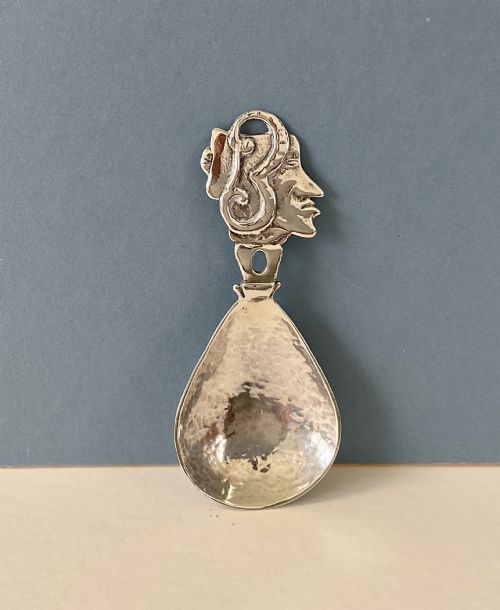
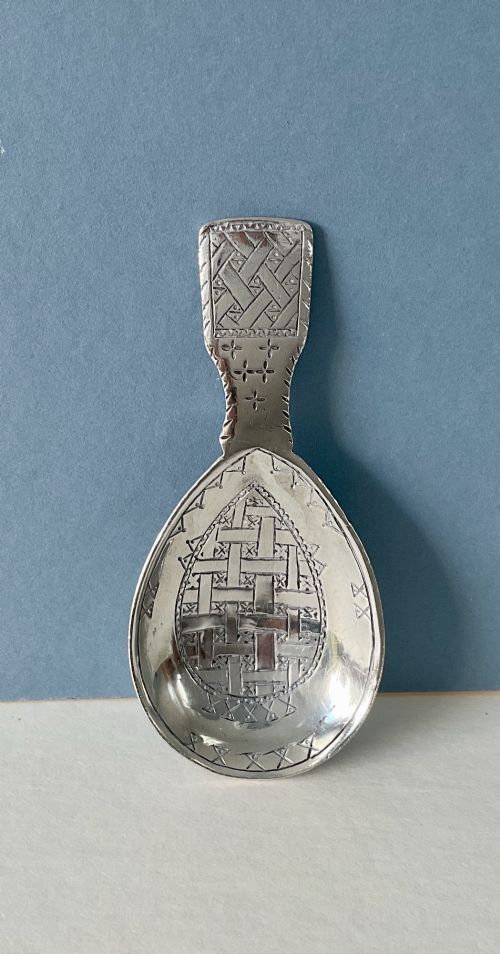
- A short-handled spoon specifically designed for measuring loose tea leaves from a canister. These often feature wide, shallow bowls shaped like shells, leaves, or hands.
- Silver gilt
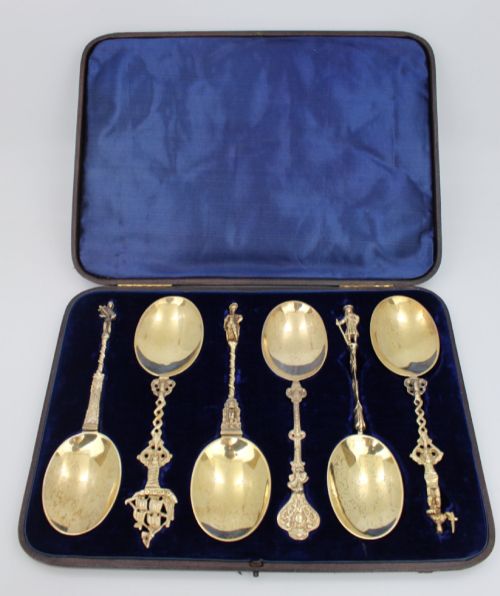
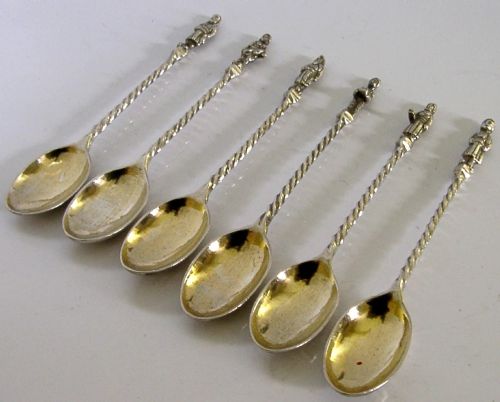
- Silver coated with a thin layer of gold on its surface, producing a warm yellow sheen. This technique appears frequently on apostle spoons and decorative service sets.
- Double struck
- A manufacturing process where a coin or spoon die strikes the metal twice under heavy pressure. This ensures the design registers with exceptional depth and clarity.
- Apostle spoon
- A spoon featuring the figure of an apostle or saint cast upon the terminal end of the handle. These historically appeared in sets representing the twelve disciples.
- Hallmark
- An official stamp struck into precious metals indicating the standard of purity, the assay office, and the year of manufacture. British pieces carry distinct town marks and date letters.
Vintage Tea Spoon: Frequently Asked Questions
What is a caddy spoon?
A caddy spoon is a small utensil created to scoop loose tea from a storage container. Their bowls often take decorative forms such as shells or cupped hands.
These pieces date across Georgian, Victorian, and twentieth-century periods, serving as functional table accessories.
How do I date silver spoons?
British silver incorporates hallmarks that denote the specific assay office and year of manufacture. Stylistic indicators like Art Deco enamel or Georgian shell motifs also point to specific decades.
Matching these marks against historical registers reveals the exact year a piece left the workshop.
Were these spoons used daily?
Many caddy spoons and teaspoons saw active service in formal tea routines across the Georgian and Victorian eras. Cased sets were frequently reserved for special household occasions.
Survival in fitted silk or velvet boxes often indicates lighter historical usage.
What is silver gilt?
Silver gilt is solid sterling silver coated with a fine layer of gold. This treatment was applied to decorative apostle spoons and presentation sets.
The underlying metal remains silver, while the gold surface provides a rich dual-tone appearance.