


Twisted Stem Spoons
Twisted stem spoons are small silver utensils with tactile, spiralling handles designed to catch the eye and the light on a formal tea or dining table.
Twisted Stem Spoons
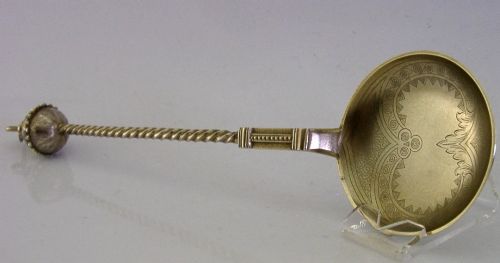
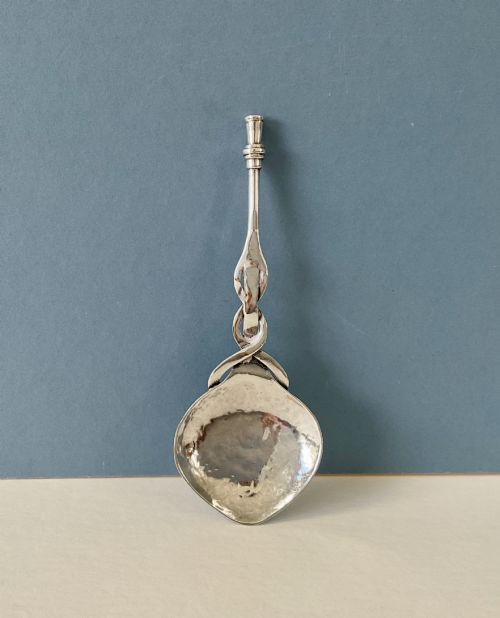
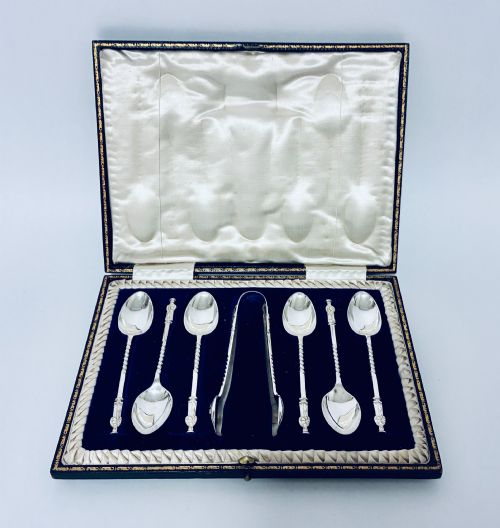
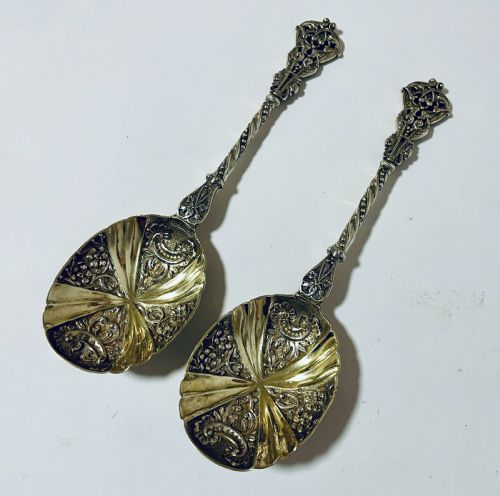
When you search for twisted stem spoons, you are looking at items that span from the Victorian and Edwardian eras into the early twentieth century. The selection includes serving spoons, teaspoons, ladles, caddy spoons and complete sets, often accompanied by fitted presentation cases lined with silk, velvet or leatherette.
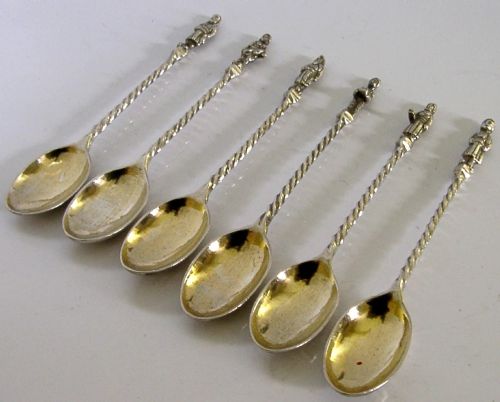
The pieces on this page originate from British workshops in provincial towns and cities like Chester, as well as continental centres including Ottoman Turkey, Imperial Russian silversmiths and Denmark. You will encounter individual showpieces alongside matched sets complete with matching sugar tongs or apostle figures.
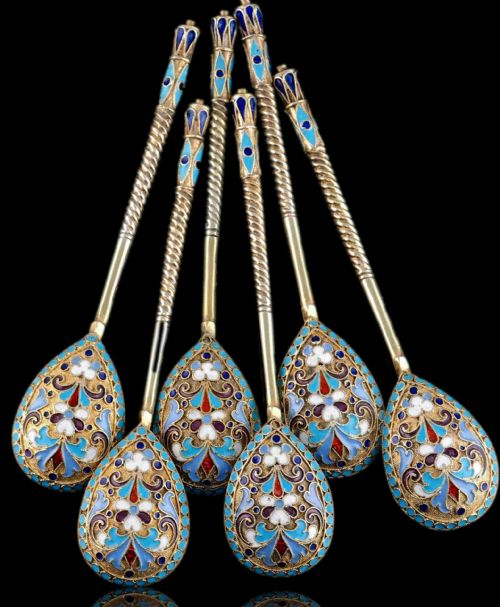
Forms vary from practical condiment ladles and mote spoons to ornate baptismal servers and cloisonné enamel sets. These utensils combine everyday utility with decorative metalwork, reflecting the shifting tastes of collectors across multiple decades.
Materials and construction
These items are constructed primarily from sterling silver, solid silver and silver-gilt, where a rich layer of gold is applied over the silver base to give a warm, dual-toned finish. Silversmiths formed the characteristic handles by twisting the metal rod while hot or cold, creating a rigid spiralling pattern that offers both grip and visual depth.
Detailing on these pieces ranges from hand-beaten Arts and Crafts surfaces to intricate cloisonné enamel work and cast figural elements. Makers utilised traditional techniques such as hallmarking to stamp standard marks of purity and origin directly into the silver.
Periods represented span from the Victorian era and Edwardian years through to the 1930s.
Distinctions in quality
Quality in these utensils rests upon the crispness of the twist in the stem and the weight of the metal utilised in the bowl and handle. Superior examples maintain deep, legible hallmarks and retain their original gilding without excessive wear from cleaning.
The presence of specialised forms like mote spoons or fully articulated figural handles elevates a piece beyond standard production. Original fitted cases lined in silk or velvet also indicate a higher tier of historic preservation.
Dmitrii Nikolaevich Nikolaev
The Twisted Stem Spoons Glossary
- Silver-gilt
- Sterling or solid silver that has been coated with a thin layer of gold. This technique enhances the colour and protects the underlying metal from tarnishing.
- Caddy spoon
- A short-handled spoon specifically designed for measuring loose tea leaves from a caddy. They often feature decorative bowls and ornate handles.
- Mote spoon
- An eighteenth or nineteenth-century tea utensil featuring a pierced bowl for straining tea leaves and a pointed terminal for clearing the spout of a teapot.
- Cloisonne
- An ancient decorative technique where enamel paste is applied within compartments created by soldered wires on a metal base. Russian makers frequently utilised this method.
- Hallmark
- An official stamp applied to precious metals indicating the standard of purity, the assay office, and the year of manufacture. These marks help verify the age and origin of the piece.
Twisted Stem Spoons: Frequently Asked Questions
What are twisted stem spoons used for?
These utensils served various dining and hospitality functions, from stirring tea and serving condiments to handling dry tea leaves or sugar. Their decorative handles made them suitable for formal parlour settings and special occasions.
Over time, many of these items transitioned into cabinet pieces or specialised gifts, particularly when housed in original velvet or silk-lined presentation boxes.
How do I care for silver-gilt spoons?
Silver-gilt items require gentle handling to preserve the delicate gold layer over the silver base. Avoid abrasive polishes and harsh chemical dips that strip away the surface finish.
Store them in dry conditions, ideally in anti-tarnish cloth or fitted cases, to prevent the metal from oxidizing too quickly.
How can I tell the age of these spoons?
Age is primarily determined by examining the stamped hallmarks on the metal, which indicate the assay office and date letter. Stylistic markers, such as the hand-beaten texture of Arts and Crafts pieces or the vibrant enamel of Russian items, also point to specific periods.
Comparing the manufacturing techniques and any accompanying presentation boxes helps narrow down the era of production.
Are these spoons safe to use for dining?
Most solid silver and silver-gilt utensils remain structurally sound for occasional table use if cleaned with care. However, pieces with delicate enamel work or antique gilding are often preserved primarily for display and collection.
Inspect the bowl and stem integrity before using older pieces with food or hot liquids.