


Scandinavian Silver Spoons
Scandinavian silver spoons are striking examples of northern design, offering tactile forms and clean lines that elevate any table setting.
Scandinavian Silver Spoons
When searching for scandinavian silver spoons, a buyer encounters a diverse selection of utensils spanning the twentieth century. These range from early pieces bearing Art Nouveau and Edwardian influences through to clean lines of mid-century modern design.
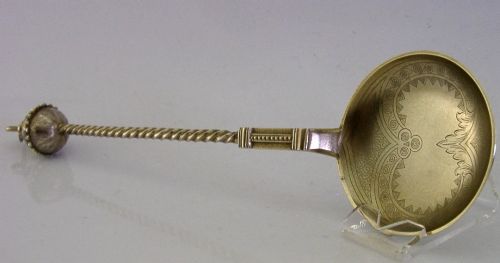
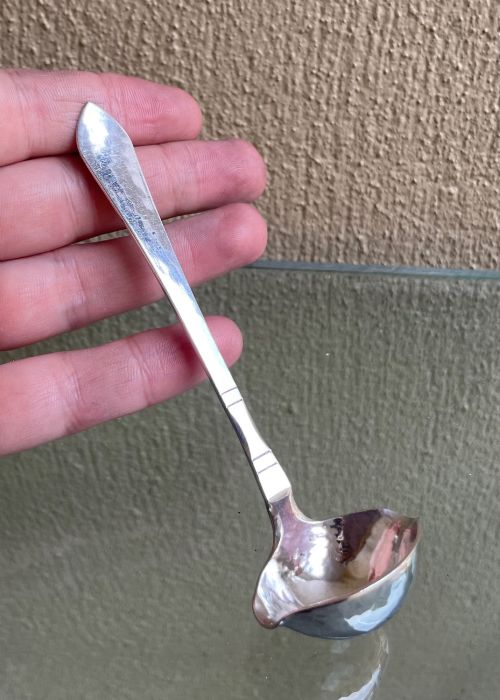
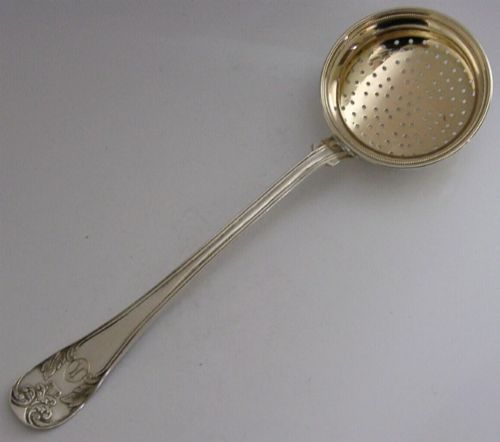
The most common forms on this page include caddy spoons, serving spoons, teaspoons, ladles, and sugar sifters. Many originate from Danish workshops, alongside examples from Norway and Sweden.
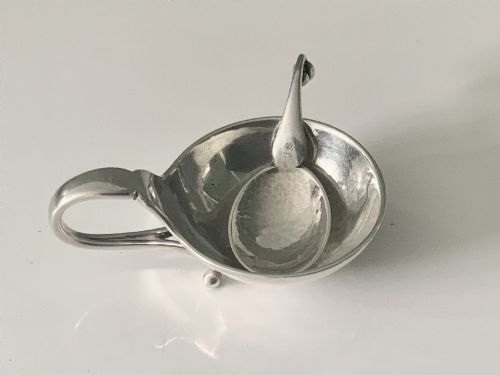
The selection covers practical table implements as well as decorative items such as Christmas spoons and salt cellars. Pieces frequently incorporate silver gilt and coloured enamel accents alongside plain sterling silver.
Materials and construction
The objects are principally fabricated from sterling silver and solid silver, with occasional items utilising silver plate or base metal. Many pieces feature a layer of gold gilt applied to the silver surface for a rich two-tone effect.
Enamel work appears on several notable items, adding vibrant colour to handles and bowls. Workshops combined traditional silversmithing techniques with characteristic regional styles from Art Nouveau and Danish Modern movements.
Makers represented in the inventory hail from Denmark, Norway, and Sweden, utilising stylistic movements from Edwardian to Mid-Century Modern.
Assessing quality and craftsmanship
Quality in these items is determined by the crispness of the silversmith's execution and the balance of the piece in the hand. Maker attribution plays a significant part, with recognised studios commanding attention for their refined proportions and sculptural handles.
The preservation of applied enamel and the retention of original silver gilt surfaces dictate the condition grade of decorative examples. Weight and gauge of the silver also distinguish substantial serving pieces from lighter utilitarian teaspoons.
Georg Jensen·David Andersen·Evald Nielsen
The Scandinavian Silver Spoons Glossary
- Sterling silver
- An alloy containing 92.5 percent silver by mass, with the remainder usually copper. This standard is widely used across Scandinavian silver spoons.
- Silver gilt
- Silver that has been coated with a thin layer of gold on its surface. This technique creates a warm, dual-colour appearance.
- Caddy spoon
- A short-handled spoon specifically designed for measuring loose tea leaves from a caddy. They often feature decorative bowls and handles.
- Sugar sifter
- A large perforated spoon or ladle used for sprinkling powdered sugar over food. Examples in the inventory include Swedish solid silver variants.
- Enamel
- A glassy substance fused to the surface of the metal through firing. It provides vibrant decorative colour on Norwegian and Danish pieces.
Scandinavian Silver Spoons: Frequently Asked Questions
How do I clean scandinavian silver spoons?
Wash the items gently in warm water using a mild washing-up liquid, then dry them immediately with a soft cloth. Avoid abrasive pastes or harsh dips, particularly on pieces with enamel or silver gilt.
Store the items in a dry environment, ideally in anti-tarnish rolls or lined boxes, to minimise oxidation between uses.
Can I use these spoons daily?
Sturdy sterling silver teaspoons and serving pieces handle regular use easily. Plain solid silver designs withstand everyday dining without issue.
Delicate enamel caddy spoons and gilt items benefit from more careful handling to preserve their surface decoration over time.
What styles are common?
Art Nouveau and Edwardian designs feature heavily among pieces from the early twentieth century, showing organic motifs and flowing lines. Mid-century and Scandinavian Modern styles appear frequently among later items.
Minimalist geometry and functional elegance characterise the Danish Modern pieces found within the selection.
How do I date these spoons?
Maker marks, town marks, and standard silver purity stamps assist in identifying the origin and period. Stylistic indicators like Art Nouveau curves or mid-century abstraction narrow down the manufacturing decade.
Certain commemorative items, such as annual Christmas spoons, bear explicit year stamps on their stems or bowls.