
Antique Serving Cutlery
Antique serving cutlery comprises silver spoons, ladles and fish slices designed for the dining table from the eighteenth century onwards.
Antique Serving Cutlery
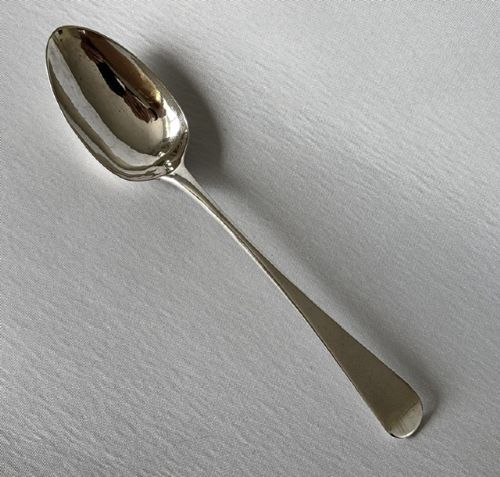
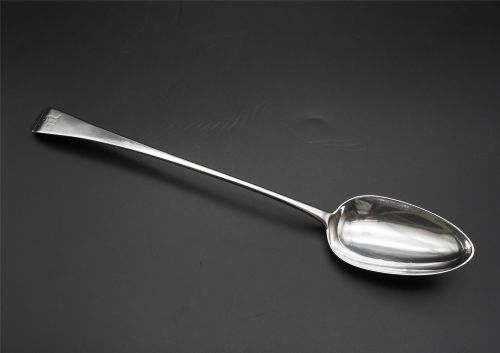
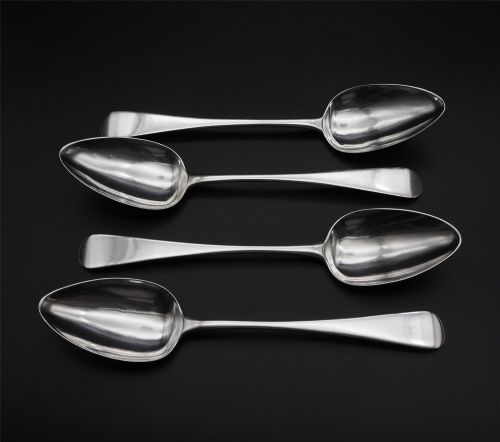
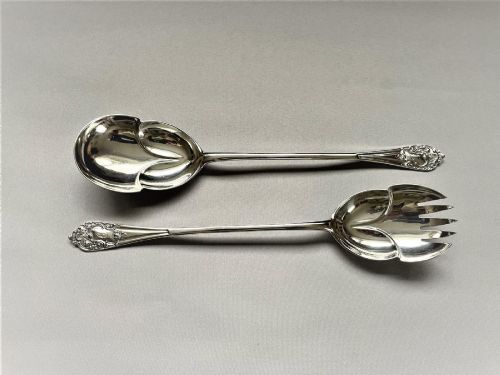
When you search for antique serving cutlery, you encounter larger implements intended for portioning food rather than individual dining. These pieces include large basting spoons, soup ladles, fish slices and salad servers spanning the Georgian, Victorian and Edwardian periods.
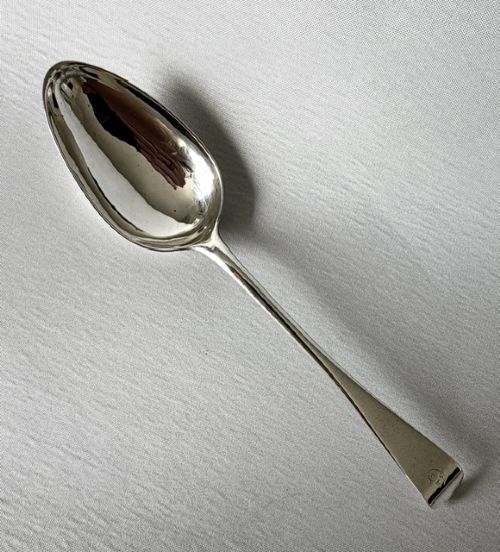
The selection on this page relies heavily on sterling silver items, alongside silver plate and pieces incorporating materials such as mother of pearl. Forms range from plain eighteenth century tablespoons to ornate late Victorian berry spoons and cased sets.
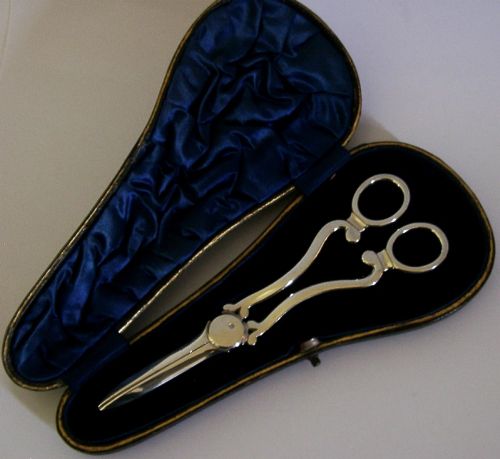
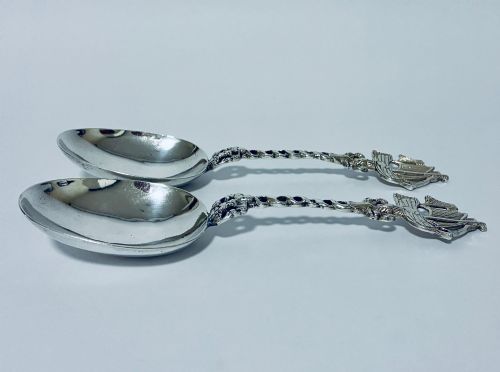
The most frequent items met here are silver serving spoons and ladles from the Georgian and Victorian eras, often bearing maker marks from London, Sheffield or provincial workshops. Specialised implements such as grape shears, sardine servers and asparagus tongs also appear among the offerings.
Materials and production methods
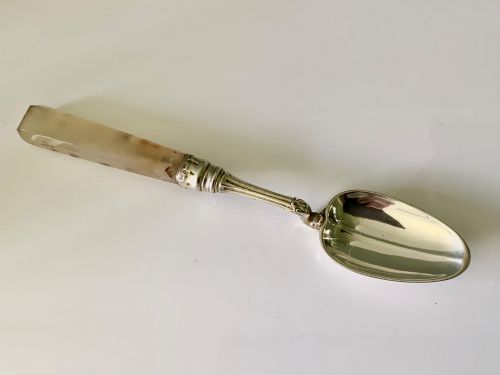
Makers utilised sterling silver and silver plate as the primary metals, shaping bowls and blades through hammering, casting and piercing. Handles frequently incorporate sterling silver, sometimes paired with organic elements such as antler horn, mother of pearl or glass inserts.
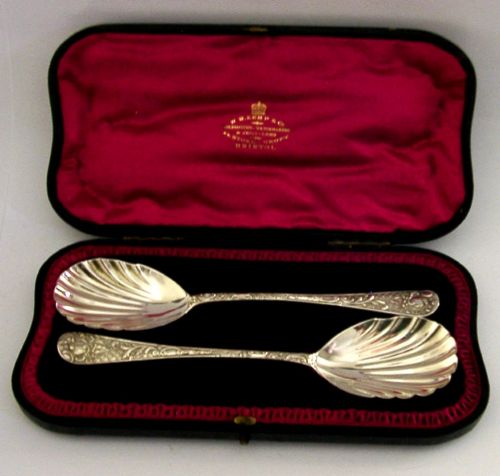
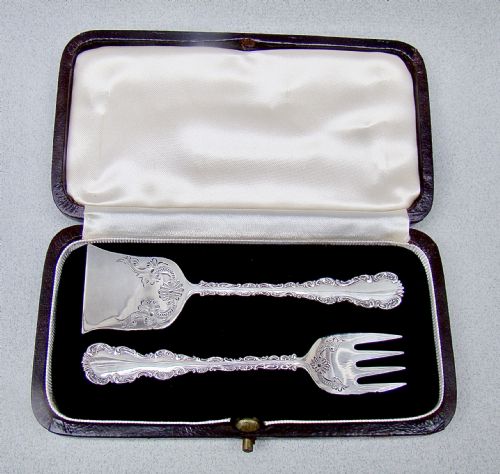
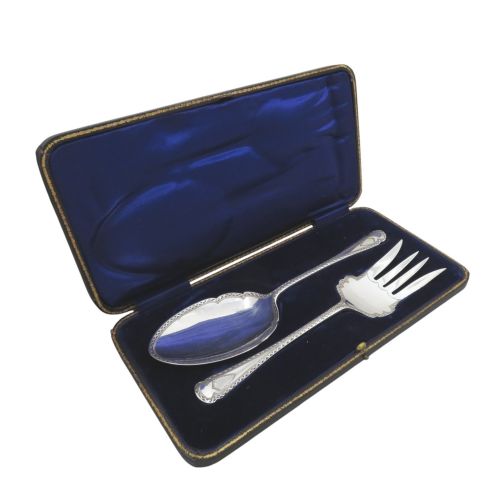
Cased presentation sets often utilise velvet, silk and satin linings inside leather covered wooden boxes to house the cutlery securely. Decoration on the silver surfaces involves hand engraving, chasing and the addition of applied crests or cast fruit motifs.
Listings feature sterling silver, silver plate, pewter, glass and organic elements such as mother of pearl and antler horn.
Distinguishing quality in the pieces
Quality rests upon the weight of the metal, the crispness of chased or engraved ornament, and the integrity of the maker marks. Heavier gauges of sterling silver provide better balance and resistance to bending during use.
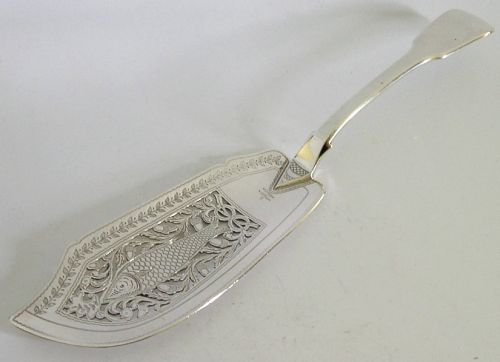
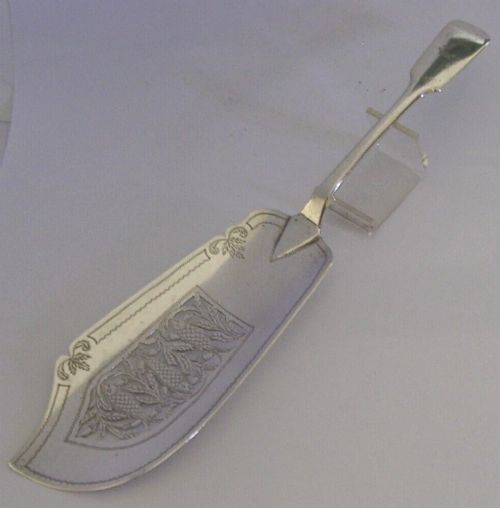
The precision of piercing work on fish slices and fruit knives demonstrates the maker skill. Original fitted cases lined in silk or velvet also elevate the standing of a matched pair or set.
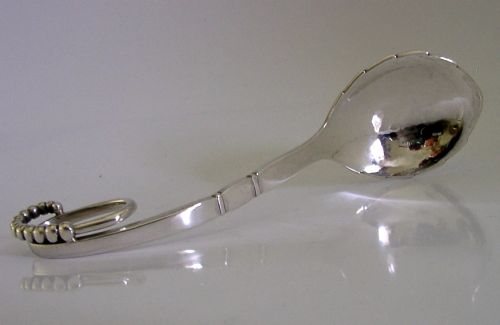
Peter and Jonathan Bateman·Georg Jensen·Henry Wilkinson·O'Connor·Hester Bateman·William Chawner·Creswick
The Antique Serving Cutlery Glossary
- Basting spoon
- A large spoon originally used for spooning juices over roasting meat, measuring significantly longer than a standard tablespoon.
- Berry spoon
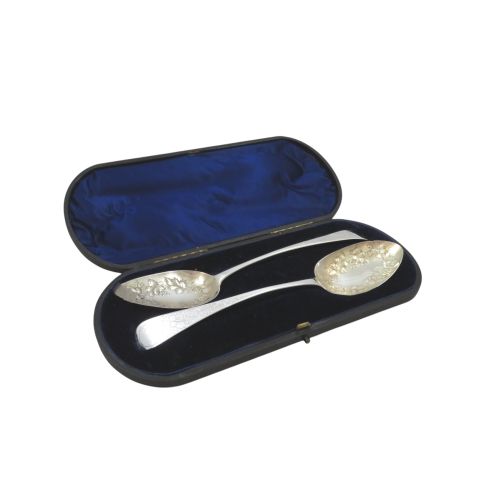
- A serving spoon, often dating from the Georgian period, featuring later chased fruit and leaf decoration added to the bowl.
- Fiddle pattern
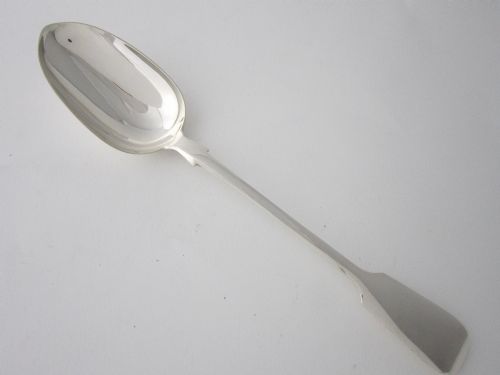
- A nineteenth century flatware handle design characterised by a narrow stem that broadens into a shoulder and a squared end resembling a violin.
- Fish slice
- A wide, flat, often pierced blade used for serving fish portions at the table.
- Marrow scoop
- A narrow, trough like implement designed for extracting marrow from bones, featuring bowls at both ends in various sizes.
Antique Serving Cutlery: Frequently Asked Questions
How do I clean antique silver serving pieces?
Clean sterling silver items gently using a specialised non abrasive silver cloth or mild soapy water to preserve the surface details and hallmarks.
Avoid harsh chemical dips that strip away the aged patina and can damage organic handle materials like mother of pearl or velvet linings.
Can I use antique cutlery for daily dining?
Many solid sterling silver serving spoons and ladles remain robust enough for regular use at modern dinner parties and family meals.
Care should be taken with delicate silver plated items or pieces featuring hollow handles and glued components, which require hand washing.
What does a silver hallmark tell me?
Hallmarks stamp official guarantees of metal purity onto the silver, alongside symbols indicating the assay office, such as the leopard head for London.
Additional marks reveal the date letter for the year of manufacture and the maker punch, helping trace the exact origin of the piece.
Why are some spoons called berry spoons?
Many eighteenth century spoons were retrofitted during the Victorian era with elaborate embossed fruit and leaf designs to suit changing dining fashions.
These modified pieces are known as berry spoons and remain collectable examples of nineteenth century decorative tastes applied to earlier silver.