


Silver Fish Servers
Silver fish servers are specialised dining utensils designed for presenting course-specific dishes, bringing period craftsmanship directly to the table.
Silver Fish Servers
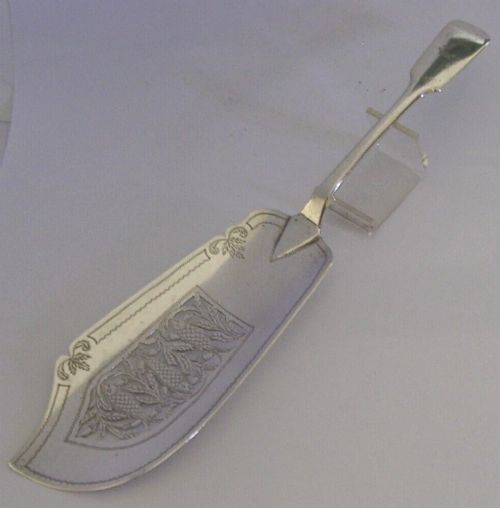
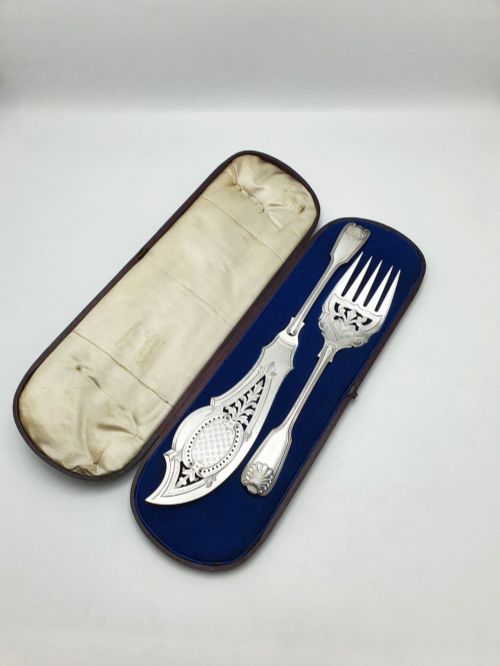
Silver fish servers encompass single slices, matched knife and fork sets, and cased pairs designed specifically for portioning fish at the dining table. These utensils emerge most frequently from the Victorian and Georgian periods, appearing alongside Edwardian and French examples in solid sterling silver and silver plate.
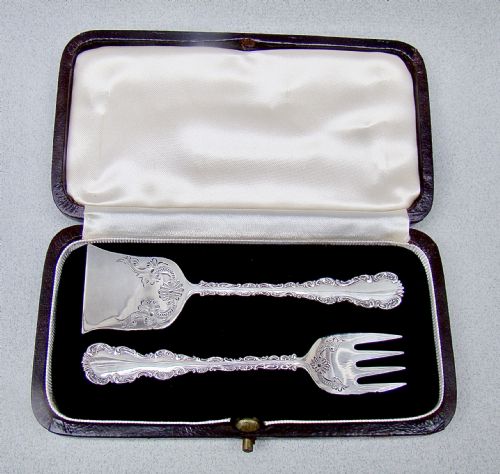
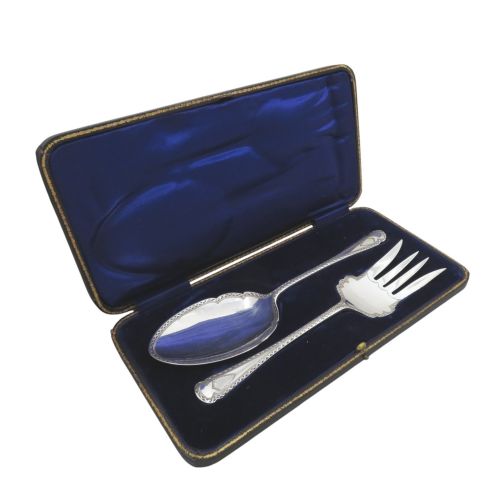
The form typically comprises a wide, flat, pierced blade shaped as a slice, often paired with a matching fork featuring deep tines. Collectors frequently encounter cased sets lined with velvet or satin, housing matching forks and knives intended for formal nineteenth-century dining.
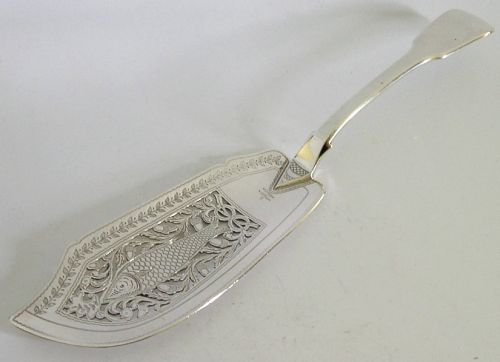
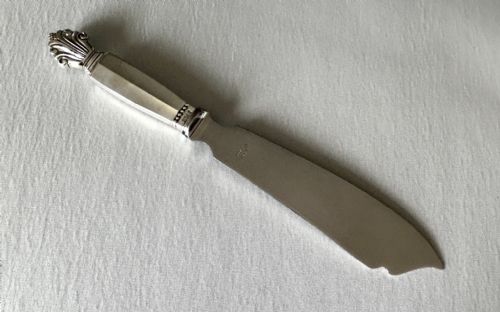
Originating predominantly from British and French workshops, these implements reflect the shifting culinary habits of the eighteenth, nineteenth, and twentieth centuries. The selection on this page ranges from George III pierced slices to mid-century modern designs and Edwardian cased presentations.
How they were made
Makers utilised sterling silver and silver plate for the functional blades and tines, frequently incorporating pierced, engraved, or chased decoration depicting dolphins, scrolls, and foliage. Piercing reduced the weight of the metal while creating intricate geometric or naturalistic patterns across the surface of the slice.
Handles required distinct materials to balance the weight of the metal work, leading craftsmen to employ bone, horn, antler, ivory, mother-of-pearl, and wood alongside solid silver or plated grips. These organic handle materials were often carved, pinned, or turned to fit securely against the silver ferrules.
Silver Fish Servers Retail Price Guide 2026
Typical asking prices for silver fish servers among the pieces listed under this phrase on Sellingantiques today, from the lower quarter to the upper quarter. They describe what is for sale here now, not the wider market.
Listings feature silver fish servers spanning the eighteenth century through the mid-twentieth century, encompassing both British sterling and French silver.
What varies in quality
Quality rests in the crispness of the piercing and engraving upon the blade, where deep, hand-cut channels and detailed animal or scroll motifs distinguish superior silversmithing. Plain or shallowly stamped metalwork indicates mass-produced or lower-tier manufacture.
The choice and execution of the handle material dictate the overall refinement of the set, with well-matched natural horn, carved ivory, or robust stag antler commanding greater visual harmony. Secure construction between the metal bolster and the grip ensures structural integrity during use.
Henry Wilkinson·Georg Jensen·Thomas Daniell·George Adams·Charles Boyton·Chawner & Co·Mappin & Webb·James Dixon·Alvin
The Silver Fish Servers Glossary
- Fish slice
- A wide, flat serving utensil with a shaped blade used for lifting portions of fish. It is frequently pierced with decorative openings.
- Pierced
- A technique where metal is cut through to create ornamental patterns and designs. This reduces the overall weight of the serving piece.
- Fiddle pattern
- A nineteenth-century flatware design characterised by a narrow stem that broadens into a shoulder before flaring at the terminal. It is common on Georgian and Victorian silver pieces.
- Ferrules
- Small metal bands or rings that secure the handle to the blade or tine. They provide structural stability and a neat transition.
- Cased set
- A collection of tableware housed in a fitted presentation box, often lined with velvet or satin. These sets protected the polished metal and organic handles during storage.
Silver Fish Servers: Frequently Asked Questions
How were silver fish servers used?
These utensils were employed at the dining table for serving delicate portions of fish during formal multi-course meals. The wide slice supported the flesh while the companion fork assisted in steadying and transferring the food.
Such implements ensured that hosts could portion delicate courses cleanly without breaking the presentation. They remained essential fixtures of middle and upper-class dining throughout the nineteenth century.
Why do some servers have non-metal handles?
Organic handle materials such as ivory, bone, horn, and antler provided a tactile contrast to cold metal and improved grip during service. These materials also offered distinct aesthetic variety, ranging from dark polished horn to creamy carved ivory.
Craftsmen selected these substances to complement the decorative theme of the dining service. Natural variations mean that no two sets share identical handle characteristics.
How should cased sets be stored?
Cased sets benefit from remaining within their original fitted boxes, which protect the velvet or satin linings and keep the metal stable. Storing them in dry conditions prevents tarnish and protects organic handles from humidity fluctuations.
Routine inspection helps maintain the condition of both the fitted case and the utensils inside. Avoiding abrasive cleaning preserves the original engraved and pierced details.