


Engraved Fish Servers
These engraved fish servers combine fine metalwork with delicate hand-chased motifs, offering a glimpse into grand dining traditions.
Engraved Fish Servers
When you search for engraved fish servers, you are looking at specialised serving cutlery designed for the formal dining table. These pieces include single slices and matched sets comprising a knife and fork, often intended for distinct courses.
The versions you are most likely to meet on this page span the Georgian and Victorian periods, featuring broad blades shaped to lift delicate fish without breaking the flesh. Makers utilised sterling silver and silver plate, frequently pairing the metal blades with handles carved from bone, mother-of-pearl, horn, or antler.
Originating largely from British and French workshops, these utensils reflect changing culinary fashions throughout the eighteenth and nineteenth centuries. Alongside standard English fiddle patterns, you encounter continental French pieces and specialised sardine servers.
Materials and Technique
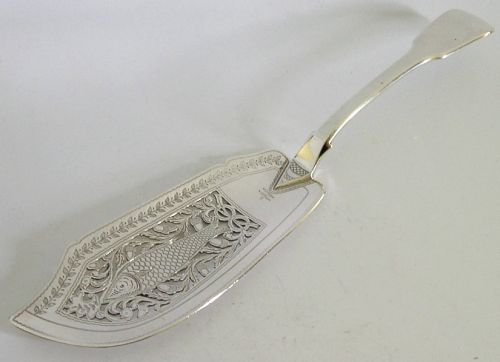
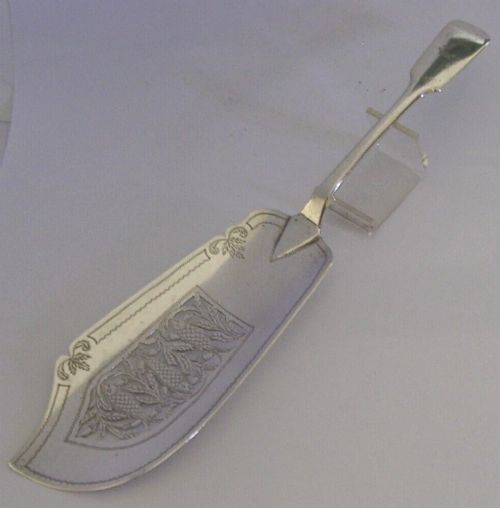
Silversmiths formed the wide blades of these servers using solid sterling silver or base metals coated in silver plate, employing piercing saws to cut intricate scrollwork and naturalistic motifs. Hand-engraving tools then chased fine lines across the surface, depicting fish, dolphins, foliage, and crests.
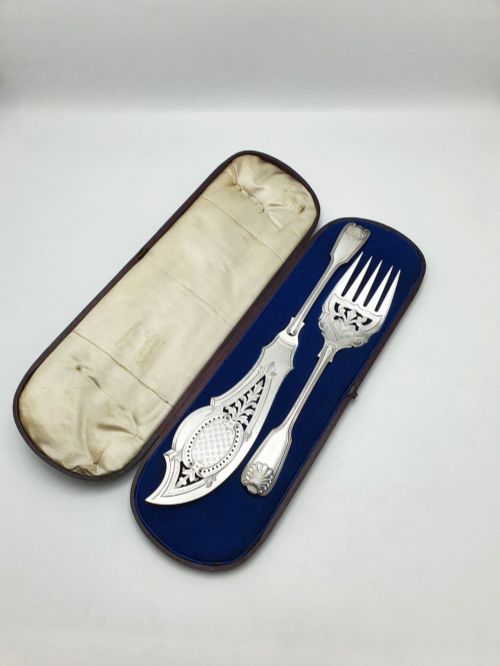
Handles required different craftsmanship, utilising organic materials such as bone, horn, wood, and mother-of-pearl shaped to fit the hand. These natural grips were secured to the metal tangs using pins, often nestled inside velvet and silk-lined presentation cases.
Listings span multiple periods including the eighteenth century, George IV, and Victorian eras, utilising sterling silver, silver plate, mother-of-pearl, bone, horn, and wood.
Judging Quality and Execution
The distinction between standard examples and the finest work lies in the depth and clarity of the hand-engraving. Crisp, detailed chasing that integrates seamlessly with the pierced framework indicates a higher standard of craftsmanship than shallow, machine-etched lines.
Material selection also dictates quality, with solid sterling silver pieces outranking silver-plated alternatives, just as finely turned mother-of-pearl or antler handles surpass plain wooden grips. Complete boxed sets retaining their original silk and velvet linings command greater interest from collectors.
Thomas Daniell·Charles Boyton
The Engraved Fish Servers Glossary
- Fish slice
- A large, wide serving utensil specifically shaped for lifting portions of fish at the dining table. They frequently feature pierced blades decorated with engraved scrolls.
- Fiddle pattern
- A nineteenth-century flatware design characterised by a stem that widens sharply near the terminal in a shape resembling a violin. It remains common on British silver pieces.
- Chasing
- A metalworking technique where the artisan pushes and displaces metal with a hammer and punch rather than cutting it away. This creates raised or indented decorative patterns on the blade.
- Piercing
- The process of cutting openings through the metal blade to form geometric or naturalistic patterns. On fish servers, this allows liquid to drain away from the food.
Engraved Fish Servers: Frequently Asked Questions
How were fish servers used?
These utensils were deployed at the Victorian and Georgian dinner table for portioning and serving whole fish courses to guests. The broad blade of the slice supported the delicate flesh while the matching fork helped steady the portion.
Such pieces formed part of elaborate tablescapes, often housed in dedicated presentation cases lined with silk and velvet until required for formal meals.
Are these servers sterling silver?
The listings include both solid sterling silver pieces and silver-plated examples over base metal. Hallmarks stamped onto the metal help identify the silver standard and the year of manufacture.
Plated versions remain common, particularly from the later nineteenth century, offering the same decorative engraved aesthetic without the higher cost of solid silver.
What handle materials exist?
Handles vary widely depending on the period and the maker's workshop. You will find metal handles integrated into the design alongside natural organic materials such as bone, mother-of-pearl, horn, and antler.
Organic grips provide a tactile contrast to the cold metal blades, with mother-of-pearl and carved horn representing particularly decorative choices.
How do I date these pieces?
Dating relies heavily on official hallmarks stamped into the silver, which record the assay office, date letter, and maker's mark. Stylistic clues such as French Restoration motifs or Victorian aesthetic movement engraving also help narrow down the decade of production.
Unmarked silver-plated sets require evaluation based on manufacturing techniques, box styles, and the specific decorative motifs used across the blade.