


Antique Fish Serving Cutlery
Antique fish serving cutlery brings the dedicated dining tools of the Victorian, Edwardian and Georgian eras directly to the modern table.
Antique Fish Serving Cutlery
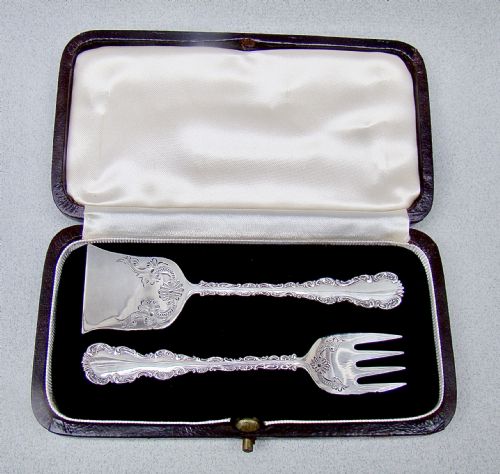
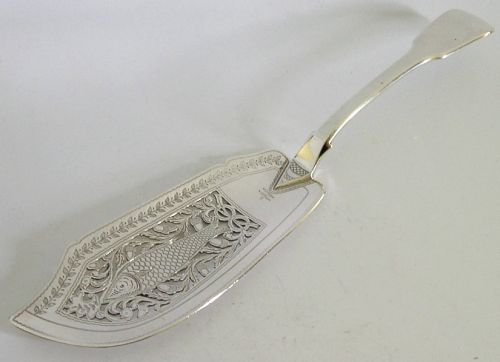
When buyers search for antique fish serving cutlery, they look at specialised servers, flatware, and carving sets designed specifically for seafood courses during the nineteenth and early twentieth centuries. These implements span Georgian, Victorian, and Edwardian periods, appearing as individual fish slices, boxed pairs, or complete sets with matching forks and knives.
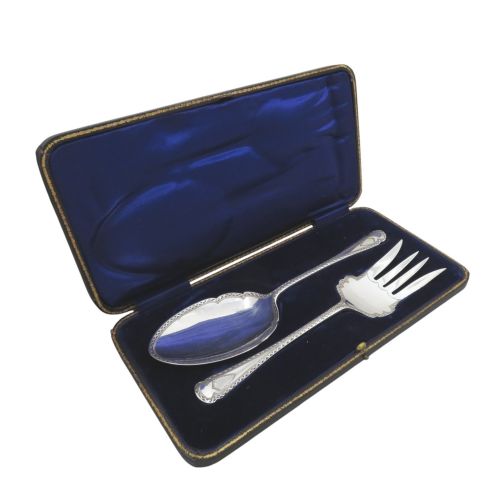
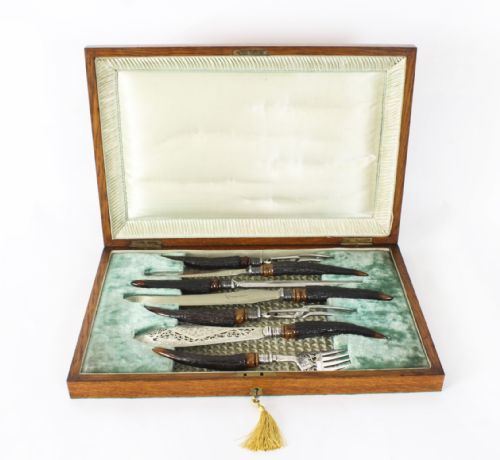
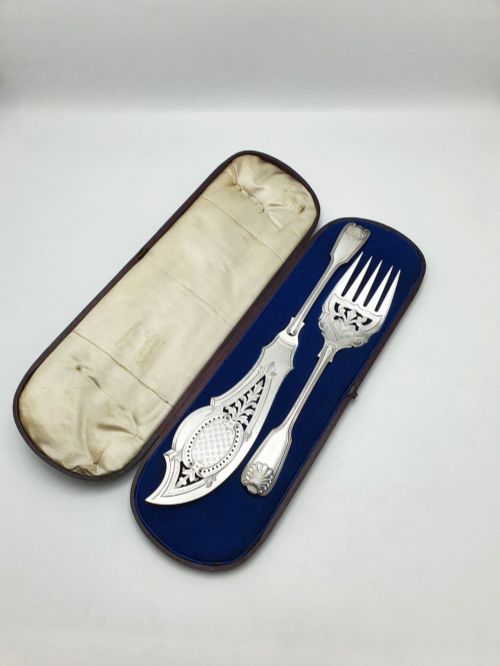
The version most commonly met on this page is the Victorian silver-plated or sterling silver fish server set, frequently housed in a presentation case lined with velvet or satin. Such pieces often exhibit detailed engraving on the blade and handle, representing the formal dining habits of the period.
Beyond standard servers, the selection encompasses specialised pieces like sardine servers and French silver slices dating from the eighteenth century onward. These objects reflect the changing culinary fashions and dining rituals of upper-class households across England and France.
Materials and methods of construction
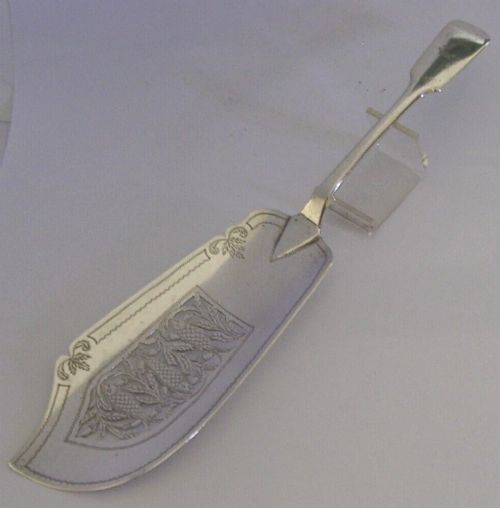
Makers fashioned these utensils primarily from sterling silver or silver plate, utilising durable metals capable of resisting the corrosive oils of fish without tainting the taste of the food. Blades frequently feature intricate piercing or hand engraving to depict aquatic themes, floral motifs, or crests.
Handles introduce a variety of tactile materials including bone, wood, leather, and natural antler horn, fixed securely to the metal shafts with pins or ferrules. These organic elements provided a solid grip and contrasted visually with the gleaming silver bowls and slices.
Listings feature items spanning the Georgian, Victorian, and Edwardian eras, utilising materials such as sterling silver, bone, and antler horn.
Assessing quality in historical servers
Quality rests heavily on the weight of the metal and the crispness of the hand-engraved or pierced decoration on the blade. Substantial gauge sterling silver commands greater attention than thin silver plate, showing the maker's commitment to durability and refined design.
The integrity and material of the handle dictate much of the overall execution, with well-fitted natural antler horn, bone, or dense wood elevating the piece above standard utilitarian wares. Fitted presentation cases lined with satin or velvet similarly indicate higher initial manufacture for affluent households.
Henry Wilkinson·Alvin
The Antique Fish Serving Cutlery Glossary
- Fish slice
- A wide, flat utensil with a pierced or engraved blade designed for lifting delicate fish portions at the table. It represents the central piece in many nineteenth-century serving sets.
- Sardine server
- A small, specialised fork or flat server created specifically for transferring tinned or fresh sardines. These items often appear in fitted cases from the late Victorian period.
- Sterling silver
- An alloy containing a high proportion of pure silver, marked on British items with the lion passant. It forms the primary precious metal for high-end dining utensils.
- Silver plate
- A base metal foundation coated with a thin layer of silver through electroplating or older techniques. This material allowed nineteenth-century households to own impressive tableware at a lower cost than solid silver.
- Fiddle pattern
- A traditional nineteenth-century flatware handle design characterised by a narrow stem that widens toward the end in the shape of a violin. It appears frequently on Georgian and Victorian silver slices.
Antique Fish Serving Cutlery: Frequently Asked Questions
What is the difference between a fish slice and a fish fork?
A fish slice is a wide, flat implement designed to slide beneath a whole fish or large fillet and lift it without breaking the flesh. The matching fork assists by steadying the portion as it moves from the platter to the dinner plate.
While the slice does the heavy lifting, the fork provides precision control during formal nineteenth-century dining courses.
How were fish serving sets used historically?
These sets were employed during the fish course of multi-course Victorian and Edwardian banquets, where hosts served specialised dishes using dedicated cutlery to prevent transferring flavours to other foods.
The host or hostess used the server at the table, keeping the metal away from direct contact with steel knives, which were thought to impart an unpleasant taste to fish.
Are these servers made of solid silver or plated?
Pieces vary between solid sterling silver and silver plate over a base metal, with hallmarks on British items indicating the specific standard and assay office. Hallmarks help identify the year of manufacture and the metalsmith responsible for the work.
Silver-plated versions offer a bright appearance achieved through nineteenth-century plating techniques while utilising more affordable underlying metals.
How should I clean antique silver fish servers?
Gentle washing in warm soapy water with a soft cloth removes everyday dust and oils without harming delicate engraved details or organic handles like bone and antler. Avoid harsh chemical dips, which can strip away desirable patinas and damage vulnerable handle materials.
Storage in dry conditions, ideally within lined boxes or anti-tarnish cloth, helps maintain the surface finish between uses.