



Fish Knife and Fork
These fish knife and fork sets are proper dining implements designed for the course, bringing Victorian and Edwardian craftsmanship directly to the modern table.
Fish Knife and Fork
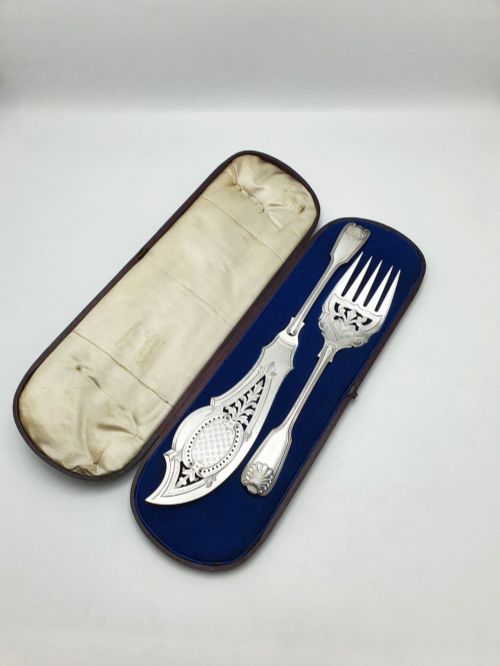
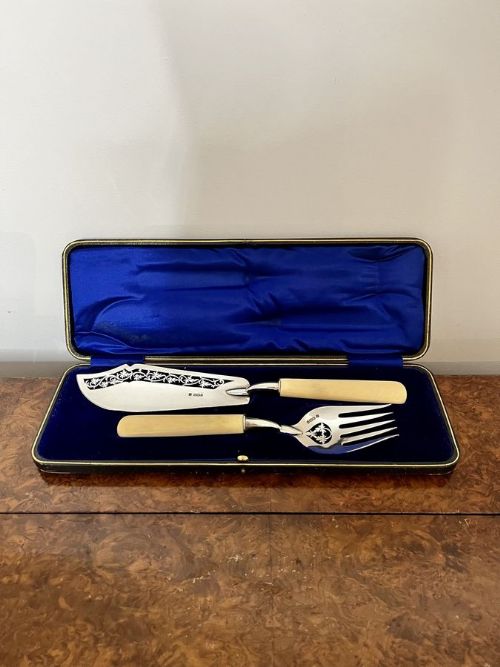
A fish knife and fork set comprises paired cutlery designed specifically for serving or eating fish during formal nineteenth and twentieth-century dining. These utensils appear primarily in Victorian and Edwardian iterations, spanning from the 1870s through to the Edwardian period and 1910.
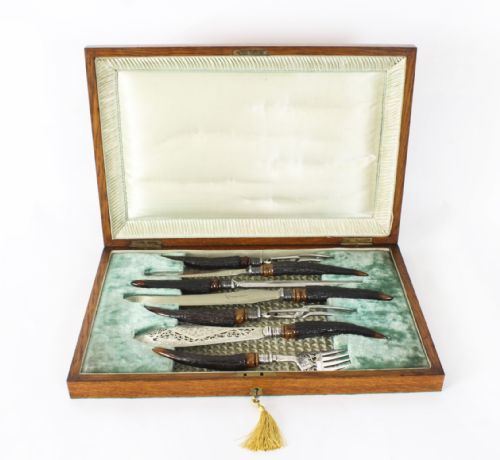
Buyers encounter individual cased pairs alongside larger serving sets and complete canteens equipped for multiple persons. Many examples survive in fitted wooden boxes lined with velvet, preserving the cutlery in original condition.
The forms encompass flatware, serving cutlery, and dedicated carving sets intended for the dining room. Originating mainly from English workshops, these pieces reflect the domestic habits and material culture of the late nineteenth century.
How they were made
Manufacturers combined sterling silver or silver plate with organic materials such as bone, horn, and stag antler for the handles. Blades and tines were frequently fashioned from steel or silver, often embellished with detailed engraved decoration.
Handles utilised natural stag antler or carved bone, secured to the metal elements with pins. Fitted cases lined with velvet were constructed from wood to house these sets securely.
Certain sets feature dedicated hunting and dog engravings on the blades, adding a touch of sporting character to the dining table.
What varies in quality
Quality rests upon the choice of materials, distinguishing solid sterling silver and genuine stag antler from silver plate and simpler wooden components. The presence of a fitted velvet-lined case elevates an assemblage.
The crispness of the engraving upon the blades and servers separates standard production from finer workshop output. Edwardian and Victorian sets demonstrate varying degrees of decorative depth, particularly in hunting or animal motifs.
Waring & Gillows
The Fish Knife and Fork Glossary
- Sterling silver
- A silver alloy containing 92.5 percent pure silver by mass, frequently utilised for high-grade Victorian and Edwardian fish servers.
- Silver plate
- A base metal coated with a layer of silver, commonly found on nineteenth-century cutlery sets.
- Stag antler
- The shed horn of a stag, shaped and polished to form tactile, textured handles on serving knives and forks.
- Canteen
- A fitted box or cabinet designed to hold a complete set of matching cutlery securely in fixed slots.
- Flatware
- Table cutlery comprising knives, forks, and spoons used for dining.
Fish Knife and Fork: Frequently Asked Questions
What is a fish knife and fork used for?
These implements were created for the fish course of formal Victorian and Edwardian meals, where standard steel knives would react poorly with fish oils.
The wide blade of the knife helps lift the flesh away from the bones without cutting them, while the matching fork assists with handling the delicate portions.
How do I date a fish server set?
Dating relies on hallmarks stamped on sterling silver pieces, alongside stylistic clues in the engraving and handle materials.
Victorian sets often feature heavier ornamentation and stag antler, whereas Edwardian examples tend toward lighter forms and refined Edwardian aesthetics.
Why do some sets come in wooden cases?
Fitted wooden boxes lined with velvet were designed to protect delicate silver and organic handles from damage when stored in a sideboard.
These cases often indicate a superior grade of set intended for formal gifting or presentation within prosperous nineteenth-century households.