



Silver Fish Serving Set
A silver fish serving set brings nineteenth-century dining elegance to the table with matching knife and fork pairs designed for delicate courses.
Silver Fish Serving Set
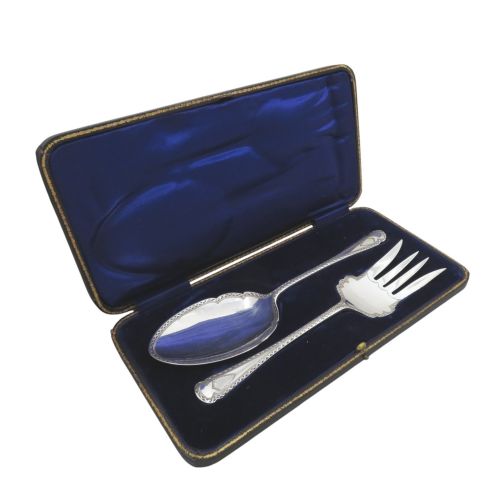
A silver fish serving set comprises matched pairs of specialised cutlery designed for carving and portioning fish at the dining table during the nineteenth and early twentieth centuries. These utensils appear primarily from the Victorian and Edwardian eras, spanning periods such as 1880, 1890, and 1900.
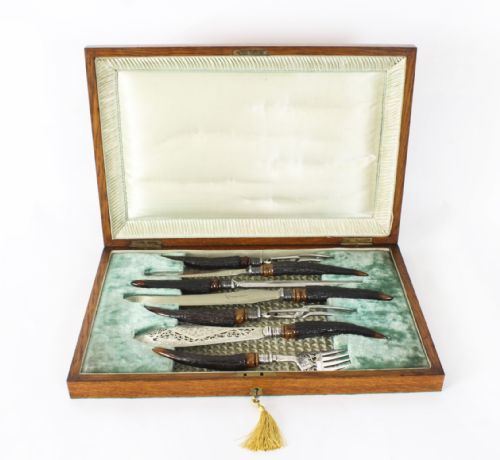
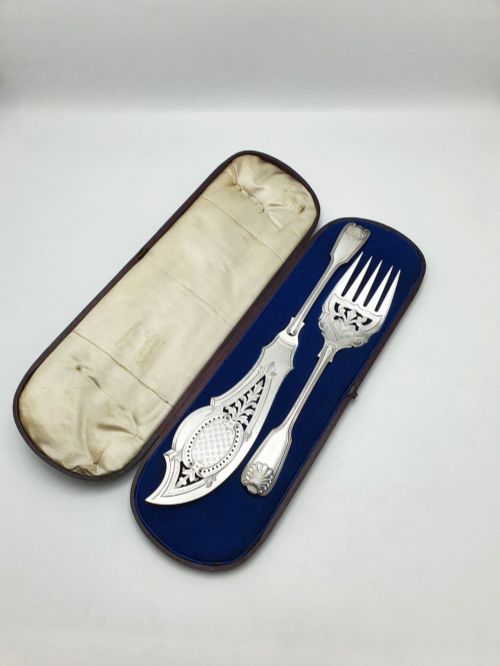
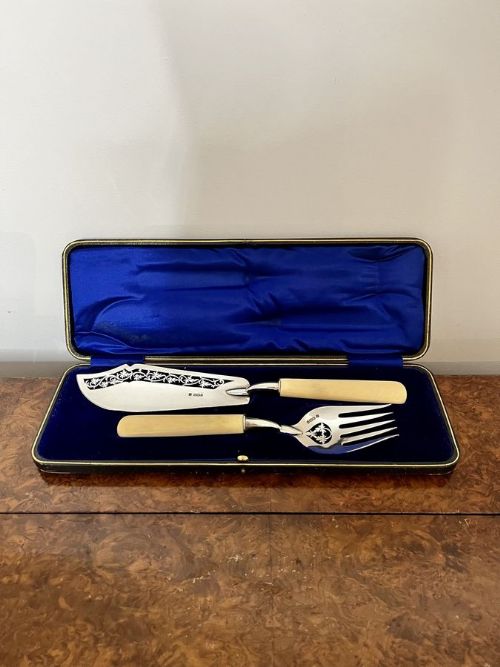
The form typically includes a wide, pierced knife blade alongside a matching fork, often tailored to separate delicate fish flesh cleanly from the bone. Buyers will most frequently encounter boxed presentations complete with fitted velvet or leatherette interiors.
Materials and construction
Makers utilised sterling silver and silver plate for the functional blades and tines, pairing them with natural materials for the grips. Handles fashioned from bone, stag antler, and cow horn provide a tactile contrast to the polished metal work.
Engraving and piercing techniques decorate the flatware surfaces, frequently displaying intricate floral motifs or hunting and dog scenes. Fitted presentation cases lined in velvet or leatherette housed these sets securely for formal dining.
Several Victorian sets feature specialised dog and hunting engravings upon the blades, bringing canine companionship directly to the dining table.
Factors of distinction
The standard of execution in the metalwork and the depth of the hand-engraving separate standard items from superior examples. Finely pierced blades showing balanced symmetrical patterns indicate careful craftsmanship.
The choice of handle material and its preservation also influence the overall character of the set. Well-matched stag antler or clean bone grips secured tightly to the ferrules represent higher manufacturing care.
The Silver Fish Serving Set Glossary
- Sterling silver
- A silver alloy containing 92.5 percent pure silver by mass, widely used for high-end Victorian and Edwardian cutlery. This standard ensures durability and a bright finish.
- Silver plate
- A base metal coated with a layer of pure silver through electroplating or older techniques. This method offered a bright presentation at a more accessible cost during the nineteenth century.
- Stag antler
- The shed horn of a deer utilised as a handle material for serving cutlery. Its textured surface provides a secure grip and a robust appearance.
- Leatherette
- A simulated leather material employed to cover fitted presentation boxes for flatware. It protected the contents while mimicking the appearance of genuine hide.
- Piercing
- The art of cutting shaped apertures through metal blades to create decorative patterns. This technique reduced the weight of larger serving implements while adding visual ornamentation.
Silver Fish Serving Set: Frequently Asked Questions
What is a silver fish serving set used for?
These matched utensils were created to serve fish courses formally at the nineteenth-century dining table. The wide knife helps lift delicate portions while the companion fork assists in separating the flesh.
Today, they are utilised for serving similar dishes or collected as examples of period craftsmanship. Many choose to display them in their original fitted boxes.
How do I tell sterling silver from silver plate?
Examination of the metal surfaces often reveals hallmarks stamped into sterling silver pieces, indicating the maker, assay office, and year of production. Silver plated items lack these official assay marks and may show base metal beneath worn areas.
Weight and patina can also offer clues regarding the composition of the metal. Sterling examples maintain their chemical purity beneath surface tarnish.
How should I store a cased set?
Keeping the pieces inside their original velvet or leatherette lined box protects them from dust and accidental scratches. Ensure the storage environment remains dry to prevent tarnishing of the metal surfaces.
Avoid wrapping the items in materials that trap moisture. Proper placement in a stable climate preserves both the metal and the fitted case.
What periods do these sets come from?
The available pieces stem principally from the Victorian and Edwardian eras, covering the nineteenth and early twentieth centuries. Dates commonly range from the 1870s through to the 1900s.
Design motifs often shift from heavy Victorian ornamentation towards lighter Edwardian styling. Each era brings distinct manufacturing traits to the cutlery.