


Antique Fish Servers
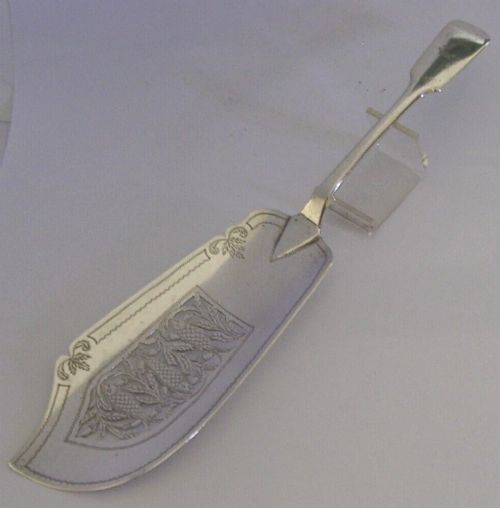
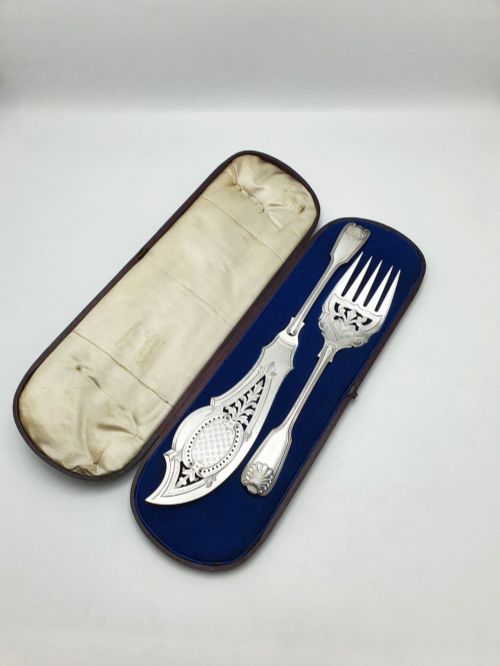
These antique fish servers are dedicated dining implements spanning Georgian, Victorian and Edwardian eras, fashioned to present delicate courses with proper ceremony.
Antique Fish Servers
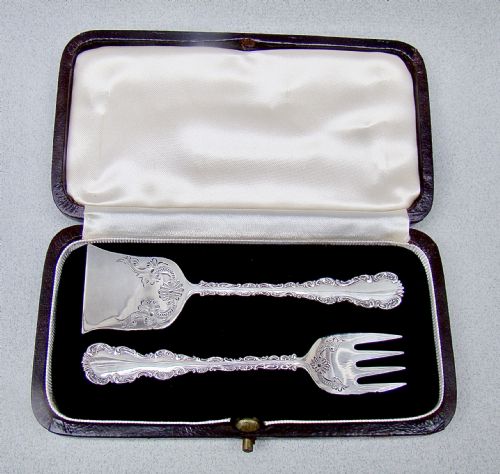
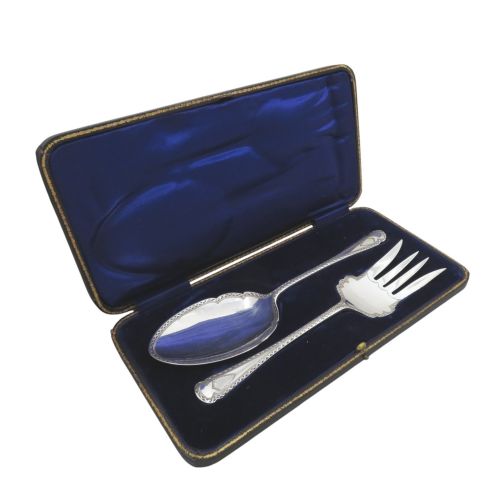
When you search for antique fish servers, you encounter specialised implements designed specifically for the formal dining table. The selection spans single fish slices alongside matched pairs of serving knives and forks, often housed in fitted presentation cases lined with velvet or satin.
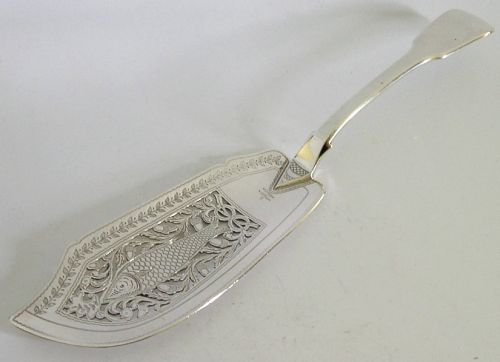
Victorian examples dominate the available forms, ranging from plain sterling silver to elaborate silver-plated sets featuring engraved decoration. Georgian pieces appear frequently as single pierced slices, while Edwardian iterations often incorporate organic handles alongside fitted boxes.
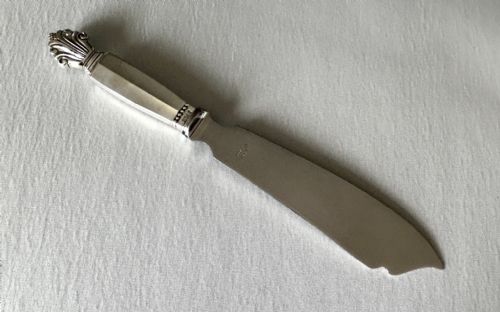
The objects serve a singular purpose from an era of elaborate dining rituals, moving delicate portions of fish without breaking the flesh. Collectors encounter both solid sterling silver iterations and durable silver-plated alternatives paired with diverse handle materials.
How they were made
Silversmiths employed solid sterling silver or base metals coated in silver plate, shaping blades through cutting, hammering and piercing. Blades often display intricate hand-engraved motifs depicting natural scenes, scrolling foliage or family crests.
Handles introduce a contrasting palette of materials including carved bone, polished ivory, stag antler, horn, mother-of-pearl and exotic woods. These components were pinned or cemented into metal ferrules to secure the grip for daily use.
Listings feature solid sterling silver and silver plate across Georgian, Victorian and Edwardian periods.
What varies in quality
Quality rests upon the thickness of the silver metal, the depth and crispness of the blade piercing, and the integrity of any engraved work. Heavy gauge sterling silver commands greater attention than thin plating that has worn down to the base metal over decades.
The pairing of materials also dictates standard, particularly where handles are carved from natural media like ivory or mother-of-pearl without splitting. Fitted wooden boxes lined with original velvet or satin elevate the preservation of the set.
Henry Wilkinson·Georg Jensen·Thomas Forester and Sons·Alvin·George Adams·Charles Boyton·Thomas Daniell·James Dixon
The Antique Fish Servers Glossary
- Fish slice
- A wide, flat serving implement designed to lift portions of fish from a platter. Many examples feature delicate pierced work to drain liquid.
- Sterling silver
- An alloy consisting of pure silver and other metals, typically copper, standardised for durability and marked with traditional hallmarking symbols.
- Silver plate
- A base metal substrate coated with a thin layer of silver through chemical or electrochemical processes. This method provided a brighter finish at a lower cost than solid silver.
- Fiddle pattern
- A traditional cutlery handle design characterised by a narrow stem that broadens symmetrically near the terminal into a distinct shape resembling a fiddle.
- Ferrules
- The metal bands or collars joining the serving blade to the handle, preventing the material from splitting under pressure.
Antique Fish Servers: Frequently Asked Questions
How do I clean antique silver fish servers?
Clean sterling silver items using a dedicated silver cloth or mild polish, avoiding abrasive pads that ruin delicate hand engraving. Take care around organic handle materials such as ivory or horn, keeping moisture away from the joins.
Store the implements in dry conditions, ideally within their original fitted cases lined with velvet or satin to prevent tarnishing from ambient air exposure.
Were these servers always sold in pairs?
Many Victorian and Edwardian examples consist of a matched serving knife and fork housed together in a presentation box. Earlier Georgian pieces typically survive as a single wide fish slice rather than part of a twin set.
Later silver-plated sets often expanded the grouping to include multiple matching pieces intended for large dining gatherings.
How can I tell the date of a silver piece?
British sterling silver items generally bear official hallmarks stamped directly into the metal. These tiny marks indicate the assay office, the standard of silver, and a specific date letter corresponding to the year of manufacture.
Unmarked silver plate or pieces with continental origins rely on stylistic cues, maker's marks, and the construction methods visible in the handle and blade.
What are the handles typically made from?
Makers utilised a wide array of natural and manufactured materials for gripping surfaces. Common historic options include carved ivory, bone, mother-of-pearl, polished horn, stag antler, and exotic hardwoods.
Later mid-century iterations occasionally introduced early plastics or solid silver handles integrated directly into the body of the utensil.