

Vintage Silver Serving Flatware
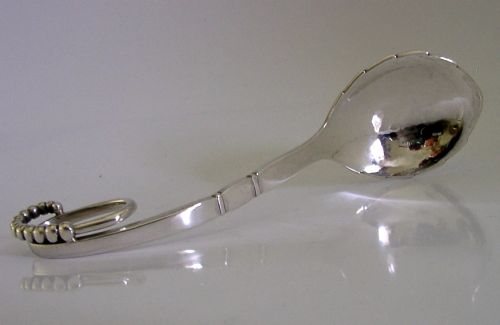
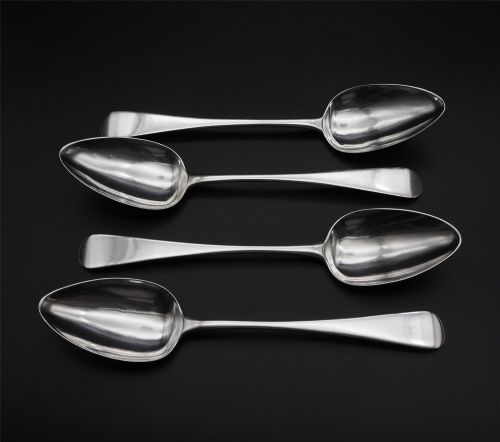
Vintage silver serving flatware brings distinct character to the table through functional forms shaped in sterling silver, silver plate, and silver gilt.
Vintage Silver Serving Flatware
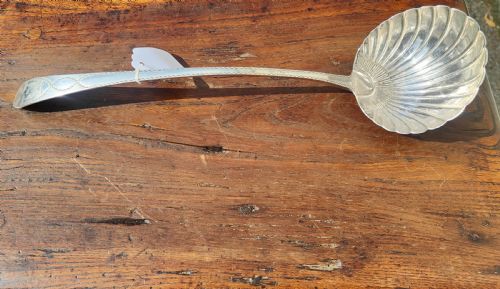
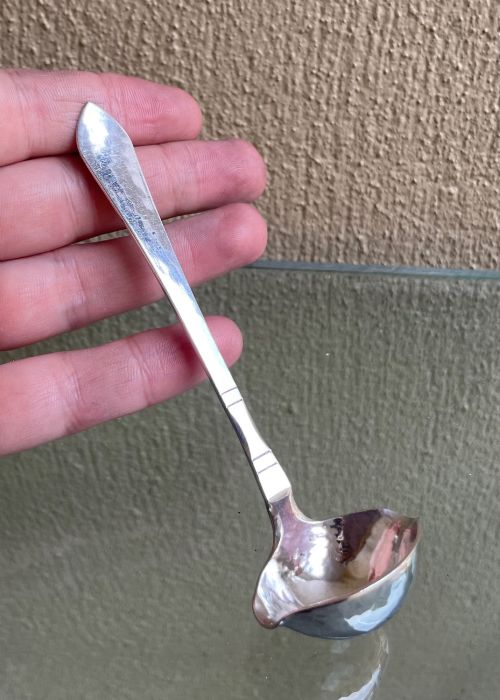
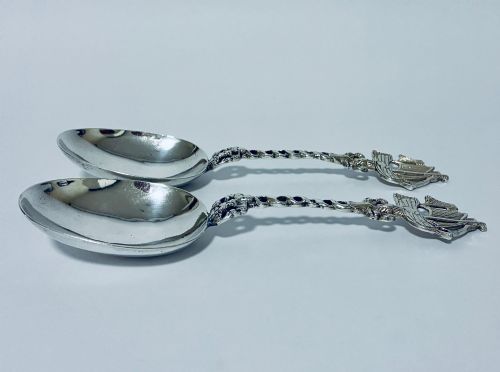
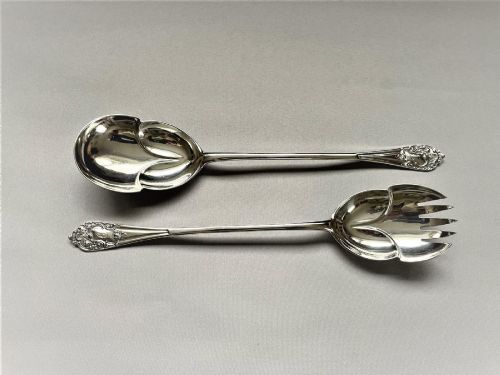
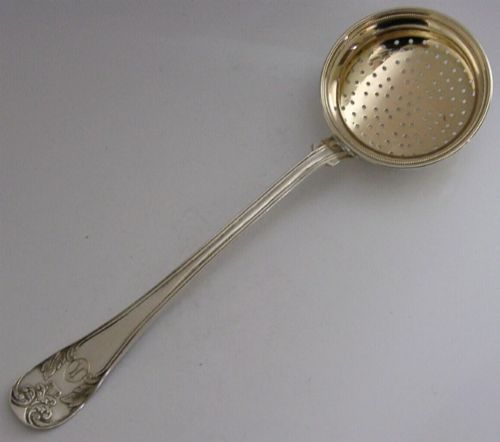
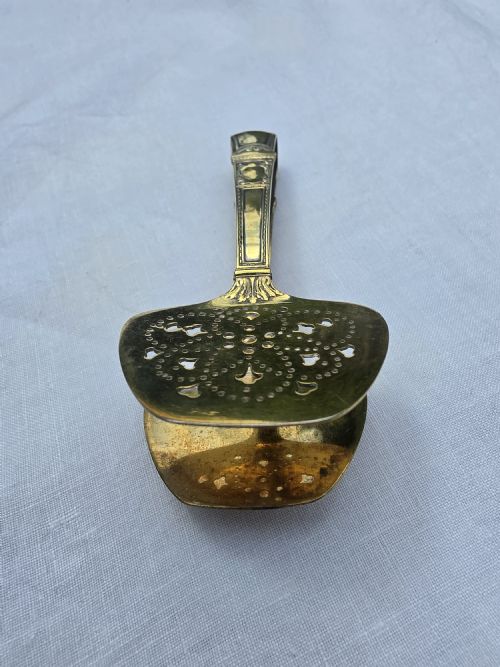
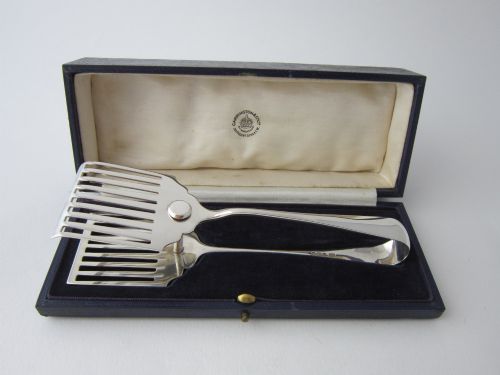
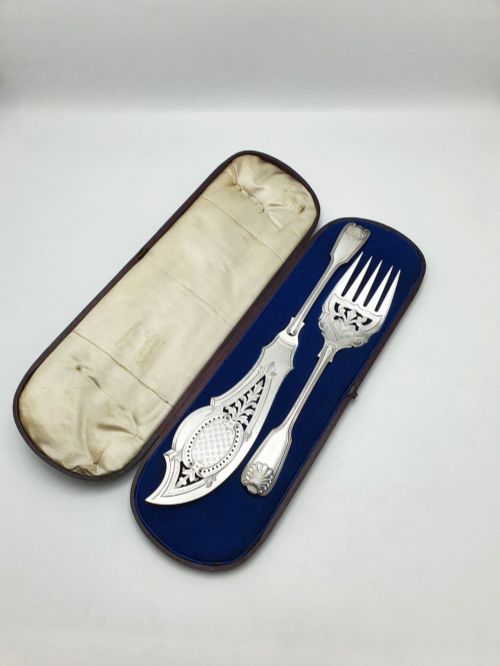
Vintage silver serving flatware encompasses specialised implements designed for specific culinary tasks, ranging from large fish servers and salad sets to delicate sugar sifters, asparagus tongs, and sauce ladles. The selection spans distinct eras including the Georgian, Victorian, Edwardian, and Art Deco periods, each bringing recognizable regional and stylistic shifts in form.
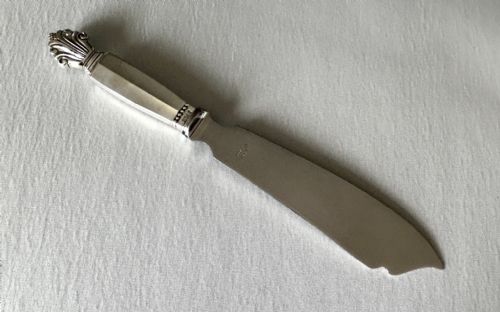
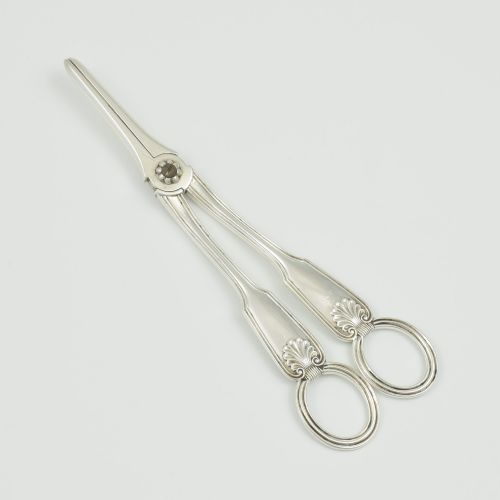
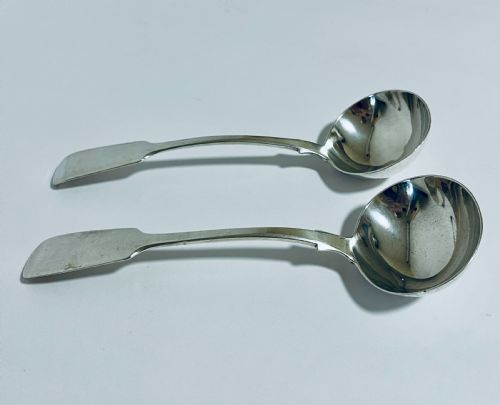
Buyers encountering this category most frequently meet serving spoons, fish servers, and tongs produced in sterling silver or silver plate. Forms range from unadorned Georgian ladles and heavy Victorian grape scissors to fluid Art Nouveau preserve spoons and sculptural mid-century Georg Jensen serving slices.
How they were made
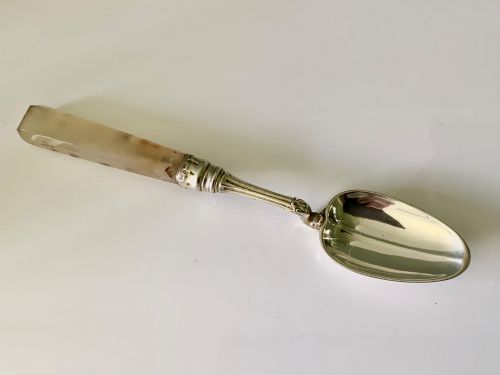
Makers utilised solid sterling silver, silver plate over base metals, and silver gilt, frequently incorporating contrasting natural elements such as mother of pearl, agate, silk, velvet, and antler for handles. Blades, bowls, and tines were cast, hammered, or pierced, often displaying intricate hand-engraving alongside applied or cast cast ornament.
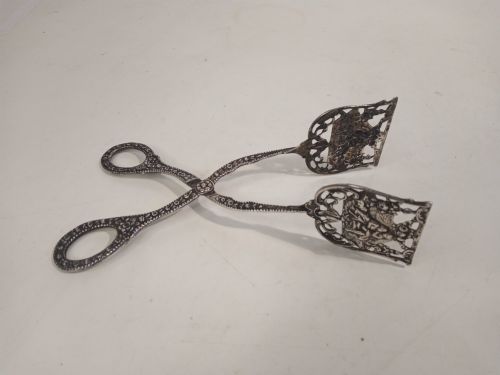
Specialised construction techniques accommodated particular functions, such as the hollow stems of marrow scoops, the hinged joints of grape shears and sugar tongs, and the bifurcated tines of specialised serving forks.
Some Victorian silver fruit knives feature blades cast entirely in silver so the acid from citrus fruit would not leave a metallic taste.
What varies in quality
Quality in vintage silver serving flatware rests upon the crispness of cast ornament, the depth and precision of hand-engraving, and the structural integrity of joints in items like tongs and scissors. Heavier gauge metal provides superior rigidity and balance in the hand during use.
The integration of secondary materials, such as secure pinning in mother of pearl handles and the intact retention of gold wash on silver gilt pieces, marks the distinction between standard production and exceptional maker output.
Georg Jensen·Tiffany and Company·Goldsmiths and Silversmiths Co·Jonathan Hayne·William Devenport
The Vintage Silver Serving Flatware Glossary
- Sterling silver
- A silver alloy containing 92.5 percent pure silver and 7.5 percent other metals, usually copper, ensuring durability for functional tableware.
- Silver gilt
- Silver objects that have been coated with a thin layer of pure gold on the surface, creating a rich two-tone decorative effect.
- Bifurcated
- Split into two branches or forks, commonly found on specialised serving implements designed to pierce and lift foods cleanly.
- Marrow scoop
- A narrow, double-ended utensil with trough-like bowls originally used for extracting bone marrow.
- Sifter spoon
- A ladle or spoon featuring a pierced bowl designed to strain liquid away from sugar, berries, or small foodstuffs.
Vintage Silver Serving Flatware: Frequently Asked Questions
What tasks were serving flatware used for?
These specialised utensils were engineered for transferring specific foods from communal dishes to individual plates at the dining table. Categories include large ladles for gravies, tongs for asparagus or sugar lumps, and servers dedicated to fish, pastry, or salad.
Each form corresponds directly to the dining habits of its period, reflecting the formal presentation of multi-course meals.
How do I care for silver serving pieces?
Routine maintenance involves gentle hand washing in warm soapy water using a soft cloth, followed by immediate drying to prevent water spots. Infrequent, careful polishing with a dedicated silver cloth preserves the metal without wearing down delicate engraving.
Storing pieces in lined boxes or anti-tarnish rolls protects them from airborne sulphur and physical friction against other cutlery.
Can antique silver be used daily?
Solid silver and robust silver plate are durable enough for regular dining use when handled with appropriate care. Implements with delicate organic handles, such as mother of pearl or tortoise-shell, require extra caution and hand washing rather than immersion.
Using these utensils brings historical craftsmanship into active daily service rather than leaving them confined to display.
How are different periods identified?
Stylistic indicators provide the first clue to a piece's age, such as the flowing organic lines of Art Nouveau or the geometric precision of Art Deco. Hallmarks stamped into sterling silver offer definitive proof, recording the assay office, date letter, and maker's mark.
Comparing these punches against historical registry records yields the exact year and location of manufacture.