




Victorian Silver Plate Cutlery
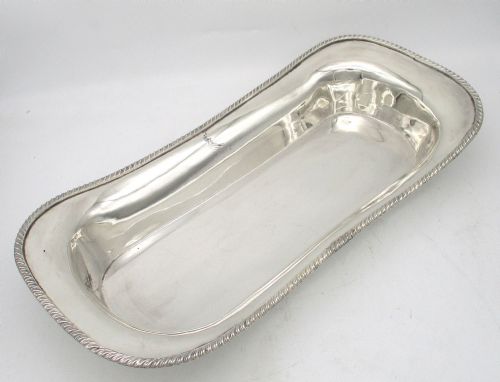
Victorian silver plate cutlery brings domestic luxury to the table through elaborate servers, rests and fitted canteens.
Victorian Silver Plate Cutlery
When a buyer searches for victorian silver plate cutlery, they encounter diverse serving pieces and dining implements spanning the nineteenth century and the Edwardian era. The selection ranges from specialised fish servers and fruit knives to knife rests, carving sets and boxed canteens.
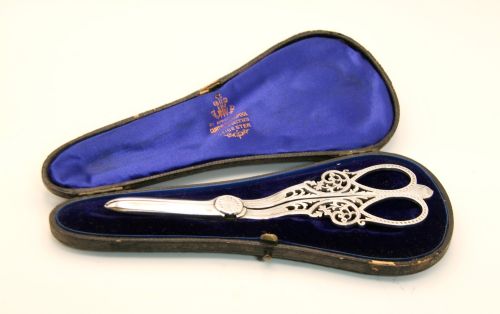
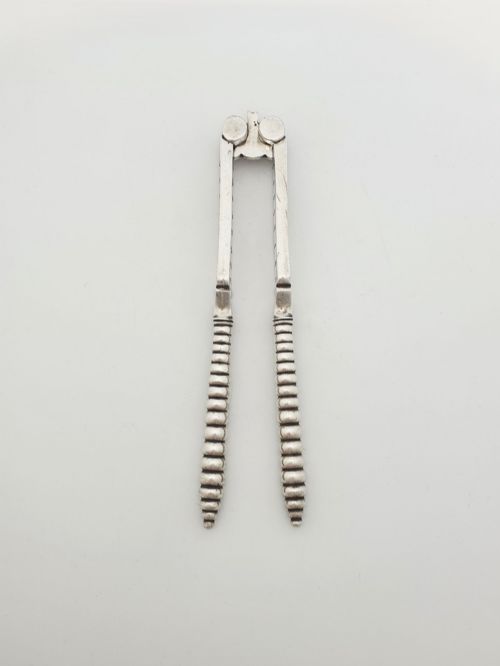
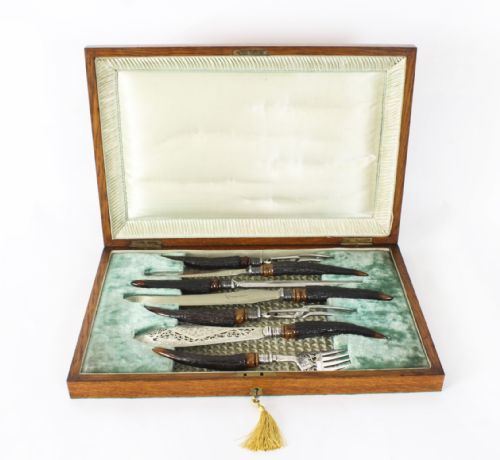
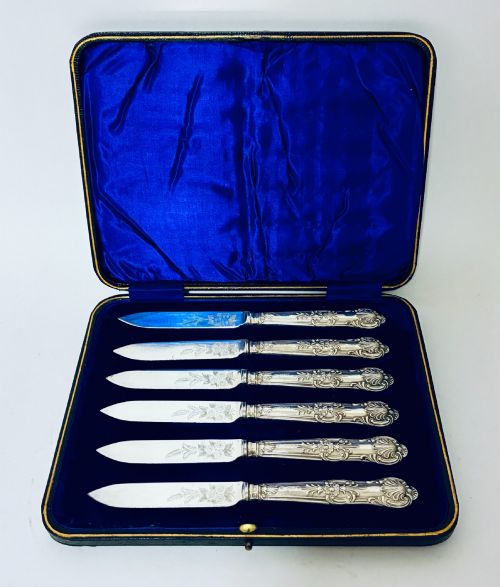
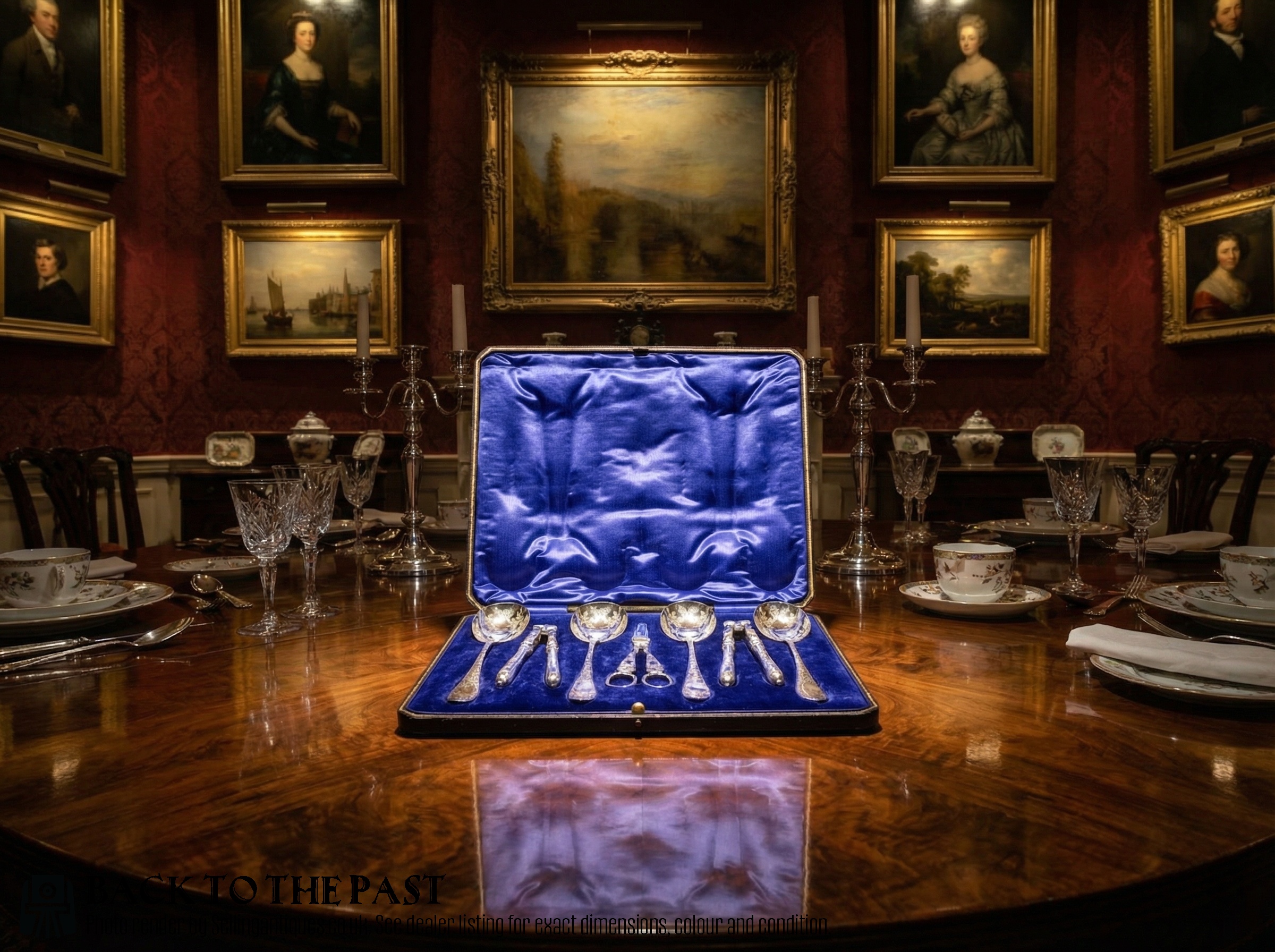
Most pieces date from the Victorian period, with specific examples appearing from the eighteen-eighties and nineties alongside Edwardian additions. Forms include grape scissors, lobster crackers, stilton scoops and napkin rings housed in original oak or mahogany cases.
Materials and Techniques
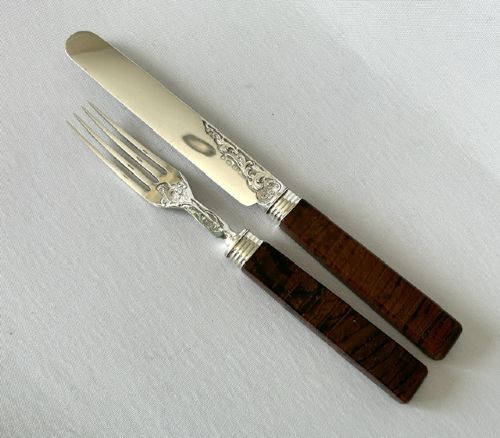
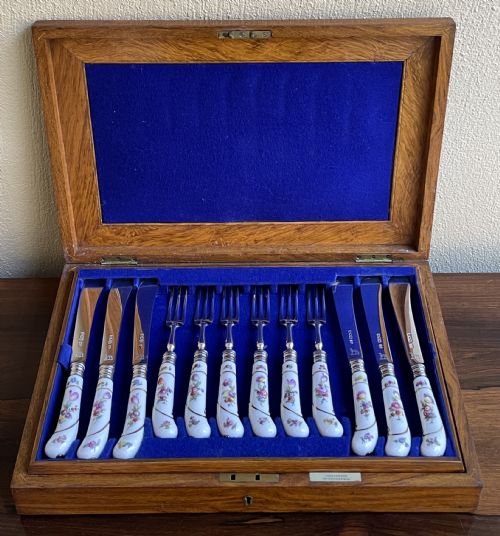
Makers utilised silver plate over base metals, frequently combining the metal with organic elements such as mother-of-pearl, antler horn, bone and porcelain. Presentation boxes and canteens were constructed from oak, mahogany, leatherette and velvet.
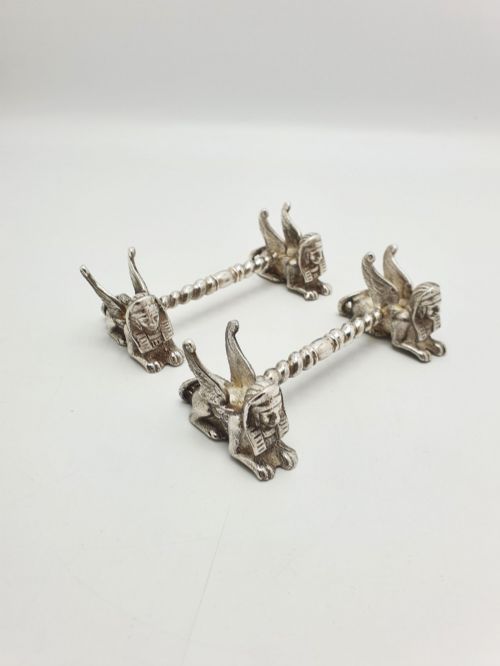
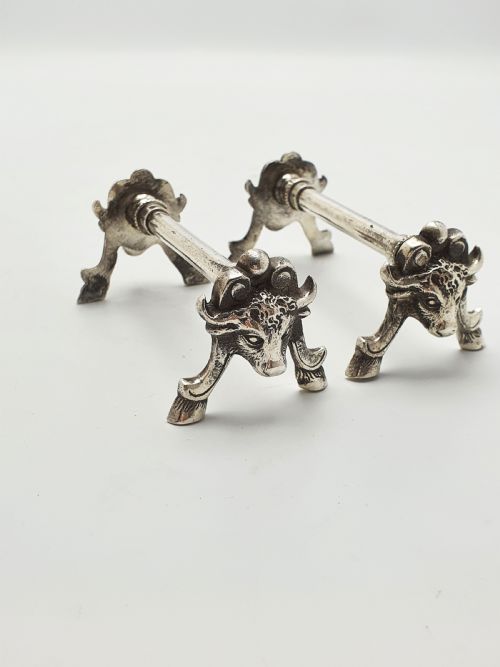
Engraving and decorative casting defined the ornamentation, producing figural knife rests depicting sphinxes, bull heads and rampant lions alongside detailed hunting and dog scenes.
Victorian Silver Plate Cutlery Retail Price Guide 2026
Typical asking prices for victorian silver plate cutlery among the pieces listed under this phrase on Sellingantiques today, from the lower quarter to the upper quarter. They describe what is for sale here now, not the wider market.
Listings feature items incorporating mother-of-pearl, antler horn, oak, mahogany, velvet and silk alongside silver plate.
Assessing Quality
The standard of execution depends heavily on the weight of the metal and the precision of the engraving on blades and servers. Heavy gauge silver plate maintains its integrity across decades of use better than thinner applications.
The choice of handle material and the survival of the original fitted presentation box or oak canteen elevate the desirability of a set. Finer examples display meticulous detailing in figural elements like animal heads and cast mounts.
Carrington·Walker Knowles·Hukin & Heath·Thomas Harwood and Co·Mappin & Webb
The Victorian Silver Plate Cutlery Glossary
- Silver plate
- A thin layer of silver bonded to a base metal core. This technique allowed nineteenth-century manufacturers to produce substantial dining items at a lower cost than solid silver.
- Old Sheffield plated
- An earlier method of fusing a sheet of silver to a copper ingot before rolling and shaping. Pieces utilising this technique often date to the early nineteenth century.
- Knife rest
- A small support designed to keep carving or table knives elevated above the tablecloth between courses. They frequently appear in pairs and take figural forms such as sphinxes or lions.
- Stilton scoop
- A specialised utensil featuring a long, curved blade used for serving hard cheeses. They often feature carved bone, ivory or mother-of-pearl handles.
Victorian Silver Plate Cutlery: Frequently Asked Questions
What is included in a fish cutlery set?
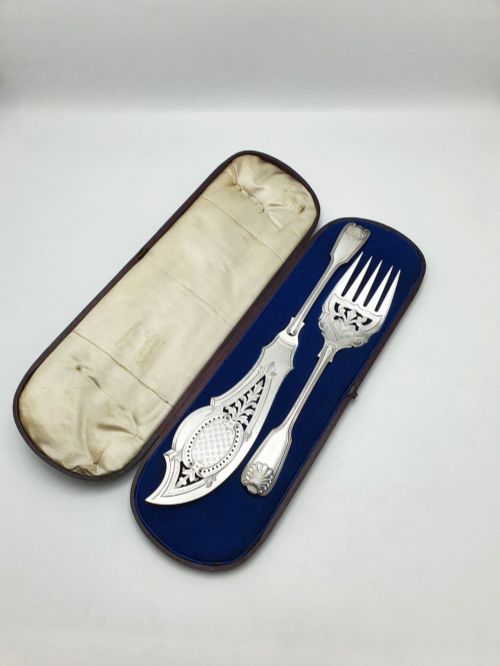
Fish cutlery sets typically comprise specialised knives and forks featuring wide blades designed to separate fish bones from the flesh. Many sets also include matching servers for presentation.
These sets frequently come complete in original wooden canteens lined with velvet or silk for safe storage.
How were knife rests used?
Knife rests were placed beside each plate during formal nineteenth-century dinners to support carving knives or ordinary cutlery between courses. This kept grease and food residue off the table linen.
They were cast in various figural and decorative designs, including animals and architectural motifs.
What are grape scissors used for?
Grape scissors are specialised implements designed with short, angled blades and long handles to snip small clusters of grapes from the main stem. This allowed diners to serve fruit cleanly at the table.
They often appear alongside nutcrackers and fruit knives in dedicated boxed presentation sets.
How do I care for silver plate cutlery?
Silver plate requires gentle cleaning with non-abrasive polishes formulated specifically for plated items to avoid wearing away the silver layer. Hand washing with mild soap is essential rather than using mechanical dishwashers.
Store pieces in lined boxes or anti-tarnish rolls when not in use to protect the surface.