


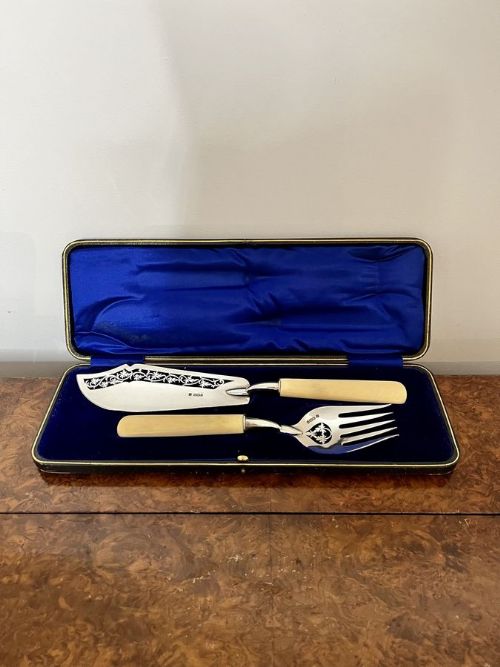


Antique Fish Slice
An antique fish slice brings dedicated craftsmanship and ornamental design to the dining table for serving delicate portions.
Antique Fish Slice
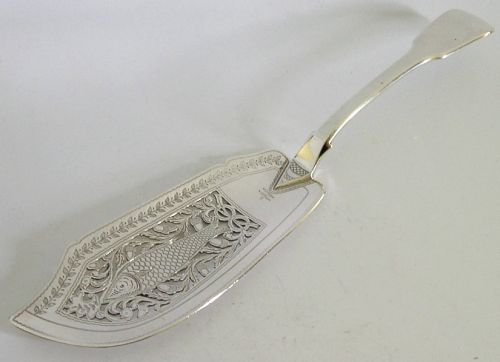
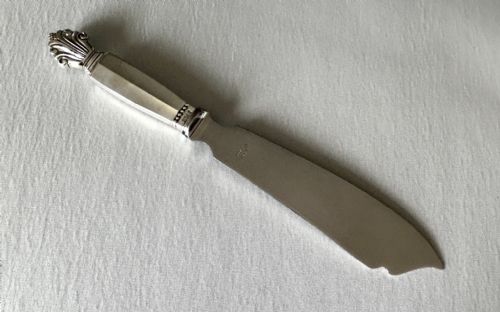
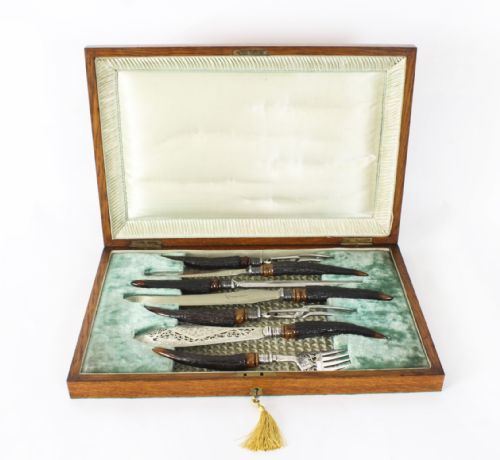
An antique fish slice is a specialised serving utensil designed specifically for presenting fish dishes at the table. These implements frequently appear alongside matching forks in dedicated sets or as single servers. The form combines a broad, often pierced blade with a substantial handle tailored for balance.
On this page, buyers encounter various iterations spanning several centuries of dining culture. Georgian, Victorian and Edwardian examples dominate the selection, alongside continental pieces in silver and silver plate. The materials range from sterling silver to bone and antler handles.
What varies in quality
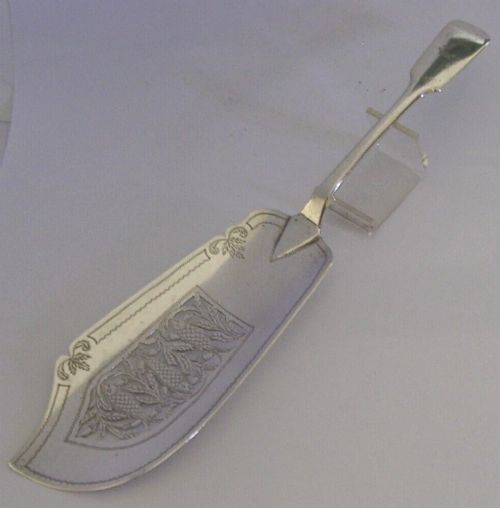
The precision of the blade piercing and engraving dictates the standard of execution. Master silversmiths created finely detailed wildlife motifs, family crests or complex scrollwork that elevated simple utility into decorative art.
Weight and balance distinguish superior examples from standard production pieces. A heavier gauge of silver provides rigidity across the broad blade, ensuring the implement performs its task without bending under the weight of the food.
Listings feature sterling silver, silver plate, wood, bone, velvet, stainless steel and stag antler across multiple periods.
Thomas Daniell·GEORGE ADAMS·Charles Boyton·Georg Jensen·Samuel Neville·Bateman
The Antique Fish Slice Glossary
- Piercing
- The technique of cutting decorative apertures through the metal blade. This ornamental work often depicts fish, foliage or scroll patterns.
- Fiddle Pattern
- A nineteenth-century handle shape characterised by a narrow stem that broadens near the terminal into a shoulder resembling a stringed instrument.
- Kings Pattern
- An ornate nineteenth-century flatware design featuring shell and scroll motifs along the edges of the handle.
- Sterling Silver
- An alloy containing 92.5 percent silver by mass, with the remainder composed of other metals to increase hardness.
- Silver Plate
- A base metal substrate coated with a thin layer of pure silver through electroplating or older mechanical methods.
Antique Fish Slice: Frequently Asked Questions
What is an antique fish slice used for?
These utensils were created to lift and serve portions of fish at formal dining tables during the eighteenth, nineteenth and early twentieth centuries. The broad blade supported the delicate flesh of the fish without breaking it.
They often formed part of a larger service set that included a matching fork. Today, collectors frequently utilise them for serving similar dishes or as decorative tableware.
How do I identify a Georgian fish slice?
Georgian examples typically display hand-engraved details, flat-chased motifs or crisp piercing on sterling silver blades. The handles often feature fiddle patterns or plain ivory and bone grips.
Hallmarks stamped directly onto the silver provide the most reliable guide for dating, revealing the assay office and year of production.
What is the difference between silver and silver-plated fish slices?
Solid silver pieces consist entirely of precious metal alloys, usually sterling silver, and bear standard hallmarks including a lion passant in British items. Silver plate involves a base metal core coated with a thin outer layer of silver.
Solid silver maintains its intrinsic material value over time and resists base metal exposure through wear.
How should I care for an antique fish slice?
Silver components require occasional polishing with a gentle, non-abrasive cloth formulated for precious metals to maintain their finish. Hand washing with mild soap and immediate drying prevents moisture damage to organic handle materials.
Avoid putting antique cutlery into mechanical dishwashers, as harsh detergents and high heat ruin bone, wood and antler grips.