




Late Victorian Cutlery
Late victorian cutlery brings refined nineteenth-century silver and plate to the table, offering service pieces that elevate dining with period craftsmanship.
Late Victorian Cutlery
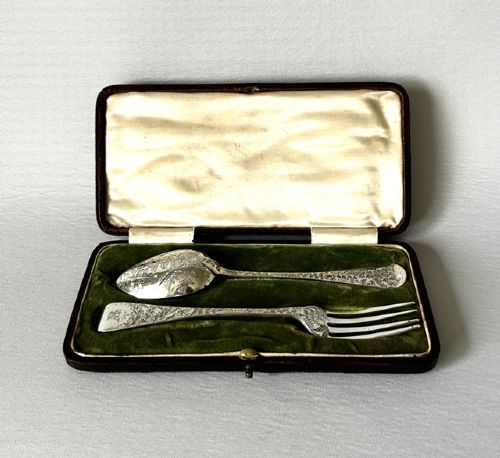
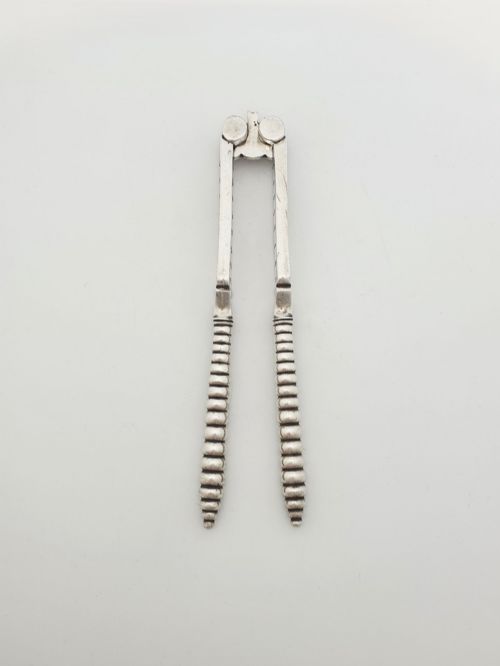
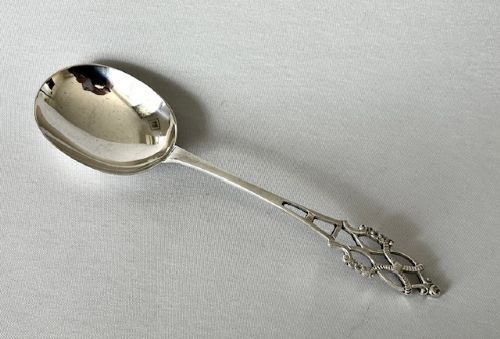
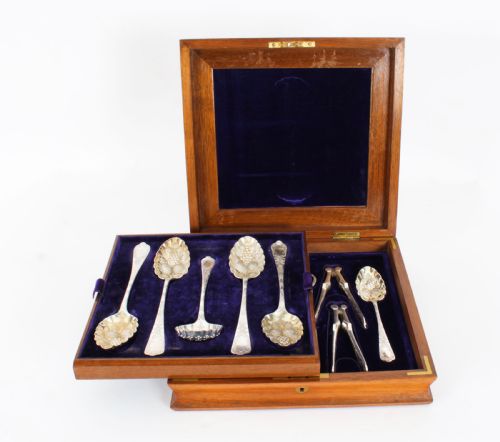
Late victorian cutlery spans specialised flatware and serving pieces produced during the closing decades of the nineteenth century. These instruments include Christening sets, fish servers, fruit sets, lobster crackers, and individual butter knives or coffee spoons.
Most examples found in these listings date from the eighteen-eighties and eighteen-nineties, capturing the aesthetic shifts of the period from ornate Victorian design towards early Art Nouveau and Russian Revival influences. Sets frequently arrive in their original fitted mahogany or oak cases, lined with velvet or silk.
Buyers encounter both solid sterling silver and durable silver plate, often paired with organic handles made from mother-of-pearl, horn, or bone. These items reflect the era's taste for specialised dining utensils designed for specific courses rather than general use.
What varies in quality
Quality differences stem from the choice of primary material, distinguishing solid sterling silver and silver gilt items from silver plated versions. Maker attribution also alters standing, with pieces originating from recognised workshops like Hukin & Heath, Mappin & Webb, or John Round commanding distinct interest.
The survival of original fitted wooden cases lined with velvet or silk influences the completeness and preservation of a set. Finer examples display crisp, deep engraving on handles and blades alongside intact organic handle materials free from warping.
Lobster crackers from this era ensured polite company could tackle shellfish without losing dignity at the dining table.
Hukin & Heath·Mappin & Webb·Walker & Hall·John Round
The Late Victorian Cutlery Glossary
- Silver plate
- A base metal coated with a thin layer of silver. This technique provided the appearance of solid silver at a lower production cost during the nineteenth century.
- Silver gilt
- Sterling silver that has been coated with a thin layer of gold on its surface. This process creates a two-tone decorative effect.
- Mother-of-pearl
- The iridescent inner layer of certain mollusc shells used for knife and fork handles. It provides a smooth, pale surface with natural sheen.
- Hallmark
- An official stamp applied to precious metals indicating the standard of purity, the assay office, and the date letter. English pieces commonly show city marks and maker initials.
- Server
- A large utensil designed for portions of fish, fruit, or berries at the table. These pieces often feature wide blades with detailed engraving.
Late Victorian Cutlery: Frequently Asked Questions
What is the difference between silver plate and sterling silver cutlery?
Sterling silver consists of solid precious metal throughout, marked with official assay office stamps indicating its standard.
Silver plate applies a layer of silver over a base metal core, offering similar visual appeal with different weight and durability properties.
Why do many sets include mother-of-pearl handles?
Mother-of-pearl provided a durable, decorative surface that resisted staining from acidic fruits during dessert courses.
Victorian makers favoured organic materials like shell, horn, and bone to create tactile contrast against polished metal blades.
How do I identify the date of late victorian cutlery?
English silver items rely on stamped hallmarks that include specific date letters corresponding to the assay year in cities like Sheffield or London.
Stylistic cues such as early Art Nouveau motifs or documented maker marks help assign approximate dates when official hallmarks are absent on plated items.
Were these pieces meant for everyday use?
Specialised items such as fish servers, Christening sets, and hors d'oeuvres forks were typically reserved for formal dining or specific family milestones.
Many of these instruments survive inside original fitted wooden cases lined with silk or velvet, indicating they were stored carefully between meals.