


Victorian Fish Servers
Victorian fish servers are matching knife and fork sets designed for portioning fish at the dining table, combining practical weight with intricate engraved decoration.
Victorian Fish Servers
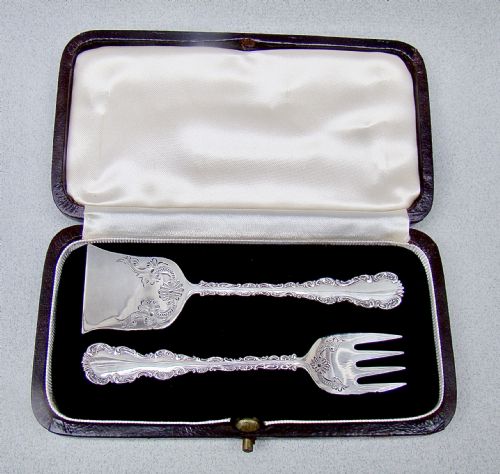
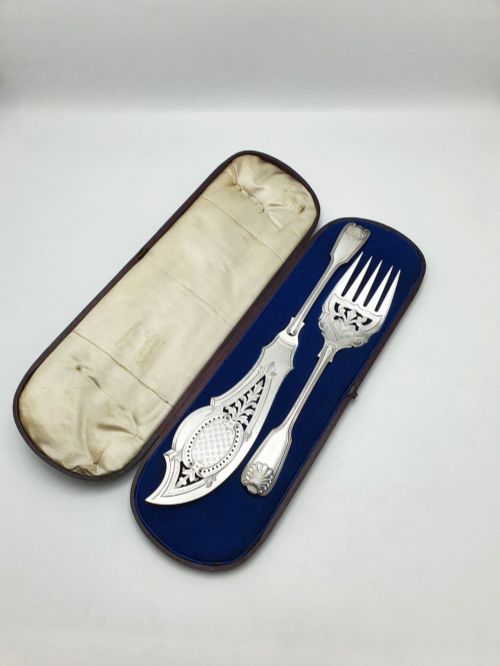
Victorian fish servers comprise paired forks and wide-bladed knives designed specifically for the formal dining table. These utensils appear frequently as cased pairs, often nestled in velvet or satin-lined presentation boxes alongside fitted cutlery.
The materials span solid sterling silver and silver plate, frequently complemented by handles carved from bone, horn, antler, mother-of-pearl, or ivory. Many sets originate from the nineteenth century, including specific decades such as the eighteen-fifties, seventies, and eighties.
Beyond standard flatware, the forms encompass specialised sardine servers and large pierced slices intended to drain oil or liquid from the fish. Collectors encounter both plain fiddle pattern designs and heavily chased examples featuring engraved dolphins, scrolls, and hunting motifs.
Materials and construction
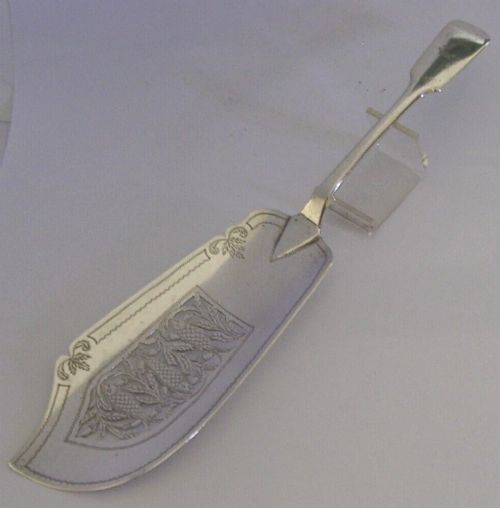
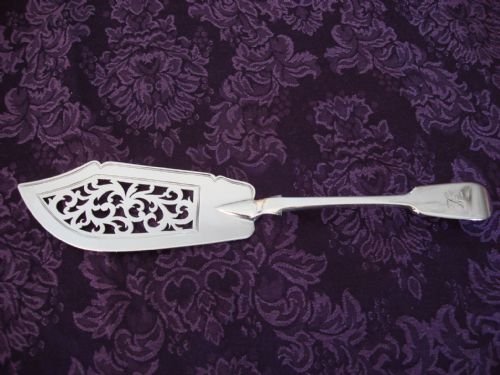
Silversmiths formed the working parts from sterling silver or applied silver plate over base metal, utilising piercing saws to cut delicate scrollwork and lattice designs into the broad blades. Engravers then hand-chased botanical foliage, fish scales, and family crests onto the metal surfaces.
Handles required distinct natural materials such as cattle bone, deer antler, solid ivory, and polished horn, secured to the metal tangs with pins or collars. Presentation sets frequently rested within fitted wooden cases lined with velvet, leather, or satin to protect the delicate contents.
Several sets feature finely engraved hunting dogs bounding across the blades to remind diners of the catch.
Quality and craftsmanship
The distinction between standard utility sets and exceptional examples lies in the depth of hand-engraving and the crispness of the blade piercing. Superior pieces exhibit deeply chiselled scrolls and robust gauge metal that resists bending under pressure.
Material selection significantly influences the grade of a set, where unmarked silver plate contrasts with heavy solid sterling silver bearing clear hallmarks. Original fitted presentation cases lined in quality fabrics also elevate the standing of a surviving pair.
Henry Wilkinson·Thomas Forester And Sons·George Adams·Charles Boyton·Mappin And Webb·Walker And Hall
The Victorian Fish Servers Glossary
- Fish slice
- A broad-bladed knife designed to lift and portion delicate fish at the table. These blades are often pierced to allow juices to drain away.
- Hallmark
- An official stamp applied to precious metals indicating the standard of purity, the assay office, and the year of manufacture. British sterling silver pieces typically carry a series of these small stamped symbols.
- Silver plate
- A layer of silver fused to a base metal foundation, commonly utilised in nineteenth-century cutlery manufacturing. This technique offered the visual appeal of solid silver at a lower cost.
- Fiddle pattern
- A traditional cutlery handle shape featuring a narrow stem that widens towards a distinct shoulder near the terminal, resembling the outline of a stringed instrument.
- Piercing
- The decorative technique of cutting openings through metal blades to form geometric or naturalistic patterns. This method reduced the weight of the utensil while adding ornamental detail.
Victorian Fish Servers: Frequently Asked Questions
What are victorian fish servers used for?
These matched knife and fork sets were utilised during formal nineteenth-century dining to portion and serve whole fish at the table. The wide blade of the knife gently separated the flesh from the bone without breaking it.
The matching fork supported the portion as it transferred to the diner's plate. Together, they formed an essential part of the multi-course fish dinner service.
How do you clean silver fish servers?
Maintenance requires gentle washing in warm soapy water using a soft cloth to remove tarnishing residue without scratching the metal. Specialised silver creams applied sparingly help preserve the hand-engraved details.
Harsh abrasive dips should be avoided, particularly on pieces featuring organic handles like bone, horn, or ivory, which can dry out and crack if submerged.
Why do some fish servers have pierced blades?
Piercing the wide blades served both an aesthetic and a practical purpose during formal meals. The decorative cutouts allowed butter, oil, and cooking juices to drain away from the fish before it reached the plate.
Silversmiths utilised this technique to display their skill through intricate lattice work and botanical engravings.