


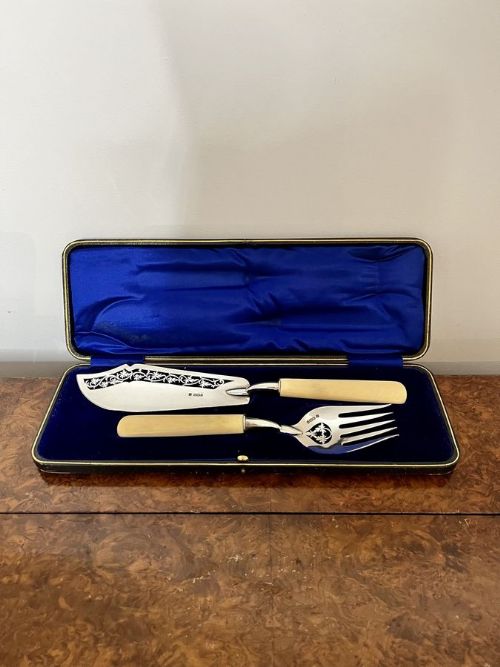

Antique Silver Fish Slice
An antique silver fish slice is a specialised serving tool designed for grand dining tables, combining fine metalwork with practical elegance.
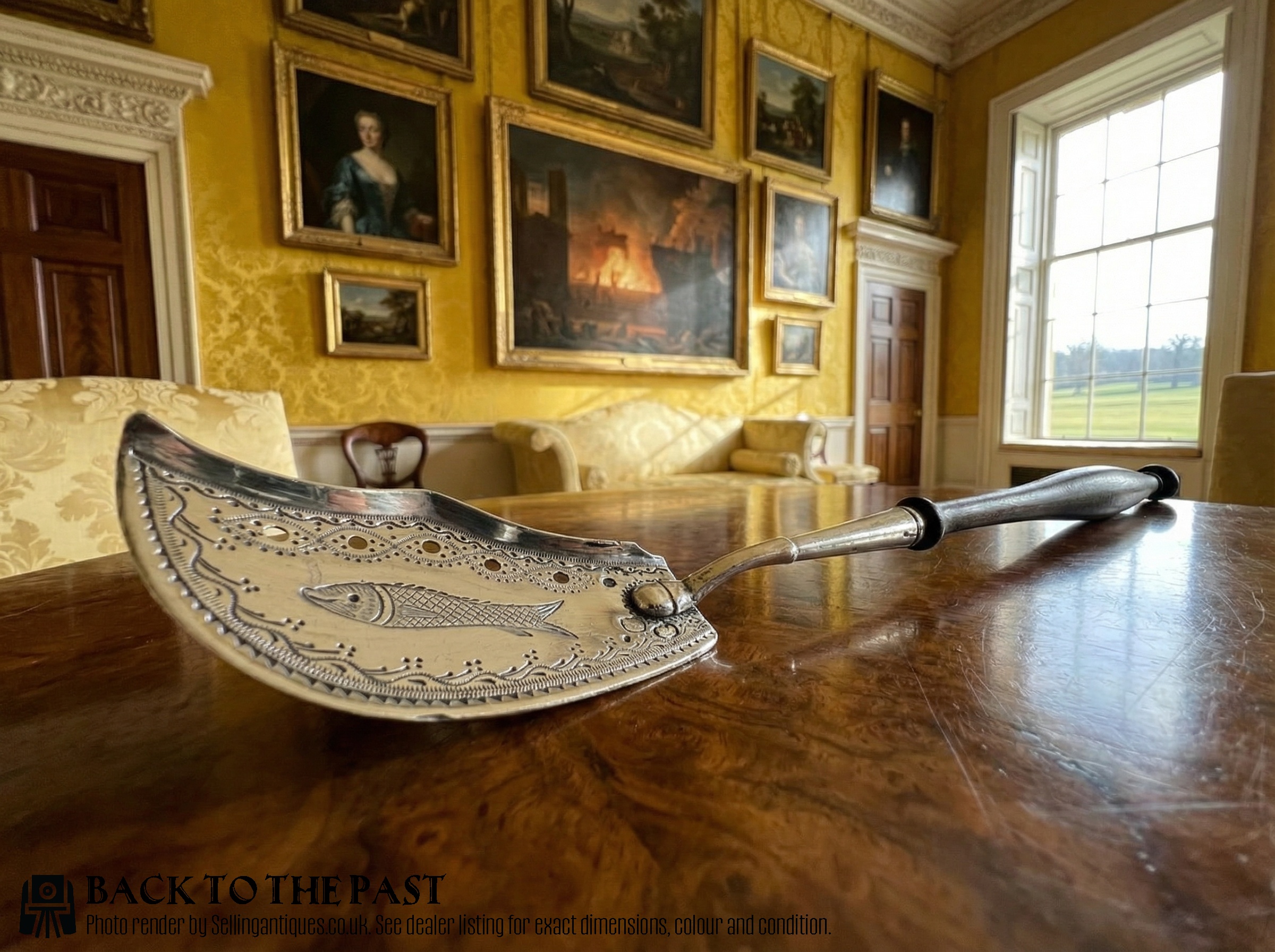
What an antique silver fish slice is
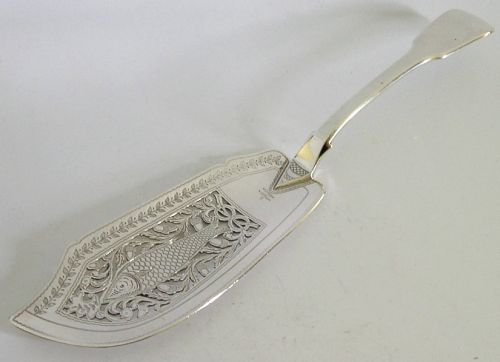
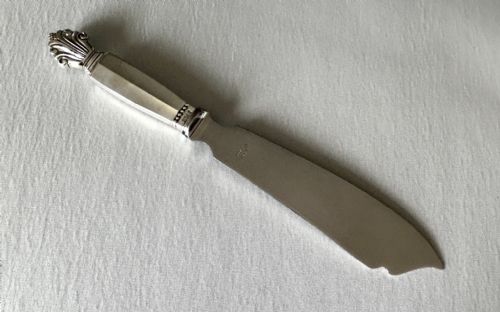
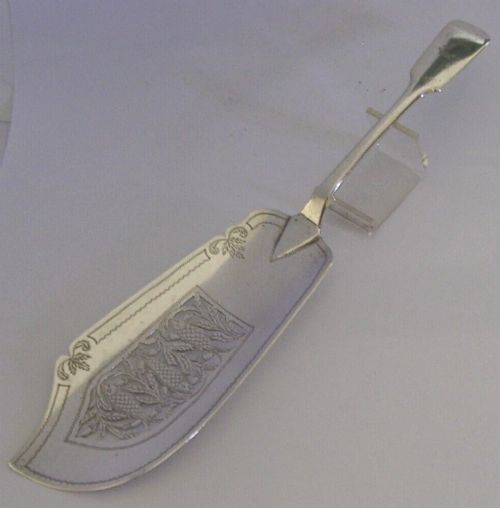
When searching for an antique silver fish slice, collectors encounter a variety of forms designed to lift delicate portions of fish during formal meals. These utensils span several centuries, with particular strength in English Victorian and Georgian craftsmanship.
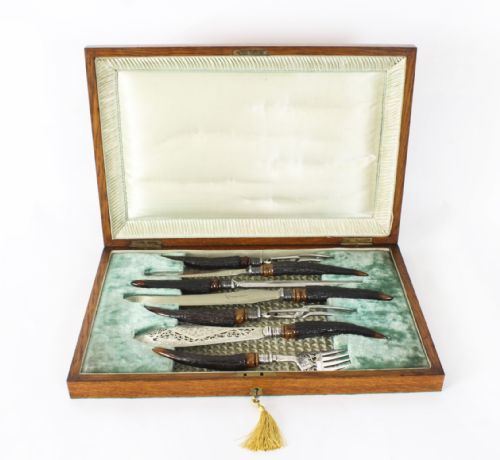
Beyond standard flatware patterns, pieces frequently incorporate natural materials like stag antler or wood for handles. Some variations emerge from European workshops, showing distinct regional tastes in serving cutlery.

Materials and construction methods
Silversmiths utilised sterling silver or silver plate for the blades, hammering and casting the metal into wide, flat forms. Steel and stainless steel occasionally appear in supporting elements or related carving sets.
Blades were shaped through careful piercing and engraving, creating openwork patterns of fish, feathers, or geometric motifs. Handles were fashioned from dense hardwoods, stag antler, or shaped silver, pinned securely to the tang.
Retail Price Guide 2026
Typical UK retail prices for silver fish slice, calculated from the Sellingantiques database of over a million retail prices indexed since 2003. This retail price guide relies exclusively on Sellingantiques data; no external sources or auction records are used, so the figures do not describe the wider market.
Listings feature periods spanning from the eighteenth century through to mid-century modern designs.
What separates standard pieces from finer examples
Quality rests in the crispness of the blade's piercing and the depth of any hand-engraved detail. Master silversmiths executed pierced designs with clean symmetry, whilst lesser examples show heavier, less refined cutting.
The choice and balance of materials dictate the upper tier of the range. Solid silver combined with sculptural handles or finely chased figural motifs represents the peak of period production.
Georg Jensen·Charles Boyton·George Adams·Samuel Neville·Bateman
The Antique Silver Fish Slice Glossary
- Piercing
- The technique of cutting decorative openwork patterns through the silver blade. This allowed excess butter or sauce to drain from the fish before serving.
- Kings Pattern
- A popular nineteenth-century flatware design featuring shell and scroll motifs at the terminal. It provides a heavy, ornate look suited to formal dining.
- Fiddle Pattern
- A traditional handle shape widening near the terminal, resembling a stringed instrument. This design dominated British domestic cutlery throughout the nineteenth century.
- Tang
- The continuation of the metal blade extending into the handle. Its secure pinning indicates sound construction.
- Hallmark
- Official stamps indicating the metal standard, assay office, and year of manufacture. These marks allow researchers to date British silver accurately.
Frequently Asked Questions
What is a fish slice used for?
A fish slice serves as a wide spatula designed to lift and transfer portions of fish at the dining table. The broad surface supports delicate flesh without breaking it.
Many examples feature pierced blades to let cooking liquids drain away before the portion reaches the plate. They formed part of formal nineteenth-century dining services.
How can I date an antique silver fish slice?
Dating relies primarily on the hallmarks stamped into the metal by official assay offices. These marks typically include a date letter, a standard mark, and a maker's mark.
Stylistic clues such as handle shape and piercing patterns also help narrow down the period of manufacture when marks are rubbed.
Are these pieces made of solid silver?
The listings include both solid sterling silver and silver-plated varieties. Hallmarks generally confirm solid silver content by displaying the lion passant for British sterling.
Some continental pieces show alternative purity numbers, while silver-plated versions use base metals beneath an outer layer of silver.
How should I clean antique silver?
Gentle cleaning with a specialist silver cloth removes tarnish without harming the metal or engraved details. Avoid harsh chemical dips that strip away the aged patina accumulated over decades.
Storing pieces in tarnish-resistant wraps helps maintain their appearance between occasional uses.